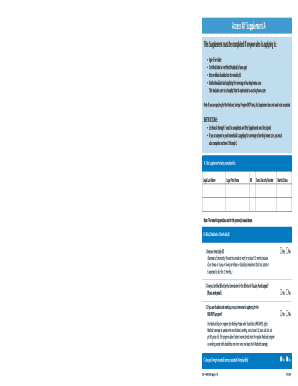
Definition & Meaning of the (Check One Program)
The "(Check One Program)" is a form or component typically used in specific legal or administrative processes, where individuals or entities are required to indicate a selection among multiple options provided. This program is crucial in scenarios where certain decisions or preferences need to be documented officially. Often seen in governmental, legal, or institutional contexts, the ability to check one program ensures clarity and precision in form submissions by reducing ambiguity and promoting standardization.
Steps to Complete the (Check One Program)
-
Review Instructions Carefully: Begin by reading all instructions associated with the form. Understanding the requirements and purpose will guide your completion process.
-
Identify Available Options: Examine the list of options provided. Ensure you are aware of all choices before proceeding.
-
Select Appropriate Category: Carefully determine which program category or option aligns with your needs or circumstances. For instance, if the form pertains to healthcare programs, ascertain which healthcare option best suits your situation.
-
Mark Your Selection: Use the designated method to indicate your selected option. This could be physically checking a box, selecting from a digital dropdown, or highlighting your choice.
-
Verify Your Entry: Double-check your selection for accuracy to prevent errors that could affect processing.
-
Complete Additional Sections: Fill out any remaining segments of the form that are related to your selected option.
Who Typically Uses the (Check One Program)
The "(Check One Program)" form is commonly utilized by diverse groups, including:
- Individuals Engaged in Legal Proceedings: Often used in filings or claims where an individual must declare a specific choice among given legal options.
- Businesses and Corporations: Used to indicate choices regarding regulatory compliance, tax filings, or contractual obligations.
- Government Agencies: Employees may use this in administrative processes to streamline decision-making and policy implementation.
- Healthcare Providers: Utilized to document patient preferences or consent for different treatment programs.


Key Elements of the (Check One Program)
- Clear Description: Each option within the form is thoroughly described to ensure precise understanding among users.
- Mandatory Selection Error Prevention: The design often includes mechanisms to prevent submission without a selection, maintaining integrity in the documentation process.
- Accessibility Features: Adaptations for digital completion ensure the form is accessible and easy to fill out for individuals with disabilities.
How to Use the (Check One Program)
-
Initial Registration or Setup: Ensure you have all necessary personal or business details required for registration.
-
Access through Proper Channels: Available on specific platforms such as government websites or affiliated digital resources.
-
Guidance and Customer Support: In instances of confusion, users are advised to seek out available guidance resources or support services.
Legal Use of the (Check One Program)
Compliance and legal enforcement are foundational to the use of the "(Check One Program)". This form is legally binding once completed and must be handled following federal and state regulations. It's crucial for the validity of contracts, legal rights assertion, and confirmations in various binding agreements.
Software Compatibility with the (Check One Program)
When digitizing or managing the "(Check One Program)", consider:
-
Compatibility with PDF Editors: Ensure the program form is compatible with tools like DocHub, which facilitate editing, signing, and collaboration.
-
Integration with Existing Systems: For businesses, ascertain that the form seamlessly integrates with existing office or document management software like QuickBooks or TurboTax to streamline operations.
IRS Guidelines for the (Check One Program)
If the program is associated with tax filings or declarations, the IRS provides specific guidelines and instructions on how to fill out the form accurately. Users must adhere to these to avoid penalties or compliance issues, ensuring all information submitted aligns with IRS requirements.
State-Specific Rules for the (Check One Program)
Different states may have distinctive regulations or additional requirements for the "(Check One Program)". It is vital to consult state-specific resources or legal advisors to ensure compliance with local laws and regulations before completing and submitting the form.
Required Documents for the (Check One Program)
Completing the "(Check One Program)" may necessitate supplementary documentation to substantiate the selection or preference expressed. Typical documents might include:
-
Identification Proof: Valid ID or government-issued document.
-
Supporting Documents: Evidence or certificates related to the selection, such as tax documents, legal notices, or program-specific forms.
Examples of Using the (Check One Program)
-
Filing Tax Returns: When submitting tax documents, individuals might use the form to choose specific deductions or credits.
-
Healthcare Enrollment: Patients may use it to indicate preferred healthcare plans or services.
-
Educational Applications: Students selecting among financial aid options or courses during school registrations.