




01. Edit your form online
Type text, add images, blackout confidential details, add comments, highlights and more.

Type text, add images, blackout confidential details, add comments, highlights and more.

Draw your signature, type it, upload its image, or use your mobile device as a signature pad.

Send it via email, link, or fax. You can also download it, export it or print it out.
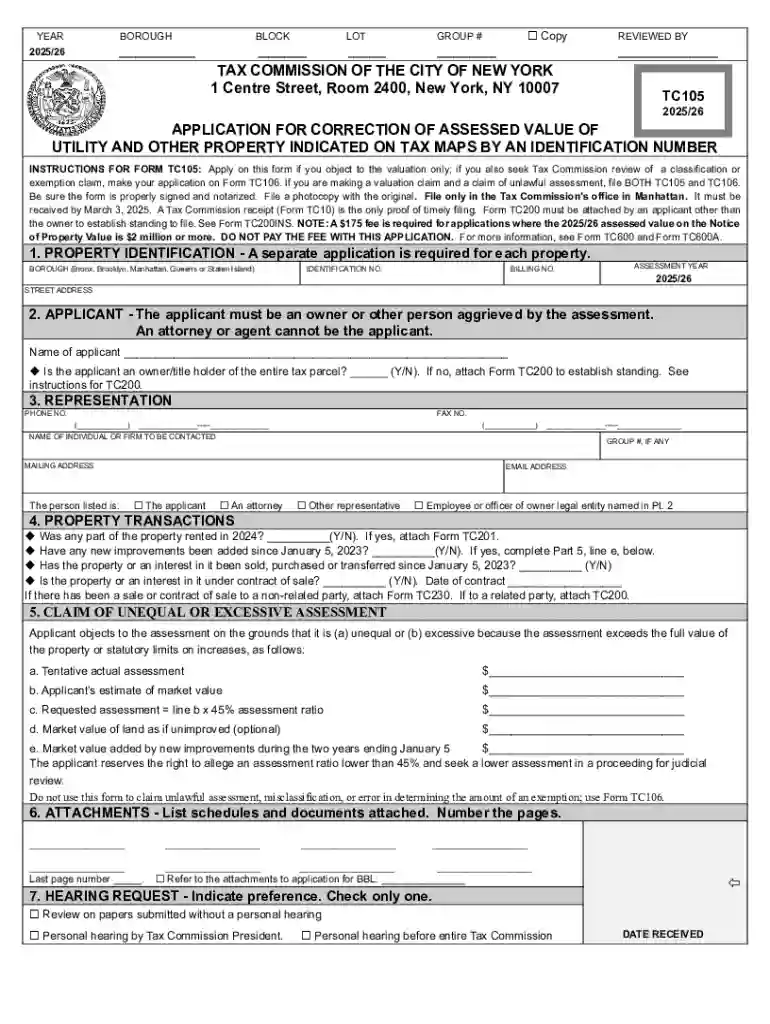
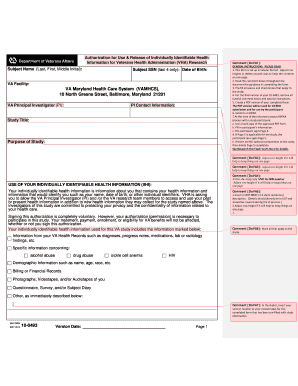
The TC105 form is an essential document for property owners and aggrieved parties in New York City who wish to address concerns related to the assessed value of utility and other properties. Specifically, it applies to issues arising from assessments believed to be unequal or excessive for the tax year 2025/26. Property owners or representatives can use this form to formally dispute their property's valuation, ensuring any adjustments align with current market conditions and legal standards.
When using the TC105 form, it's vital to understand its role in rectifying perceived inaccuracies in property assessments. Individuals must gather pertinent information, such as property details and justifications for disputing the assessment. The form should be completed with precision, outlining reasons for objection and ensuring all required attachments are included. A successful submission can lead to a revised property valuation, potentially reducing property taxes.
Obtaining the TC105 form involves accessing official channels. The form is available through New York City's Department of Finance or their official website. Property owners can also request it through local government offices, ensuring they have the correct and updated version for the tax year 2025/26.
Completing the TC105 form requires careful attention to detail. Here is a structured approach:
Utilizing the TC105 form is crucial for property owners experiencing discrepancies in their property's assessed value. It offers a formal avenue for contesting property tax assessments and seeking adjustments that could lead to tax savings. The form empowers owners to ensure their properties are fairly evaluated according to current valuation standards, promoting financial fairness and accuracy.
The primary users of the TC105 form are property owners in New York City who believe their property has been incorrectly assessed. This includes:


Understanding the critical components of the TC105 form enhances efficacy in its completion. Primary elements include:
Supporting documents are crucial when submitting the TC105 form. They serve as evidence for claims made within the form:
Adherence to timelines is critical when filing the TC105 form. Key deadlines include:
Meeting these deadlines ensures that the objection will be considered promptly for the concerning tax year.
Real-world applications of the TC105 form underscore its importance:
We've got more versions of the tc105 form. Select the right tc105 version from the list and start editing it straight away!
| Versions | Form popularity | Fillable & printable |
|---|---|---|
| 2025 | 4.9 Satisfied (29 Votes) | |
| 2024 | 4.1 Satisfied (20 Votes) | |
| 2023 | 4.4 Satisfied (34 Votes) | |
| 2022 | 4.8 Satisfied (106 Votes) | |
| 2021 | 4.4 Satisfied (187 Votes) | |
| 2020 | 4.4 Satisfied (105 Votes) | |
| 2019 | 4.3 Satisfied (47 Votes) | |
| 2018 | 4.4 Satisfied (220 Votes) | |
| 2016 | 4.3 Satisfied (97 Votes) | |
| 2012 | 4.4 Satisfied (234 Votes) |
At DocHub, your data security is our priority. We follow HIPAA, SOC2, GDPR, and other standards, so you can work on your documents with confidence.



Power Schottky Rectifier Features International standard package miniBLOC. TC = 105C; RMS 2500 V~
TC105 are organizing a seminar series entitled Discrete Element Method (DEM) in geotechnical engineering education from this coming February to May.


