







Definition & Meaning
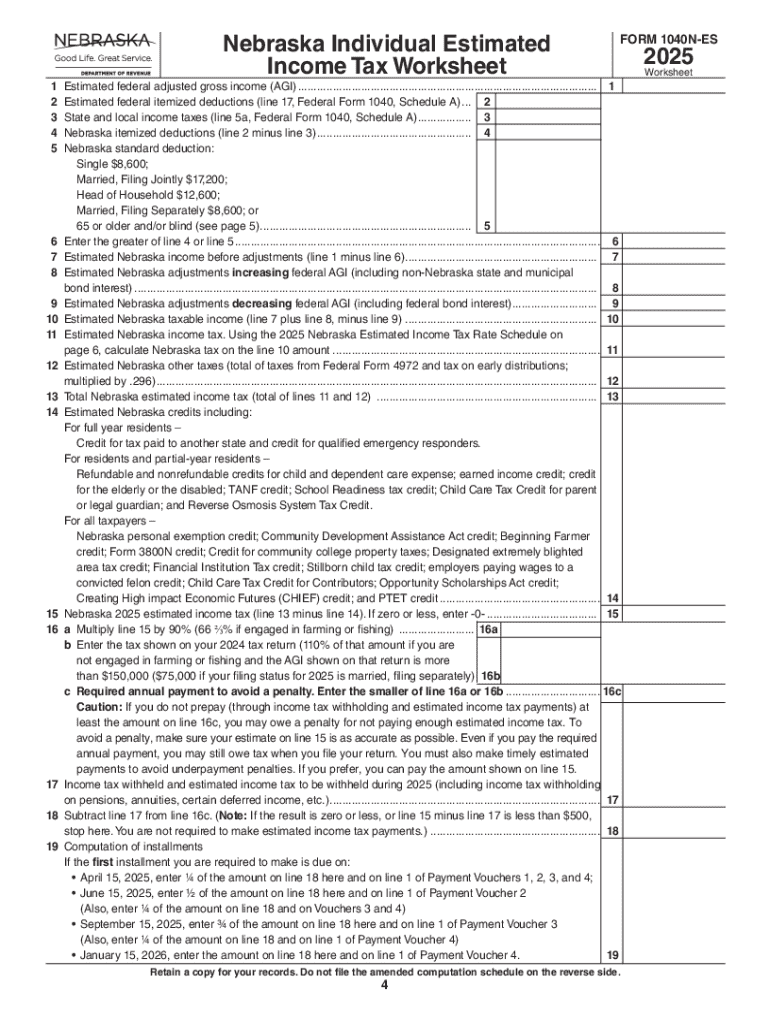
"If your Nebraska individual income tax, after allowance of Nebraska personal exemption" refers to the calculated amount of income tax an individual taxpayer owes to the state of Nebraska after accounting for the state's personal exemptions. Personal exemptions reduce the income subject to tax, therefore lowering the total tax liability. This concept is pivotal in ensuring individuals only pay taxes on their net taxable income.
Importance of Personal Exemptions
- Reduction in Taxable Income: Personal exemptions lower your taxable income, ensuring you are taxed on a smaller base amount.
- Impact on Tax Rates: Adjusted taxable income may place taxpayers in a lower tax bracket, further decreasing the overall tax rate applied.
- Dependency Considerations: Exemptions may factor in dependents, affecting families and those supporting others, such as parents or children.
How to Use the If Your Nebraska Individual Income Tax, After Allowance of Nebraska Personal Exemption
Understanding how to use this tax principle requires a careful review of tax documentation and guidelines specific to Nebraska state taxes.
Application in Tax Calculations
- Determine Exemptions: Identify the number of personal exemptions applicable to your financial situation, including dependents.
- Calculate Taxable Income: Subtract the total exemptions from your gross income to determine the net taxable income.
- Apply Standard Tax Rates: Use Nebraska's tax rate schedule for the year to calculate the tax due on the adjusted taxable income.
Practical Scenarios
- Single Taxpayer: Calculate using personal exemption without dependents.
- Married with Dependents: Calculate using multiple personal exemptions for self, spouse, and children.
Steps to Complete the If Your Nebraska Individual Income Tax, After Allowance of Nebraska Personal Exemption
Completing the individual income tax calculation involves several critical steps to ensure compliance and accuracy.
- Gather Necessary Documents: Collect W-2s, 1099s, and any financial records related to income and deductions.
- List Exemptions: Clearly document the exemptions you plan to claim.
- Calculate Adjusted Gross Income (AGI): Sum up all income sources and subtract allowed adjustments.
- Subtract Exemptions from AGI: Deduct personal exemptions to arrive at taxable income.
- Apply Tax Rates: Use Nebraska's current tax rate chart to determine tax dues based on taxable income.
- Submit Form: Choose your preferred submission method—online, mail, or in person.
IRS Guidelines
While primarily state-focused, IRS guidelines still intersect through federal tax considerations impacting state calculations.
Key IRS Considerations
- Federal Filing Requirements: Ensure federal compliance to align with state tax submissions.
- IRS Forms Interaction: Recognize how federal forms like 1040 mirror or influence state filings.
Filing Deadlines / Important Dates
Timely filing ensures compliance and avoids unnecessary penalties.
Nebraska Tax Deadlines
- Standard Filing Date: Aligns with the federal tax deadline in mid-April.
- Extensions: Apply for extensions if additional time is needed, typically extending filing to October.
Late Filing Penalties
Fail to file or pay on time may result in penalties, which compound with interest over time.
Required Documents
Having the correct forms ensures an error-free tax filing process.
Essential Documentation
- W-2 Forms: From employers to report wages.
- 1099 Forms: For miscellaneous income.
- Supporting Schedules: Additional documents for deductions or additional income.
Eligibility Criteria
Understanding who must file is essential for compliance.


Who Should File
- Permanent Nebraska Residents: Anyone residing in Nebraska for the tax year.
- Income Threshold: Taxpayers whose income surpasses set thresholds by the state.
Key Elements of the If Your Nebraska Individual Income Tax, After Allowance of Nebraska Personal Exemption
Identifying essential parts of the tax computation helps maintain accuracy.
Components In Tax Calculation
- Personal Exemptions: Reflect personal circumstances affecting tax obligations.
- Taxable Income: The base amount after all deductions and exemptions.
- Applicable Tax Rates: Nebraska-specific rates applied to taxable income.
State-Specific Rules for the If Your Nebraska Individual Income Tax, After Allowance of Nebraska Personal Exemption
Nebraska has distinct regulations regarding income tax, necessitating awareness of specific provisions.
Unique Nebraska Provisions
- Exemption Amounts: May vary annually based on legislative changes.
- Special Deductions: State-specific deductions not available at the federal level.
Understanding these rules and following precise steps can significantly aid Nebraska taxpayers in accurately completing their individual income tax forms after allowing for personal exemptions.


