01. Edit your form online
Type text, add images, blackout confidential details, add comments, highlights and more.

Type text, add images, blackout confidential details, add comments, highlights and more.

Draw your signature, type it, upload its image, or use your mobile device as a signature pad.

Send it via email, link, or fax. You can also download it, export it or print it out.
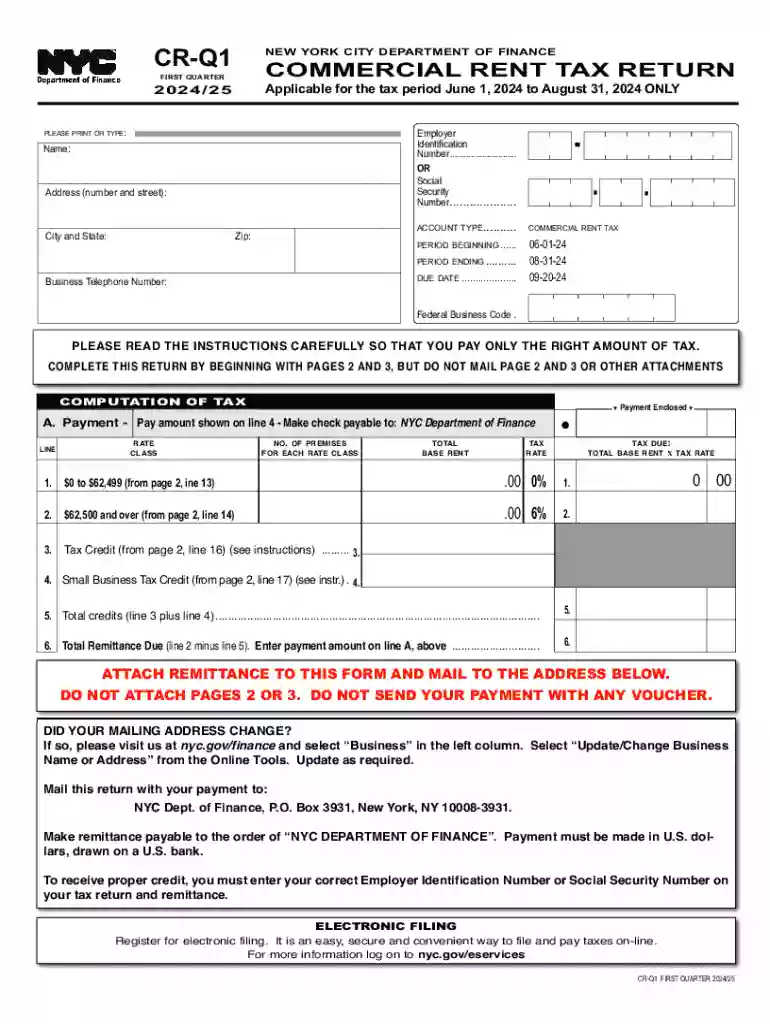
The "NYC Office-Sharing Agreements and Commercial Rent Tax" refers to the specific considerations and obligations businesses face when they engage in office-sharing arrangements in New York City and their relationship with the Commercial Rent Tax (CRT). This document outlines the specific requirements for businesses that lease office space from shared offices, including the calculation of obligations under the CRT. The CRT is a tax that applies to businesses renting commercial space in Manhattan south of 96th Street; understanding how this tax impacts office-sharing agreements is essential for compliance.
Companies engaging in office-sharing agreements must understand how the total base rent is determined. This includes the space's proportional share of the tenancy and related service fees. Proper documentation and meticulous record-keeping are necessary to ensure all adjustments and assessments accurately reflect the tax owed.
The form requires businesses to disclose specific details about their shared office arrangements, the total base rent paid, and any applicable adjustments based on eligibility for tax incentives, such as the Small Business Tax Credit. Businesses must calculate their liability considering both the rent paid and any shared-service fees that might form part of the agreement.
Among critical considerations is the legal definition of "base rent" and how shared office arrangements partition this cost among multiple businesses. Accurately detailing such arrangements on the CRT form is vital to ensure compliance and avoid penalties.
Understanding specific terms is crucial for accurate filing. These include:
Familiarity with these terms can prevent misunderstandings when reporting and calculating tax liabilities.
Collect Required Documentation
Calculate Total Base Rent
Determine Eligibility for Credits
Complete the Form
Review and Submit
Understanding the correct timeline for submission is critical. The CRT form must be submitted quarterly, with specific deadlines set by the New York City Department of Finance. Missing these deadlines can lead to fines and interest on unpaid taxes. Businesses should consult the calendar year deadlines and plan submissions accordingly to avoid penalties.
Businesses can submit the CRT form using various methods:
Selecting the appropriate method ensures compliance and timely submission.
Eligibility for completing this form includes:
Only eligible businesses are required to file and pay the CRT, and knowing eligibility can prevent unnecessary filings or payments.


Consider a scenario where a tech startup is sharing an office with several other companies. Their proportional share of the rent is $5,000 each month. Additional service fees of $500 are included for shared amenities. Despite their shared status, they must file the CRT based on their adjusted rent amount, minus any qualifying credits.
Another example might involve a law firm that claims the Small Business Tax Credit, significantly reducing its tax liability because its net income falls below the defined thresholds, demonstrating the direct impact of certain credits on tax obligations.
Understanding these examples clarifies the practical applications of this tax form, helping businesses to apply their knowledge to real-world situations effectively.
We've got more versions of the NYC Office-Sharing Agreements and Commercial Rent Tax form. Select the right NYC Office-Sharing Agreements and Commercial Rent Tax version from the list and start editing it straight away!
| Versions | Form popularity | Fillable & printable |
|---|---|---|
| 2025 | 4.1 Satisfied (32 Votes) | |
| 2024 | 4.3 Satisfied (36 Votes) | |
| 2023 | 4.2 Satisfied (37 Votes) | |
| 2022 | 4.1 Satisfied (44 Votes) | |
| 2021 | 4.8 Satisfied (86 Votes) | |
| 2020 | 4.3 Satisfied (48 Votes) | |
| 2019 | 4.3 Satisfied (96 Votes) | |
| 2018 | 4.4 Satisfied (63 Votes) | |
| 2017 | 4.4 Satisfied (171 Votes) | |
| 2014 | 4 Satisfied (75 Votes) |
At DocHub, your data security is our priority. We follow HIPAA, SOC2, GDPR, and other standards, so you can work on your documents with confidence.