







Definition & Meaning
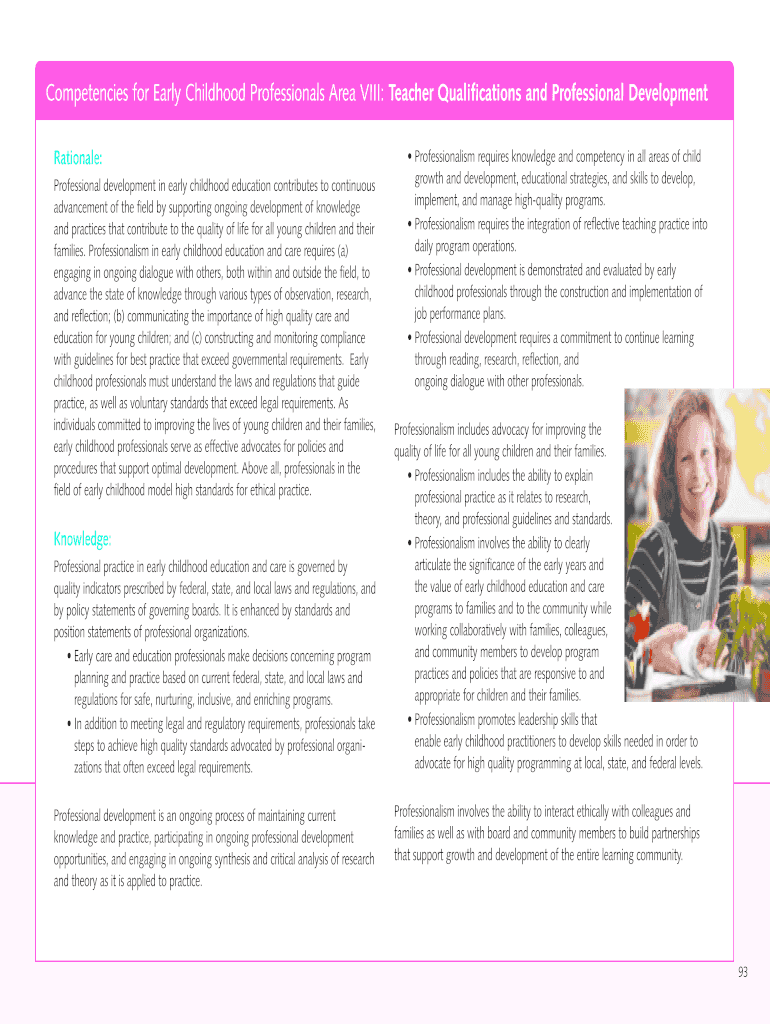
The "Competencies for Early Childhood Professionals Area VIII: Teacher Qualifications and Professional Development" is a comprehensive framework designed to enhance the skills and knowledge of early childhood professionals. This document identifies the essential competencies required for teachers in early childhood settings, emphasizing the importance of their qualifications and continuous professional growth. The framework is intended to guide educational professionals in aligning their practices with recognized standards, which focus on quality, ethics, and effective communication.
Key Elements of the Competencies Framework
The competencies framework is structured into several key elements that emphasize the skills necessary for early childhood educators:
- Teacher Qualifications: This involves meeting the educational and certification requirements needed to fulfill teaching roles effectively. It ensures educators possess the foundational knowledge necessary for teaching young children.
- Professional Development: Encourages continuous learning and development to keep pace with new teaching methodologies, technological advancements, and educational research.
- Ethics and Advocacy: Teachers are expected to adhere to ethical standards and advocate for high-quality early education. This includes promoting children's rights and family engagement.
Steps to Complete the Competencies Framework
- Review Current Qualifications: Assess current educational qualifications and certifications, comparing them with the framework’s requirements.
- Professional Development Assessment: Identify areas for growth and create a professional development plan that includes workshops, courses, and other learning opportunities.
- Implement Changes: Apply newfound knowledge and skills in the classroom setting.
- Feedback and Reflection: Gather feedback from peers, supervisors, and families to reflect on personal growth and areas for further improvement.
How to Use the Competencies Framework
Educators can use this framework as a self-assessment tool to identify personal strengths and areas for development. It acts as a guide to tailor professional development activities that enhance their teaching practice. Institutions may also use it to structure training programs that equip educators with necessary skills.
Why You Should Use the Competencies Framework
Utilizing this framework helps educators improve their teaching practice, ensuring that they meet high standards and contribute to delivering quality early childhood education. It supports personal and professional growth, increases job satisfaction, and enhances students' learning experiences.
Important Terms Related to the Competencies Framework
- Continuous Learning: The ongoing process of acquiring new skills and knowledge to improve educational practices.
- Ethical Standards: Guidelines that govern professional conduct to ensure fair and respectful treatment of all involved in the educational process.
- Communication Skills: The ability to effectively interact with children, parents, and colleagues.
Who Typically Uses the Competencies Framework
This framework is utilized by early childhood educators, educational institutions, policy-makers, and professional development coordinators. The aim is to ensure that teachers meet the necessary qualifications and continuously improve their skills to provide high-quality education.


State-Specific Rules for the Competencies Framework
While the framework is widely applicable, some states may have specific rules and adaptations to fit local regulations and educational needs. Educators should familiarize themselves with their state's specific requirements to ensure compliance.
Examples of Using the Competencies Framework
A teacher might use the framework to assess their eligibility for a new educational role by comparing their qualifications with the competencies required. An institution might design staff training sessions based on identified needs within the framework to address gaps in competency among their teaching staff.




