







Definition & Purpose of the Newborn Screening Program
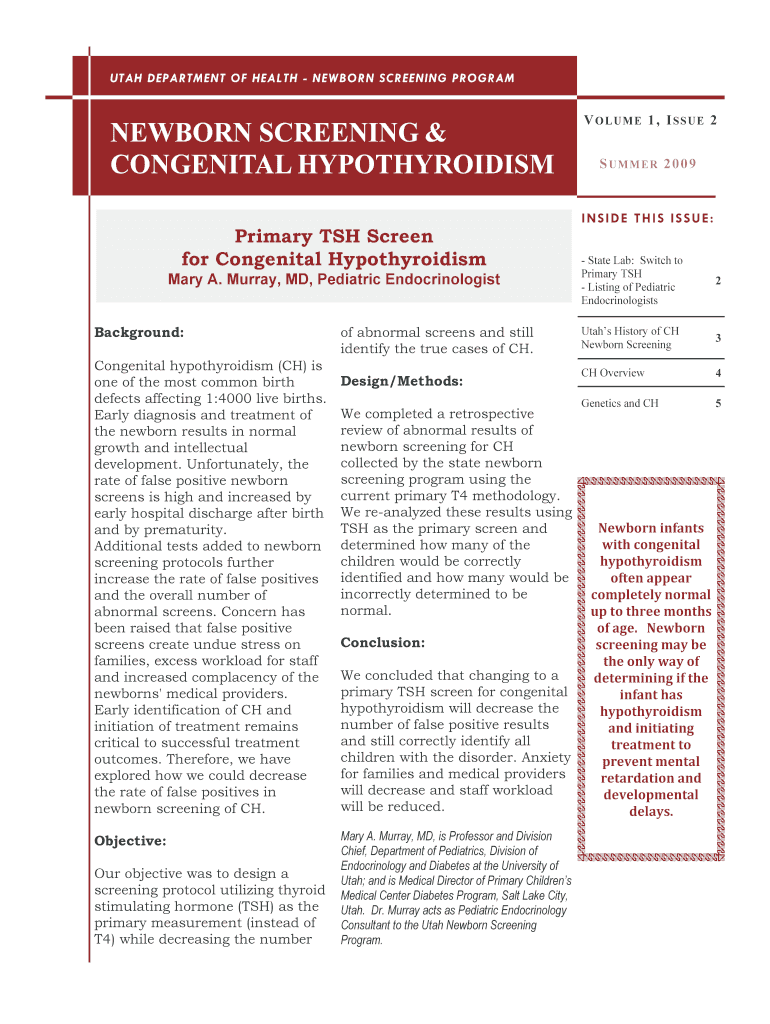
The Utah Department of Health's Newborn Screening Program aims to identify congenital disorders early in newborns to prevent serious health issues. This program focuses on detecting conditions like congenital hypothyroidism (CH) by measuring thyroid stimulating hormone (TSH) levels. Diagnosing such conditions promptly allows for timely interventions, reducing the risk of developmental delays.
How to Use the Newborn Screening Program
To utilize the Newborn Screening Program, healthcare providers draw a small blood sample from the newborn's heel within the first few days of life. This sample is then sent to a laboratory for testing. The program provides instructions on proper sample collection and handling to ensure accurate results. Parents receive results to assess if further diagnostic testing is needed.
Obtaining the Newborn Screening Program Details
Details about the Newborn Screening Program are available through the Utah Department of Health's official communication channels. Healthcare facilities often provide pamphlets and guidance during prenatal visits or shortly after birth, ensuring that parents understand the program's importance and procedures.
Steps to Complete the Newborn Screening Process
- Sample Collection: Collect a blood sample from the newborn's heel.
- Sample Submission: Send the sample to the designated laboratory.
- Result Analysis: The lab analyzes the sample and reports results.
- Follow-Up: If results indicate potential issues, further testing is scheduled.
- Intervention: Start any necessary treatments immediately to mitigate health risks.
Importance of the Newborn Screening Program
The Newborn Screening Program is vital for early detection of metabolic and genetic disorders. Early intervention based on screening results can significantly improve long-term health outcomes, preventing disabilities that might result from late diagnosis. The program's focus on accurate testing helps ensure effective healthcare interventions.
Typical Users of the Newborn Screening Program
Healthcare providers, including pediatricians and nurses working in hospitals and birthing centers, are the primary users of the program. They ensure the program's implementation by collecting samples and informing parents. Parents also play a crucial role by consenting to the screening and following up on results.
Key Elements of the Newborn Screening Program
- Screening Protocol: Use of TSH as a primary measure
- Sample Collection Techniques: Heel-prick blood sample
- Result Interpretation: Clear guidelines for follow-up actions
- Communication: Parent education and result delivery
State-Specific Rules for the Newborn Screening Program
In Utah, participation in the Newborn Screening Program is mandated by state law, ensuring that all newborns are screened shortly after birth. The state provides specific guidelines for healthcare providers on conducting screenings, reporting results, and conducting follow-ups to ensure compliance and effectiveness.
Examples of Using the Newborn Screening Program
Scenario 1: A newborn tests positive for CH. Prompt follow-up testing confirms the condition, and hormone replacement therapy begins immediately, reducing the risk of developmental issues.
Scenario 2: A hospital partners with the Utah Department of Health to improve sample collection techniques, resulting in fewer false positives and streamlined diagnostic processes.
Required Documents and Form Submission
Healthcare providers need to complete specific documentation when submitting screening samples. These documents typically include patient identification information and consent forms. Submissions are done through secured channels to maintain patient confidentiality and data integrity.
Legal Use of the Newborn Screening Program
The program complies with legal requirements for newborn screening across the U.S., integrating data protection measures and parents' rights. It adheres to the regulations set by the U.S. Department of Health and Human Services to ensure ethical and legal integrity.




