
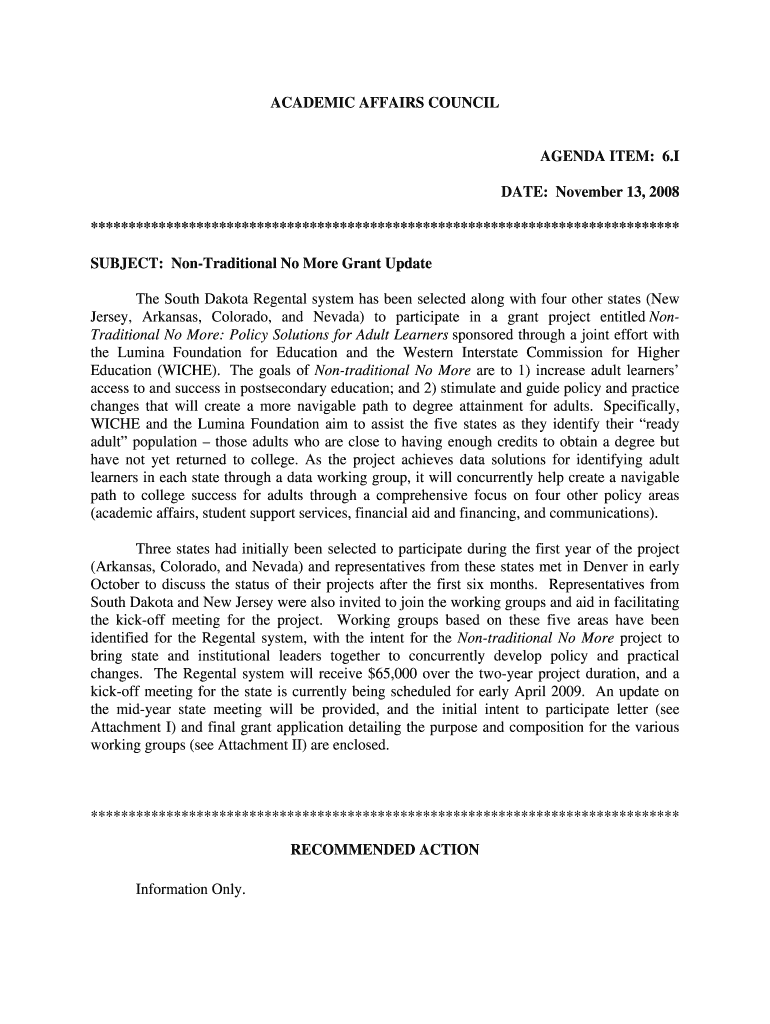







Definition & Meaning
The "ACADEMIC AFFAIRS COUNCIL AGENDA ITEM: 6 I DATE" refers to a particular item on the agenda used by an Academic Affairs Council, a body responsible for overseeing academic policies and procedures within an educational institution. This specific agenda item identifies a particular discussion point or topic to be addressed during a council meeting, contributing to strategic academic decision-making.
Purpose of the Agenda Item
- To facilitate organized discussion during council meetings.
- To ensure all key academic issues are addressed in a structured manner.
- Provides a formal record of topics discussed and actions taken by the council.
Contextual Understanding
An agenda item like "ACADEMIC AFFAIRS COUNCIL AGENDA ITEM: 6 I DATE" typically includes a brief description of the topic, supporting documents, and the date of the meeting, which helps frame the context in which discussions occur.
How to Use the ACADEMIC AFFAIRS COUNCIL AGENDA ITEM: 6 I DATE
Preparing for Meetings
- Review the agenda item and its accompanying documents in advance.
- Conduct research or gather data relevant to the topic to contribute meaningfully to the discussion.
Participation During Meetings
- Listen actively and engage in discussions based on the agenda item.
- Provide insights or feedback that promote informed decision-making.
Post-Meeting Actions
- Follow up on any assigned tasks or decisions made regarding the agenda item.
Steps to Complete the ACADEMIC AFFAIRS COUNCIL AGENDA ITEM: 6 I DATE
- Review Agenda: Prior to the meeting, carefully examine the entire agenda to understand all topics to be discussed.
- Gather Information: Collect any necessary data or reports related to agenda item "6 I DATE" to support your position or contributions.
- Participate in Discussion: During the meeting, engage in discussions associated with agenda item "6 I DATE," presenting your findings and opinions.
- Document Decisions: Note any resolutions or actions taken that pertain to the agenda item, ensuring you are clear on any responsibilities assigned to you.
- Implement Actions: Post-meeting, begin executing any tasks or responsibilities allocated, maintaining communication with other council members as needed.
Key Elements of the ACADEMIC AFFAIRS COUNCIL AGENDA ITEM: 6 I DATE
Essential Components
- Topic Title: Provides a concise descriptor of the issue at hand.
- Date: Specifies when the meeting or discussion takes place, critical for timing-sensitive matters.
- Supporting Documents: Any files or reports provided to supplement the agenda item discussion.
Discussion Outcomes
- Ensures clarity on decisions made or actions required.
- Helps in tracking progress and follow-through on documented decisions.
Important Terms Related to ACADEMIC AFFAIRS COUNCIL AGENDA ITEM: 6 I DATE
- Council: A governing or advisory body within the educational institution.
- Agenda: A structured list of topics to be discussed in a meeting.
- Minutes: The formal record of the discussions and decisions made during meetings.
Examples of Using the ACADEMIC AFFAIRS COUNCIL AGENDA ITEM: 6 I DATE
Scenario One
A university implements a new grading policy. The agenda item details the policy change, the rationale behind it, and a timeline for implementation.
Scenario Two
A college reviews proposals for new program offerings. The agenda item lists each proposal, provides a summary, and outlines criteria for approval.
Who Typically Uses the ACADEMIC AFFAIRS COUNCIL AGENDA ITEM: 6 I DATE


Key Participants
- University Administrators: Presidents, Deans, and Department Heads who oversee educational standards.
- Faculty Members: Professors and lecturers involved in curriculum development.
- Student Representatives: Individuals who provide input from the student body's perspective.
State-Specific Rules for the ACADEMIC AFFAIRS COUNCIL AGENDA ITEM: 6 I DATE
Understanding Legal Variations
- Certain states may have specific regulations or legal requirements regarding educational governance.
- Agenda items may need to reflect state-specific educational policies or compliance measures.
Digital vs. Paper Version
Benefits
- Digital Versions: Easily updated and distributed, with features for accessibility and searchability. Useful for remote meetings.
- Paper Versions: Beneficial when physical signatures or annotations are necessary and for institutions with less technological infrastructure.




