Definition and Meaning of Form MO-60
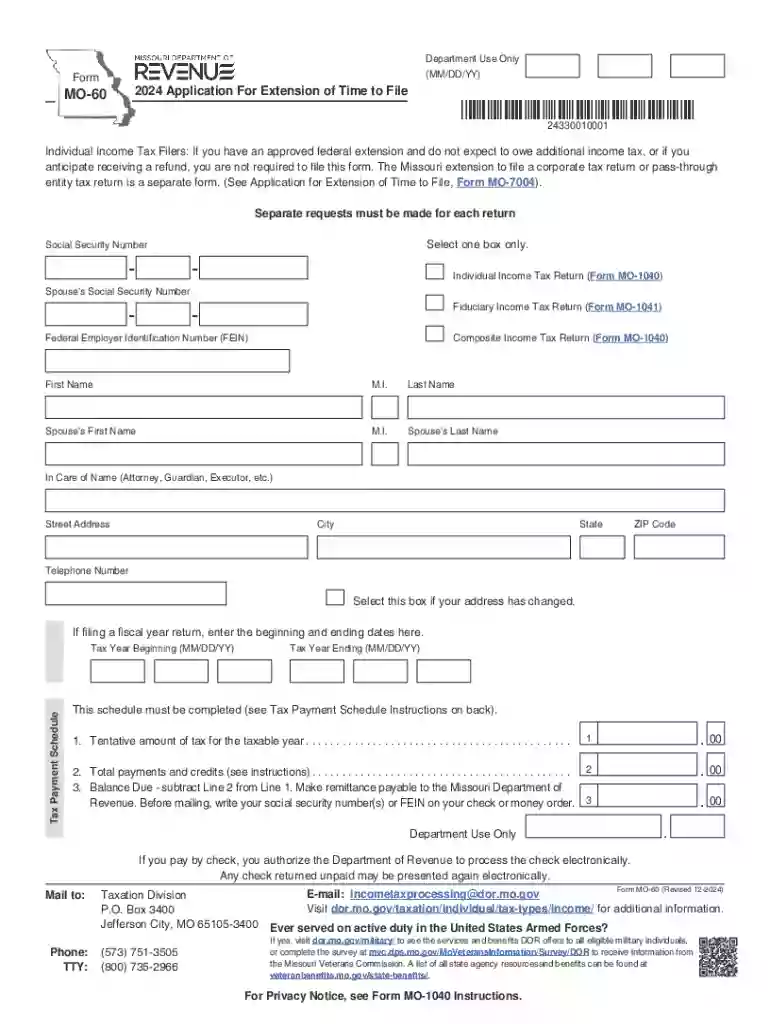
Form MO-60 is an official document used by Missouri individual income tax filers to apply for an extension of time to file their state tax returns. It serves as an essential tool for taxpayers who need more time to gather necessary information and ensure accurate and comprehensive filings. The primary objective of MO-60 is to extend the filing deadline, enabling taxpayers to avoid late filing penalties. However, it is crucial to understand that the extension does not grant additional time for the payment of taxes due. The taxpayer remains responsible for estimating and paying any owed taxes by the original due date to avoid interest charges.
Steps to Complete Form MO-60
- Gather Required Information: Before starting, ensure you have all pertinent details, including your taxpayer identification number, estimated tax liability, and payment information if taxes are owed.
- Fill Out the Tax Identification Section: Enter your name, social security number, and other identification details accurately.
- Calculate Estimated Tax: Determine your estimated tax liability for the year in question and ensure you account for any credits, deductions, or payments already made.
- Complete the Extension Request Section: Indicate the specific period for which you are requesting the extension, ensuring that it aligns with the tax year.
- Submit Payment, if Necessary: If you anticipate owing taxes, make an estimated tax payment to minimize interest charges. The form provides instructions for payment methods, including check or online transactions.
- Review and Sign: Double-check all information for accuracy, sign the form, and ensure all sections are completed.
How to Obtain Form MO-60
Taxpayers can access Form MO-60 through several methods to ensure ease of access and avoid unnecessary delays:
- Missouri Department of Revenue Website: Visit the official site to download and print the form directly.
- Local IRS Offices: Some key locations may have physical copies available for pick-up.
- Tax Software Programs: Certain tax filing software may include built-in access for downloading MO-60.
Who Typically Uses Form MO-60
Form MO-60 is commonly utilized by a wide range of individuals and entities that require additional time for accurate tax filing:
- Self-Employed Individuals: Often engaged in managing multiple income streams requiring detailed documentation.
- Small Business Owners: Need extended time to consolidate financial data across various business aspects.
- Freelancers/Contractors: Typically manage finances independently and may need extra time to gather income forms.
- Complex Income Situations: Taxpayers with investments or multiple state residencies may benefit from the extension to address complex filings.
Required Documents for Filing MO-60
Ensuring preparedness when applying for an extension requires having access to specific documents which aid in accurate request submissions:
- Income Statements: W-2 forms for employment income and 1099 forms for other income sources.
- Previous Year's Tax Returns: Serve as reference points for estimating current year's tax liability.
- Payment Records: Documentation of any estimated tax payments already made during the current tax year.
- Other Relevant Tax Documents: Includes deductions, credits, or any evidence pertinent to determining tax liabilities.
Filing Deadlines and Important Dates for MO-60
Understanding the critical dates associated with Form MO-60 is integral to avoiding penalties and ensuring your extension is processed:
- Regular Tax Deadline: Generally aligns with the federal filing date, typically April 15.
- Extension Request Deadline: Must be filed by the original tax filing deadline to be considered valid.
- Payment Deadline: Payments owed must be submitted by the standard tax due date to prevent interest accrual.
- Extension Due Date: If approved, the extension typically grants an additional six months for filing the tax return, often extending into October.
Legal Use of the MO-60
Form MO-60 is a legally recognized document within the state of Missouri, used for the specific purpose of extending tax filing deadlines. Ensuring appropriate use includes:
- Understanding Legal Obligations: The extension does not exempt the taxpayer from paying estimated taxes on time.
- Consequences of Non-Compliance: Failing to file by the extension deadline incurs penalties.
- Guidelines and Requirements: Abiding by the stipulated conditions and accurately representing all requirements on the form is essential for legal compliance.
Key Elements of Form MO-60
Several critical components form the foundation of Form MO-60, each contributing to its primary function of processing extensions:
- Taxpayer Identification Section: Ensures accurate association of the request with the taxpayer's account.
- Estimated Tax Obligations: Determines whether payments must accompany the extension request.
- Contact and Signature Verification: Validates the request through formal acknowledgment by the taxpayer.
Penalties for Non-Compliance with MO-60
Ignoring key deadlines or requirements associated with Form MO-60 can result in several consequences:
- Late Filing Penalties: Filed after the extended date incurs additional charges.
- Interest on Unpaid Taxes: Unpaid taxes by the original deadline accrue interest until fully paid.
- Potential Legal Ramifications: Consistent non-compliance may lead to further action by tax authorities.
Taxpayer Scenarios: Practical Examples
Understanding how Form MO-60 applies to various taxpayer situations provides contextual insight:
- Scenario 1: Self-Employed Consultant: Earnings throughout diverse contracts complicate income calculations necessitating an extension for precise filings.
- Scenario 2: Retiree with Investment Income: Asset management's implications on tax liability require additional processing time.
- Scenario 3: Part-Time Employee with Side Business: Managing tax deductions and liabilities from different income sources requires careful consolidation, often requiring extra time.
Each specific scenario highlights the practical utility of Form MO-60 in accommodating individual taxpayer needs under diverse situations.

IRS Guidelines for MO-60
The Internal Revenue Service (IRS) recognizes Missouri-specific procedures, aligning with state regulations while maintaining federal guidelines:
- Alignment with Federal Standards: Establishes consistency across state and federal filings.
- Differences in Criteria: Always consult both IRS and Missouri department guidelines to ensure comprehensive compliance.