






Definition and Purpose of Form 1040-V
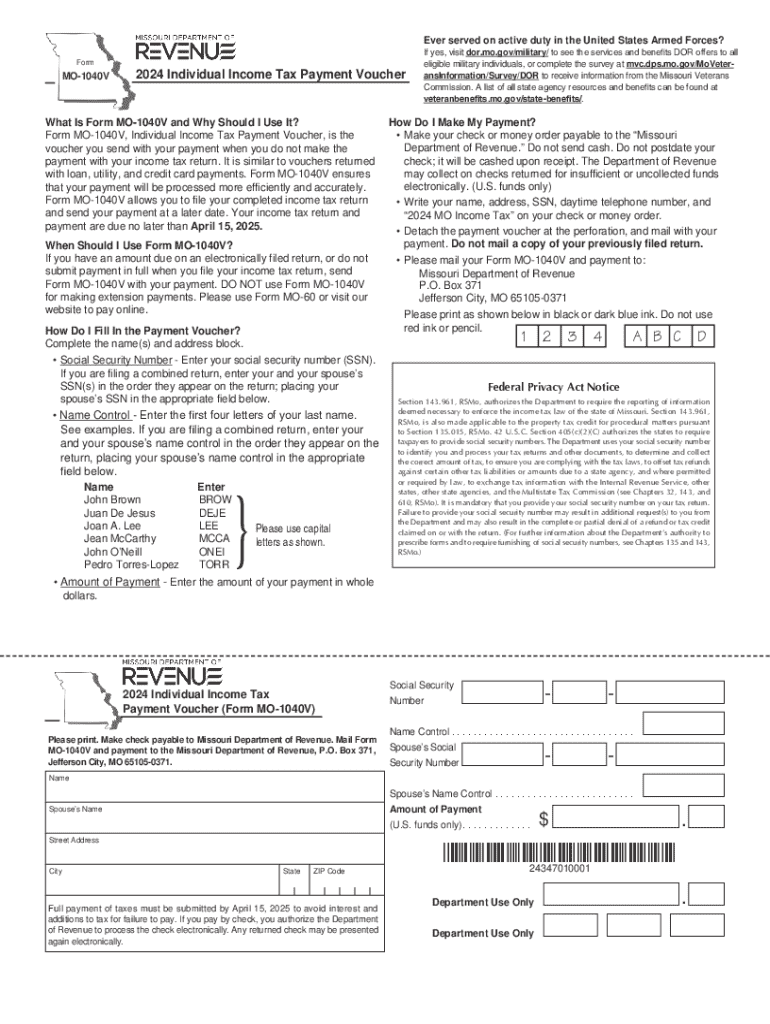
Form 1040-V, Payment Voucher for Individuals, is used by taxpayers to send their payments when they have a balance due on their federal income tax returns. This form accompanies payments made to the Internal Revenue Service (IRS), ensuring that your payment is accurately credited to your tax account. The IRS utilizes this voucher to efficiently process payments for amounts due on Form 1040, 1040-SR, or 1040-NR.
Basic Functionality
- Form 1040-V serves as a payment voucher, providing essential information about the taxpayer and the payment being submitted.
- It enables the IRS to correctly attribute payments to the appropriate tax account, which is critical for avoiding misapplied payments and potential late penalties.
How to Use Form 1040-V
Using Form 1040-V involves several steps to ensure proper submission and crediting of payments. Taxpayers should prepare this voucher once their federal tax return indicates an amount owed to the IRS.
Step-by-Step Instructions
- Complete Your Tax Return: Before utilizing the 1040-V, finalize your tax return to determine the precise amount you owe.
- Fill Out the Payment Voucher: Include your name, address, Social Security number, and payment amount on the voucher.
- Prepare Your Payment: Include a check or money order payable to "United States Treasury." Avoid sending cash via mail.
- Detach and Mail: Cut along the dotted line as indicated on the form and mail it with your payment to the address provided in the 1040-V instructions specific to your state of residence.
Practical Example
- If John Doe owes $500 after completing his Form 1040, he fills out the 1040-V with his details, writes a check for $500, and sends both to the IRS address for his state.
Obtaining Form 1040-V
Form 1040-V is easily accessible through various channels, ensuring that taxpayers can obtain it without hassle.
Sources for Obtaining the Form
- IRS Website: Download directly from the official IRS website where the form is available in PDF format.
- Tax Preparation Software: Many software programs like TurboTax or QuickBooks incorporate this form within their filing process.
- Local IRS Offices: Physical copies of the form can be picked up at IRS offices.
Completing Form 1040-V: Key Steps
Filling out Form 1040-V accurately is essential to avoid delays or misapplication of payment. Each section of the form should be completed following specific guidelines.
Information Required
- Taxpayer's Full Name: Ensure the name matches that on the tax return.
- Social Security Number (SSN): The primary taxpayer's SSN as listed on the tax return.
- Address: Current mailing address including street, city, and ZIP code.
- Payment Amount: Enter the exact amount being paid as specified in the tax return.
Tips for Accuracy
- Verify all information before mailing.
- Keep a copy of the completed 1040-V and your payment for personal records.
Key Terms Related to Form 1040-V
Understanding essential terminology related to the 1040-V maximizes the effectiveness of your submission process.
Important Definitions
- Balance Due: The amount of tax liability remaining after accounting for all credits and payments.
- Payment Voucher: A slip accompanying a payment that provides necessary information to process it.
- Federal Tax Return: A form completed by taxpayers, listing income, deductions, and taxes owed.
IRS Guidelines for Form 1040-V
Following IRS guidelines is critical for the successful submission of Form 1040-V, avoiding potential issues with unprocessed payments.
Standard Procedures
- Payments should be mailed along with the 1040-V by the tax return due date, typically April 15.
- If a filing extension has been granted, ensure payments are still made timely to avoid interest or penalties.
Scenarios and Exceptions
- In the event of natural disasters or other extenuating circumstances, the IRS may provide extensions or different instructions for submission.
Filing Deadlines and Important Dates
Staying aware of critical deadlines ensures taxpayers remain in compliance and avoid penalties.
Key Dates
- April 15: Standard date for submission of tax returns and related payments.
- Extended Deadlines: Some years, dates may shift due to weekends or federal holidays; verify specific IRS announcements annually.
Penalties for Non-Compliance
Not adhering to the regulations related to Form 1040-V can result in significant penalties.
Consequences of Missed Payment
- Late Payment Penalties: Accrue if taxes are not fully paid by the due date.
- Interest Charges: Accumulated on unpaid tax from the due date until paid in full.
Avoiding Penalties
- Early submission and confirming receipt of payments can prevent complications.
- Regularly check IRS communication for any changes in policy or deadlines.