







Definition and Meaning of Hardship License in Florida
A hardship license in Florida is a restricted driving permit that allows individuals whose regular driving privileges have been suspended or revoked to drive under specific conditions. This license is often granted due to circumstances such as financial hardship, medical needs, or other critical situations that impact a person's ability to transport themselves. The hardship license serves to enable individuals to maintain their independence and manage essential activities, such as commuting to work or attending important appointments, particularly when public transportation options are limited.
Important Terms Related to Hardship License
Understanding key terms associated with the hardship license is crucial for navigating the application process:
- Suspension vs. Revocation: Suspension indicates a temporary loss of driving privileges, while revocation is a permanent withdrawal of those privileges until certain conditions are met.
- Eligibility Criteria: Regulations define who qualifies for a hardship license, often considering factors like the reason for suspension and the individual's driving record.
- Hearing Waiver: Applicants may need to waive the right to a formal hearing about their license status while applying for a hardship permit.
How to Obtain a Hardship License in Florida
The process for obtaining a hardship license in Florida requires a clear understanding of the steps involved and the documentation needed. Individuals must determine their eligibility based on the specific reasons for their license suspension. Typical reasons include DUI offenses, excessive points on driving records, or failure to appear in court.
Steps to Complete the Hardship License Application
- Assess Eligibility: Confirm your eligibility by reviewing the reasons for your suspension. If your situation qualifies for a hardship license, proceed to the next steps.
- Gather Required Documents: Collect necessary documents, including proof of identity, any legal paperwork related to your suspension, and evidence of hardship if applicable (such as employment records).
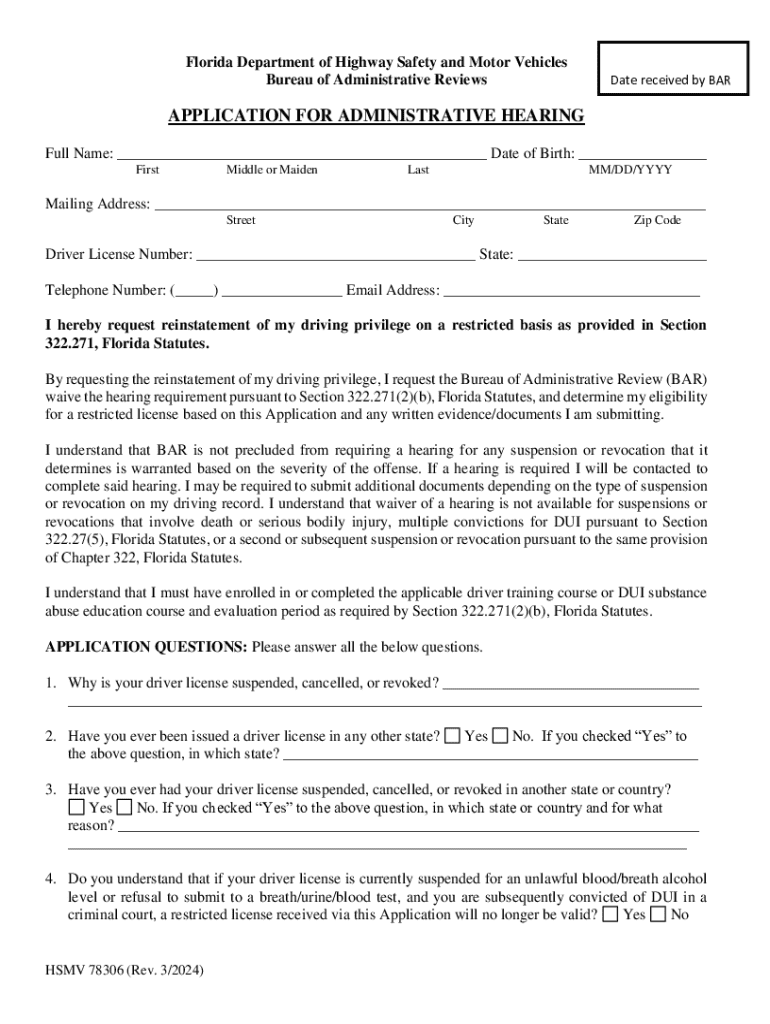
- Complete the Application Form: Fill out the hardship license application, often referred to as HSMV 78306 in Florida. This form includes detailed questions about your driving history and the reasons for your request.
- Submit the Application: You may submit the application online, by mail, or in person at a local Department of Highway Safety and Motor Vehicles (DHSMV) office. Payment for any associated fees will also be required at this stage.
- Attend a Hardship Hearing: Depending on your circumstances, you may need to attend a hearing. This provides an opportunity to explain your situation to a hearing officer, who will make a recommendation regarding your license request.
Required Documents for Hardship License Application
Important documents for the application process typically include:
- Proof of Identification: Such as a driver’s license number or state identification card.
- Proof of Residency: Documents like utility bills can demonstrate your current address.
- Driving History Records: Obtain a copy from the Florida DHSMV.
- Court Documents: If applicable, include any necessary court paperwork regarding your suspension.
Legal Use of the Hardship License in Florida
Holding a hardship license comes with specific legal obligations and restrictions that must be adhered to in order to maintain the license status. While the license allows driving for certain essential activities, such as going to work or attending school, it does not permit general driving privileges.
Typical Usage Restrictions
- Permitted Times: Drivers must stick to defined hours for operating a vehicle. This may vary based on the reason for the hardship license.
- Restricted Areas: Certain locations may be off-limits, and differences may exist based on county regulations.
- Compliance with Court Orders: Adherence to any existing court-ordered obligations is mandatory. Non-compliance can lead to additional penalties, including the potential loss of the hardship license.
Examples of Using a Hardship License in Florida
A hardship license plays a crucial role in various real-world scenarios. For instance, individuals typically use the license to drive:
- To and From Work: Many holders depend on the hardship license to commute, especially if public transport is insufficient.
- Medical Appointments: Individuals with health issues often require the license to attend necessary medical visits, making it vital for maintaining health.
- Educational Purposes: Students, particularly those who attend schools or colleges in areas without robust public transportation options, rely on the hardship license for their academic commitments.
Understanding how to navigate the application, legal obligations, and typical use cases can empower individuals in Florida to effectively manage their circumstances while adhering to state laws.




