
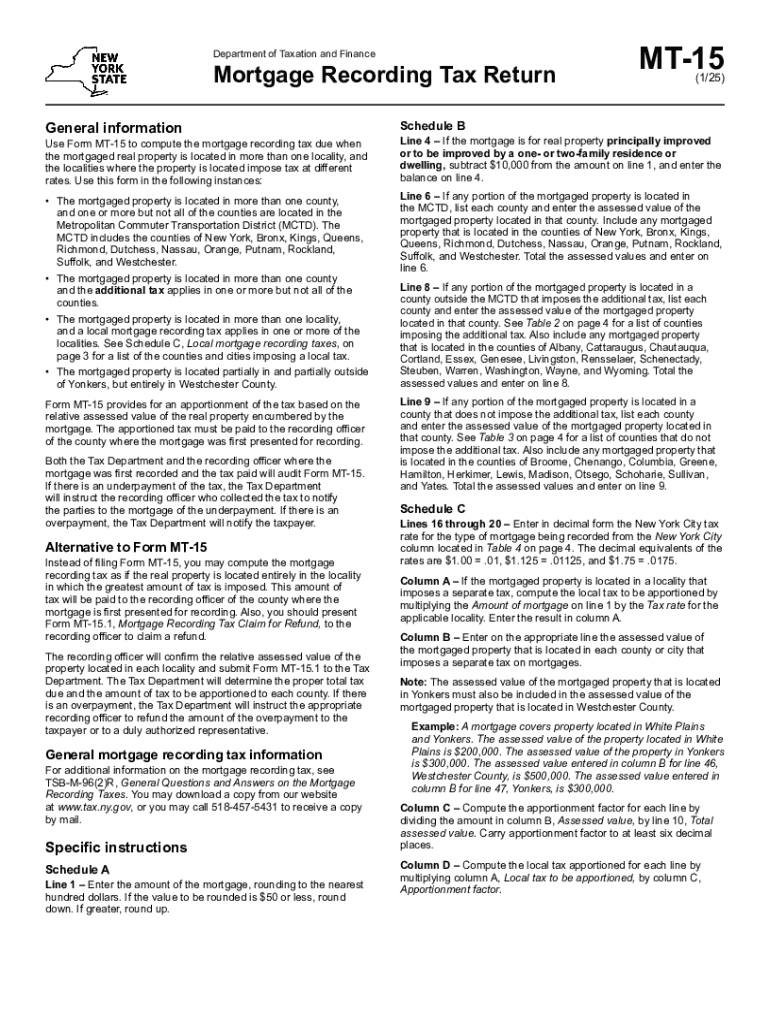







Definition and Purpose of Form MT-15
Form MT-15, the Mortgage Recording Tax Return, is utilized to calculate the tax owed when a mortgage is recorded, particularly involving properties across different localities with varying tax rates. This form is essential for determining the specific tax obligations associated with recording a mortgage, especially when properties are located in multiple jurisdictions with diverse tax regulations.
- Primary Function: The form serves to outline the mortgage recording taxes due, taking into account various scenarios such as exemptions for specific residential properties.
- Exemptions: It allows for exemptions under certain conditions, like for residential properties, which are critical in reducing the tax burden.
- Tax Apportionment: Includes guidelines on apportioning taxes based on assessed property values in different jurisdictions.
How to Use Form MT-15
Form MT-15 is used by individuals and entities involved in mortgaging real estate properties to accurately compute and record the appropriate tax amounts due to multiple jurisdictions.
- Identify Properties: List all properties involved in the mortgage, specifying their locations and assessed values.
- Assess Tax Rates: Determine the varying tax rates applicable to these properties.
- Apply Exemptions: Identify and apply any possible exemptions or reductions applicable to the properties being mortgaged.
- Complete Calculations: Calculate the total tax due, ensuring precise apportioning according to local tax rates and property values.
Steps to Complete Form MT-15
Accurate completion of Form MT-15 involves a methodical approach to ensure compliance with tax regulations.
- Gather Required Information: Collect details on all mortgaged properties, including addresses, assessed values, and local tax rates.
- Calculate Tax Obligations: Use the form to calculate the specific tax due for each property, considering applicable exemptions.
- Verify Entries: Double-check each entry for accuracy to prevent errors in tax reporting.
- Filing: Submit the completed form to the relevant tax authorities either online, by mail, or in-person as per the specified deadlines.
Who Typically Uses Form MT-15
The use of Form MT-15 typically involves a range of stakeholders in real estate and mortgage transactions.
- Individuals: People buying homes or properties across different jurisdictions.
- Businesses: Companies investing in real estate with properties in multiple localities.
- Financial Institutions: Banks or mortgage lenders handling the recording of property liens in their service areas.
Key Elements of Form MT-15
Understanding the core components of Form MT-15 is crucial for its effective use.
- Property Details: Comprehensive input fields for property information, ensuring all relevant details are captured.
- Tax Rate Application: Sections to accurately input and apply various local tax rates.
- Exemption Clauses: Dedicated areas for documenting exemptions applicable to specific properties.
Important Terms Related to Form MT-15
Familiarity with key terms used in relation to Form MT-15 enhances comprehension and ensures accurate completion.
- Mortgage Recording Tax: The tax imposed when a mortgage on real property is recorded.
- Assessed Value: The valuation of a property as determined by local assessors for tax purposes.
- Tax Apportionment: The distribution of tax responsibilities based on the locality and property involved.
State-Specific Rules for Form MT-15
The implementation of Form MT-15 can vary based on state-specific regulations.
- Local Regulations: Different rules and exemptions that apply in varying states and how they affect tax calculations.
- State Tax Authority Guidelines: The specific filing procedures and requirements as dictated by state tax authorities and legislation.
Penalties for Non-Compliance
Failure to correctly file Form MT-15 can result in several penalties.
- Monetary Fines: Financial penalties imposed for inaccurate or late submissions.
- Legal Implications: Potential legal actions or entanglements due to non-compliance with local tax laws.
- Interest Charges: Additional interest charges on unpaid taxes as a result of delayed filing.




