01. Edit your form online
Type text, add images, blackout confidential details, add comments, highlights and more.

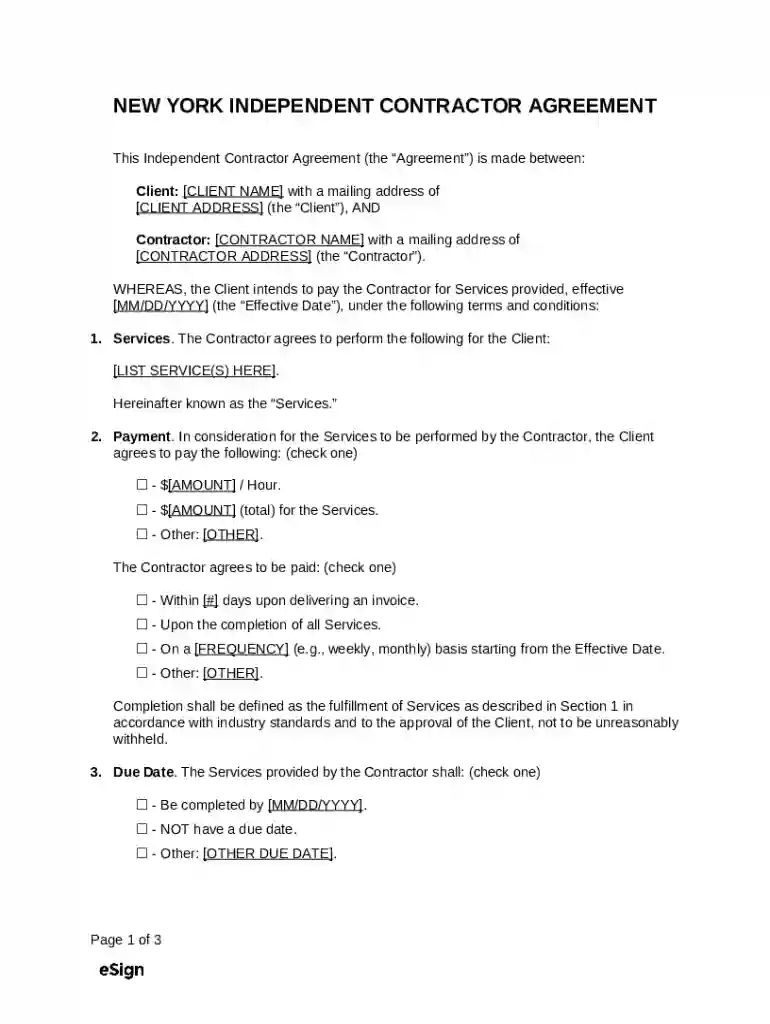
Type text, add images, blackout confidential details, add comments, highlights and more.

Draw your signature, type it, upload its image, or use your mobile device as a signature pad.

Send it via email, link, or fax. You can also download it, export it or print it out.
The New York Independent Contractor Agreement is a crucial legal document that outlines the terms between a client and an independent contractor. It establishes the contractor's independence and details various essential provisions that govern the working relationship. Key elements typically include:
This list helps both parties understand their rights and responsibilities, ensuring a smooth, professional relationship.
Using the New York Independent Contractor Agreement involves several steps to customize and implement it correctly:
Drafting the Agreement: Start by defining the scope of work, compensation, and any specific requirements for the project. It is crucial to include all key elements relevant to the relationship.
Reviewing Legal Compliance: Ensure that the agreement complies with New York State laws and any industry-specific regulations.
Customizing Terms: Tailor the agreement to fit the unique needs of both parties, adjusting payment schedules, deadlines, and confidentiality terms as necessary.
Review with Legal Counsel: Consider having a legal professional review the agreement to ensure all terms are enforceable and protect both parties' interests.
Signing the Agreement: Both the client and contractor should sign the document using legally binding electronic signatures provided by platforms like DocHub.
Storing the Agreement: Keep the signed agreement securely stored, either digitally with encryption or in physical format, for future reference.
This structured approach helps prevent misunderstandings and legal disputes, maintaining a professional and transparent relationship.
Completing the New York Independent Contractor Agreement is a detailed process that involves the following steps:
Identify Parties: Clearly identify the client and contractor, including their full legal names and addresses.
Detail the Services: Precisely describe the tasks, responsibilities, and deliverables expected from the contractor.
Specify Compensation and Terms: Outline the payment amounts, methods, and any milestone payments related to the completion of specific project phases.
Set Timelines and Deadlines: Establish clear deadlines for project milestones or overall completion to align expectations.
Outline Termination Conditions: Include clauses that define how and under what circumstances either party can terminate the agreement.
Address Legal and Insurance Requirements: Specify any required insurances or legal provisions necessary to adhere to New York's legal standards.
Proofread and Finalize: Carefully review the document for accuracy and completeness before final signatures.
Following these steps ensures that both parties have a clear understanding of their obligations, reducing the risk of future conflicts.
The New York Independent Contractor Agreement is used to legally define the relationship between a hiring entity and an independent contractor. The agreement ensures the contractor's status as an independent worker, crucial for compliance with tax and employment laws. Key legal uses include:
Ensuring the agreement is legally robust is essential for maintaining compliance with relevant laws and safeguarding the rights of both parties involved.
Understanding important legal terms is essential for anyone utilizing the New York Independent Contractor Agreement. Some of these terms include:
These terms and clauses have significant legal implications, meaning parties should understand their rights and responsibilities fully.
New York has specific legal guidelines that govern independent contractor agreements, which must be reflected in the completed document. These include:
Tax Implications: Understanding New York's tax requirements for reporting and paying taxes as an independent contractor.
Labor Law Compliance: Ensuring the contract complies with state labor laws to prevent misclassification issues.
Mandatory Disclosures: Including necessary disclosures to align with state legal standards.
Being aware of these state-specific rules helps both parties avoid legal pitfalls and ensure the contract's enforceability within New York.
Real-world scenarios highlight the utility of a well-crafted New York Independent Contractor Agreement:
Freelance Graphic Designer: A designer uses the agreement to define project scope, payment terms, and work deadlines with a corporate client.
IT Consultant: An IT consultant uses it to detail deliverable expectations, outline billing procedures, and protect confidential client data.
Construction Contractor: A construction specialist uses it to establish clear project phases, secure payment upon completion of each phase, and clarify liability insurance terms.
These examples illustrate how the agreement facilitates clear communication and sets professional standards for diverse contracting scenarios.
Obtaining this agreement can be straightforward with the use of document management tools like DocHub. Here's how:
Download a Template: Access templates from trusted legal resources or document platforms that offer customizable contracts.
Utilize Document Editing Platforms: Use DocHub to edit documents directly within supported formats for simple customization.
Consult Legal Professionals: Consider working with a legal service to tailor the agreement specifically to your needs.
Save and Share: Utilize DocHub's features to secure the document with appropriate encryption and share it automatically with other stakeholders.
These steps help ensure acquiring a legally sound agreement tailored to your specific needs, streamlining the contracting process.
At DocHub, your data security is our priority. We follow HIPAA, SOC2, GDPR, and other standards, so you can work on your documents with confidence.