
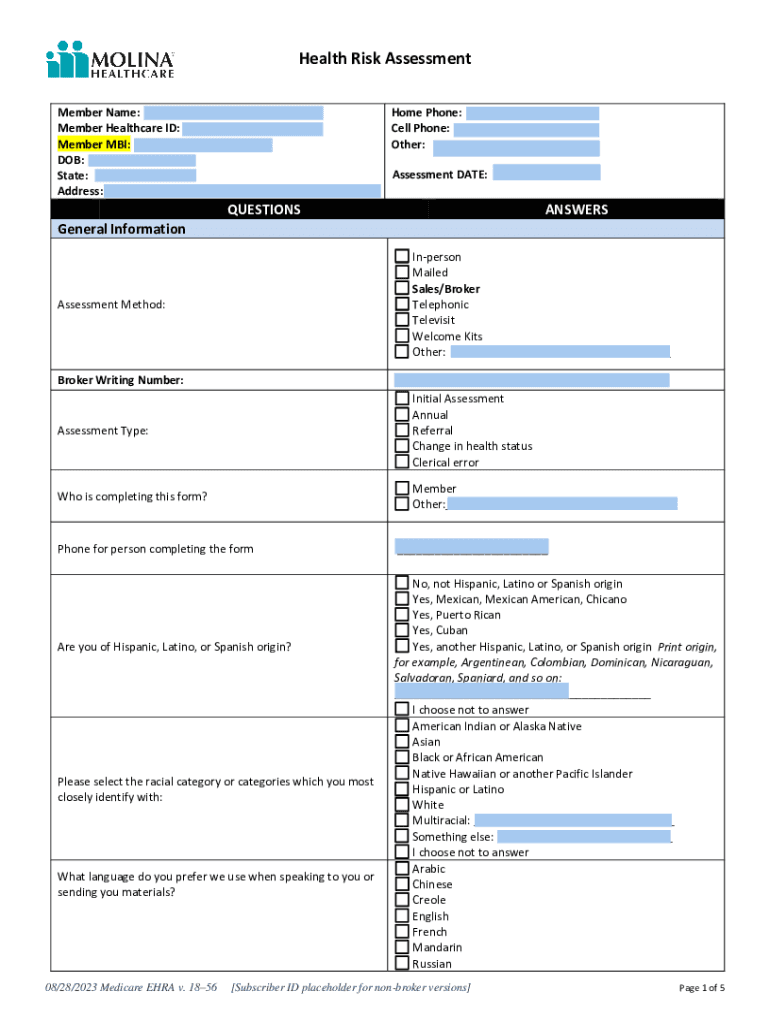







Definition and Meaning
The Employee Health Risk Assessment Questionnaire is a comprehensive form used by organizations to evaluate the health risks and overall wellness of their employees. This tool helps to gather information regarding the personal and health-related data of employees, which includes their demographic details, existing health conditions, lifestyle choices, and social factors that might influence their health. Assessing these aspects allows employers to identify potential health risks and implement preventative health measures, improving workplace productivity and employee well-being.
Steps to Complete the Employee Health Risk Assessment Questionnaire
Completing the questionnaire typically involves several steps to ensure accurate and thorough data collection:
-
Gather Necessary Information: Employees should first collect relevant personal and health information, including any medical history, current medications, and lifestyle habits.
-
Carefully Read Each Question: Understanding each question is crucial. Employees should pay attention to any skipping instructions based on their responses.
-
Answer Honestly: Employees must provide honest and accurate answers to get a realistic assessment of their health risks.
-
Review and Submit: Before submitting, employees should review their answers to ensure completeness and accuracy.
By following these steps, employees contribute to a holistic understanding of their health status that helps in guiding appropriate interventions.
Key Elements of the Employee Health Risk Assessment Questionnaire
Several key components are essential to the structure and function of the Employee Health Risk Assessment Questionnaire:
-
Demographic Information: Collects basic details such as age, gender, and occupation that can influence health outcomes.
-
Health History: This section includes questions about past and current medical conditions, surgeries, and treatments.
-
Lifestyle Choices: Evaluates behaviors such as smoking, alcohol consumption, diet, and exercise that impact health.
-
Mental Health Indicators: Addresses psychological aspects, stress levels, and emotional well-being.
-
Workplace Environment: Assesses the impact of job-related factors on health, such as stress and physical demands.
These elements work together to form a comprehensive picture of an employee's health profile.
How to Use the Employee Health Risk Assessment Questionnaire
The questionnaire serves multiple purposes within an organization:
-
Health Promotion Programs: Data collected can guide the development of targeted health and wellness programs.
-
Individual Health Plans: Information from the questionnaire assists health professionals in creating personalized health improvement plans for employees.
-
Insurance Evaluations: Employers may use these assessments in discussions with health insurance providers to negotiate better rates or enhanced coverage plans.
Understanding how to use the questionnaire effectively can lead to significant improvements in employee health and workplace efficiency.
Who Typically Uses the Employee Health Risk Assessment Questionnaire
The primary users of the Employee Health Risk Assessment Questionnaire include:
-
Human Resources Departments: Utilizes the data to tailor health programs and assess workplace health initiatives.
-
Employee Health Professionals: Doctors and wellness coaches use the questionnaire to better understand employee needs and provide suitable advice.
-
Insurance Companies: Access questionnaire data to assess risk profiles and adjust their service offerings accordingly.
These stakeholders rely on the questionnaire to maintain a healthy workforce and optimize healthcare strategies.


Why Should You Complete the Employee Health Risk Assessment Questionnaire
There are several compelling reasons for both employers and employees to engage with this assessment:
-
Proactive Health Management: Identifying risks early can lead to preventive measures and reduce serious health issues.
-
Workplace Productivity: Healthy employees are often more productive, reducing the frequency of absenteeism.
-
Cost-Effective Healthcare: By targeting specific health risks, employers can help lower overall healthcare costs.
Participation in the assessment benefits individuals by promoting better health and organizations through increased effectiveness.
Software Compatibility with the Employee Health Risk Assessment Questionnaire
Given the digital age, software compatibility is crucial:
-
Document Platforms like DocHub: Supports the editing and signing of digital versions of health risk assessments online.
-
Health Management Systems: Integration with health software allows further data analysis and visualization.
-
Cloud Services: Compatibility with cloud services ensures secure storage and easy access to assessment data.
Ensuring software compatibility facilitates efficient processing of completed questionnaires and further data integration.
Examples of Using the Employee Health Risk Assessment Questionnaire
Organizations can implement the questionnaire in various scenarios:
-
Yearly Employee Health Reviews: Incorporate the questionnaire into annual health assessments to monitor changes in employee wellness.
-
Occupational Health Services: Use during health screenings for employees in high-risk jobs to tailor preventative measures.
-
Pilot Wellness Initiatives: Collect baseline data before implementing new health programs to measure their impact over time.
These examples highlight the questionnaire's versatility, helping organizations maintain healthy work environments.




