




01. Edit your form online
Type text, add images, blackout confidential details, add comments, highlights and more.

Type text, add images, blackout confidential details, add comments, highlights and more.

Draw your signature, type it, upload its image, or use your mobile device as a signature pad.

Send it via email, link, or fax. You can also download it, export it or print it out.
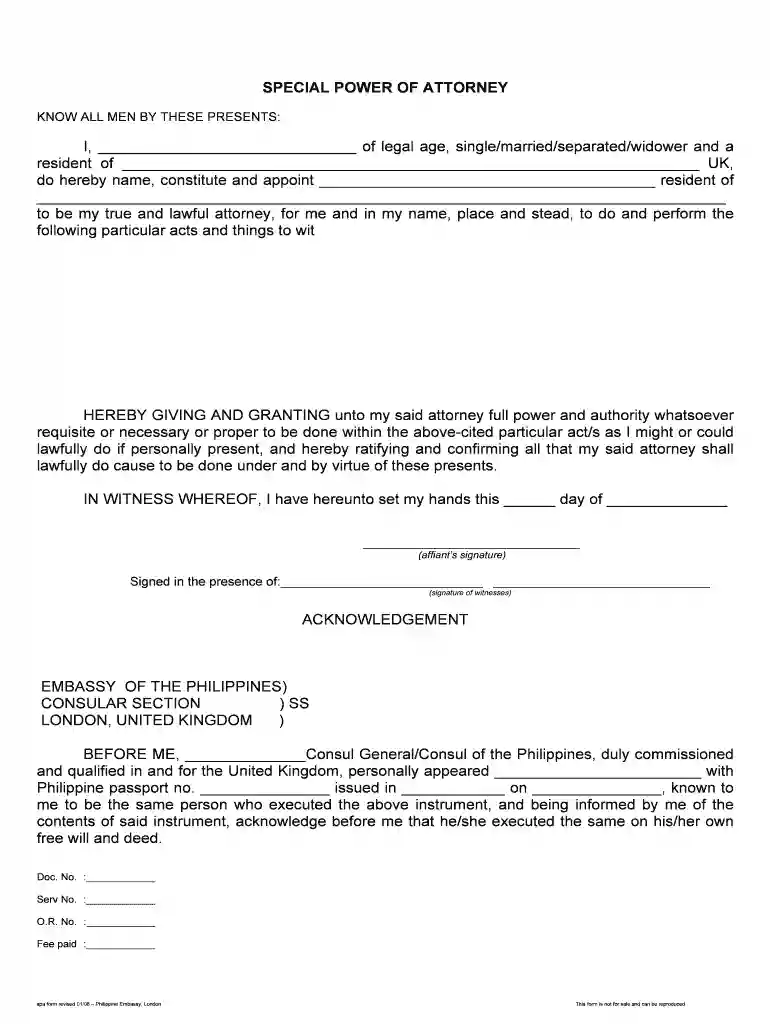
A Special Power of Attorney form, specifically processed through the Philippine Embassy in London, empowers an individual to appoint another person as their attorney-in-fact. This document grants the appointed individual full authority to act on the principal's behalf in specific matters. Commonly, the authority includes handling financial affairs, managing property, or making legal decisions, making it a crucial tool in scenarios where the principal cannot be present. It is essential that this form is properly authenticated by the Philippine Embassy to ensure its validity and acceptance in legal contexts.
Using the Special Power of Attorney (SPA) from the Philippine Embassy in London involves several critical steps to ensure it is legally binding and effective. Once completed and authenticated, the attorney-in-fact can represent the principal in various legal or financial matters specified in the document. For example, if the principal is involved in a real estate transaction in the Philippines but resides in London, the SPA allows their representative to sign documents and make decisions on their behalf. It is important to clearly outline the powers granted to avoid any misuse or legal issues.
Draft the Document:
Include Necessary Details:
Signing and Notarization:
Consular Acknowledgment:
To complete the Special Power of Attorney at the Philippine Embassy in London, you must prepare and present several specific documents:
The Special Power of Attorney provides significant flexibility and convenience for Filipinos abroad. By appointing a trusted representative, individuals can manage crucial affairs in the Philippines without being physically present. This is particularly beneficial for handling time-sensitive or complex transactions, such as selling property or managing legal cases. The SPA’s alignment with Philippine legal standards ensures that decisions made by the attorney-in-fact are recognized and enforceable in relevant jurisdictions.
It is crucial to understand key terms associated with the SPA to ensure clarity and proper use:
There are multiple methods to submit the completed Special Power of Attorney form for authentication:
The Special Power of Attorney form is typically prepared by the principal but needs validation from the Philippine Embassy in London. The embassy’s role is to authenticate the document to ensure it adheres to Philippine legal requirements and can be used effectively in legal and financial transactions within the Philippines. The consular acknowledgment provides a seal of validity, ensuring the document's acceptance.
While the primary process for the Special Power of Attorney involves paper documents, the integration of digital systems by many embassies now allows for parts of the process to be handled digitally:
At DocHub, your data security is our priority. We follow HIPAA, SOC2, GDPR, and other standards, so you can work on your documents with confidence.





by A Katapang 2023 Cited by 2 Amanda utilizes her legal and organizing knowledge to empower, educate, and serve migrant workers and trafficking survivors.
You will pay $50 USD, at the Embassy or Consulate on your day of appointment, for each notary seal required. On the day of your appointment, you must: Bring theRead more
Jun 8, 2026 Williams Street Games was the video game division of Williams Street. In 2009, it was folded into Adult Swim Games.


