




01. Edit your golf handicap calculator online
Type text, add images, blackout confidential details, add comments, highlights and more.

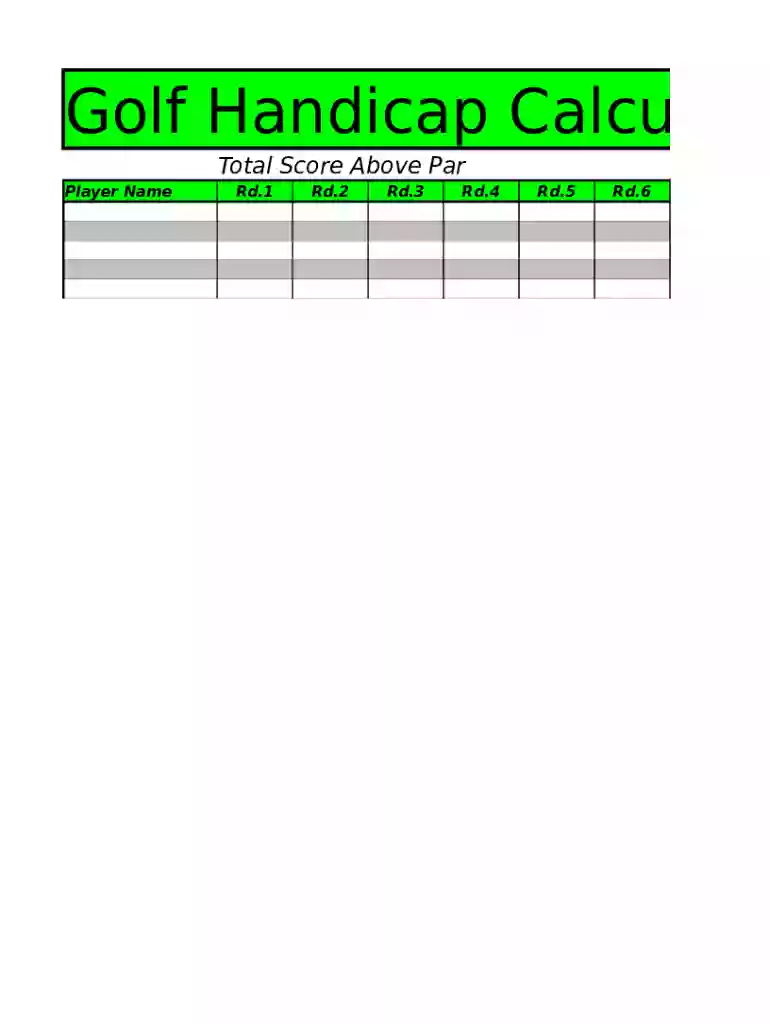
Type text, add images, blackout confidential details, add comments, highlights and more.

Draw your signature, type it, upload its image, or use your mobile device as a signature pad.

Send andrew meyer golf handicap calculator via email, link, or fax. You can also download it, export it or print it out.
A golf handicap is a numerical measure of a golfer's potential ability, calculated in relation to par over a series of games. It enables players of varying skill levels to compete on an equal footing. The lower the handicap, the more skilled the player. Understanding how to calculate your golf handicap is crucial for accurately assessing your development as a player.
To calculate your handicap, you need to follow a structured process using specific data:
Handicap Differential = (Adjusted Gross Score - Course Rating) x 113 / Slope RatingGolf handicaps are used by amateur players, clubs, and those organizing tournaments to ensure fair competition. Players of varying skill levels can use handicaps to participate in the same tournament or match, leveling the playing field and making the game enjoyable for everyone involved.
Understanding specific terms relevant to golf handicaps is essential:
The United States Golf Association oversees the rules and regulations governing the calculation and use of golf handicaps. Golfers should adhere to these rules to ensure their handicap is recognized in competitive play. Failure to comply with these guidelines could result in disqualification from official events.
Knowing how to figure out your golf handicap can significantly impact your growth and enjoyment of the game. It allows you to monitor improvement, compare performance under different conditions, and apply your skills in competitive settings. Accurately calculated handicaps ensure fair play, fostering a spirit of camaraderie and sportsmanship.
Consider a golfer who wants to play in both local tournaments and casual rounds with friends. By maintaining an accurate handicap, they can confidently compete in official events and enjoy matches with others of varying skill levels. For clubs organizing tournaments, knowing members’ handicaps helps in creating balanced and exciting competition.
While the basic principles of calculating a golf handicap are consistent worldwide, the U.S. follows specific guidelines set by the USGA. American golfers must ensure their calculations align with national standards for their handicaps to be recognized across the country, particularly when participating in tournaments or club events.
While the guidelines for calculating handicaps provide a standard approach, there may be exceptions based on course uniqueness or player circumstances. For instance, applying scores from match play or unexpected weather conditions may require adjustments to ensure an equitable handicap representation.
Through these comprehensive steps and considerations, individuals can master the process of determining their golf handicap, shaping not only their personal play but also enhancing their participation in the wider golfing community.
At DocHub, your data security is our priority. We follow HIPAA, SOC2, GDPR, and other standards, so you can work on your documents with confidence.



To figure out the handicap, a golfer needs to play a minimum of 10 rounds. Many golfers find their handicap drops precipitously at the beginning of the time
To use: simply enter your gross score for a week, select your gender, select the course you played that week, and click the Add Score button. The values willRead more


