




01. Edit your pa schedule ue 2024 online
Type text, add images, blackout confidential details, add comments, highlights and more.

Type text, add images, blackout confidential details, add comments, highlights and more.

Draw your signature, type it, upload its image, or use your mobile device as a signature pad.

Send pa schedule ue form 2024 via email, link, or fax. You can also download it, export it or print it out.
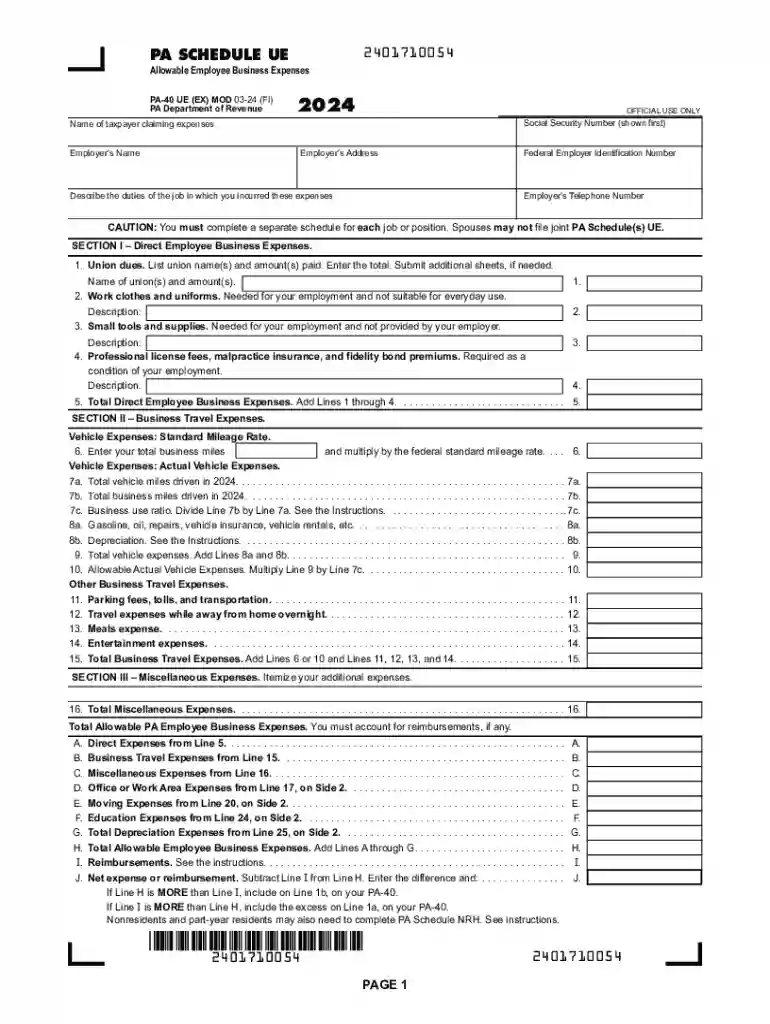
The 2024 PA Schedule UE, formally known as the Allowable Employee Business Expenses form, is a document used to report unreimbursed business expenses for employees in Pennsylvania. It's part of the PA-40 tax return and is essential for individuals who wish to deduct business-related expenses that their employers do not reimburse. This form includes categories such as travel, education, work area expenses, and more, providing Pennsylvania taxpayers the opportunity to reduce their taxable income.
Filing the PA Schedule UE can significantly affect the amount of taxable income for those who incur substantial business expenses. By accurately reporting these costs, individuals can potentially lower their tax liability. It's crucial for employees in roles that require extensive traveling, additional education, or maintaining a home office. This form allows them to recoup some expenses, ensuring they are not overtaxed on compensation already utilized for necessary business activities.
Gather Required Documents: Collect receipts, invoices, and any records of expenses related to your employment that were not reimbursed by your employer.
Understand Eligible Expenses: Familiarize yourself with what constitutes allowable expenses, such as lodging, meals while traveling for work, and supplies needed for your job.
Fill Out the Form: Enter each qualifying expense into the appropriate section of the PA Schedule UE. Ensure accuracy to avoid discrepancies.
Attach Supporting Documentation: In case of an audit, it’s essential to attach all receipts and proof of payments to validate the deductions claimed.
Review and Submit: Double-check all entries for accuracy before submitting with your PA-40 return. Corrections after submission can be complicated and time-consuming.
To utilize the Schedule UE, taxpayers must be Pennsylvania residents with costs unreimbursed by their employers. Expenses claimed must be ordinary and necessary for their responsibilities at work. Furthermore, each expense should be well-documented and substantiated with proofs like receipts and invoices.


Common users include:

Understanding the primary components of the Schedule UE is essential for correctly reporting expenses:
All entries on the PA Schedule UE must adhere to Pennsylvania Department of Revenue (DOR) guidelines. Misreporting or inflating expenses can lead to penalties or audits. It's important to keep precise records and seek clarification from a tax professional if there are uncertainties about eligibility.
The PA Schedule UE should be submitted with the PA-40 tax return by the due date, typically April 15. Extensions are possible, but late submissions without an extension can incur penalties. Taxpayers can file this form online or by mail. Electronic submissions often allow faster processing and reduce paper clutter.
Inaccurately reporting or failing to provide documentation upon request can lead to penalties. If discrepancies are discovered, taxpayers might be subject to fines or a reassessment of their tax return, potentially increasing their tax liability.
Tax software like TurboTax and QuickBooks can assist with completing the Schedule UE. These platforms offer step-by-step guidance and help ensure all deductible expenses are accounted for accurately, reducing the risk of errors and omission.
Consider a freelance consultant traveling regularly for work. They could report gasoline, lodging, and dining expenses while on business trips. Accurate record-keeping would entail saving receipts and noting travel purposes to substantiate these claims on the Schedule UE.
While the Schedule UE is specific to Pennsylvania, each state's approach to handling unreimbursed employee expenses can vary. Consulting a local tax advisor or resources provided by the Pennsylvania DOR can help navigate state-specific requirements and optimize tax returns.
The above sections provide guidance on effectively understanding and utilizing the 2024 PA Schedule UE, enhancing its benefits for eligible taxpayers.
We've got more versions of the pa schedule ue 2024 form. Select the right pa schedule ue 2024 version from the list and start editing it straight away!
At DocHub, your data security is our priority. We follow HIPAA, SOC2, GDPR, and other standards, so you can work on your documents with confidence.


You can claim a deduction for an unreimbursed employee business expense by filing a PA Schedule UE, Allowable Employee Business Expenses form along with your PARead more
Mar 15, 2021 Review the instructions from the PA Department of Revenue for completing the PA-40 Schedule UE to learn more about allowable employee businessRead more


