







Definition & Meaning
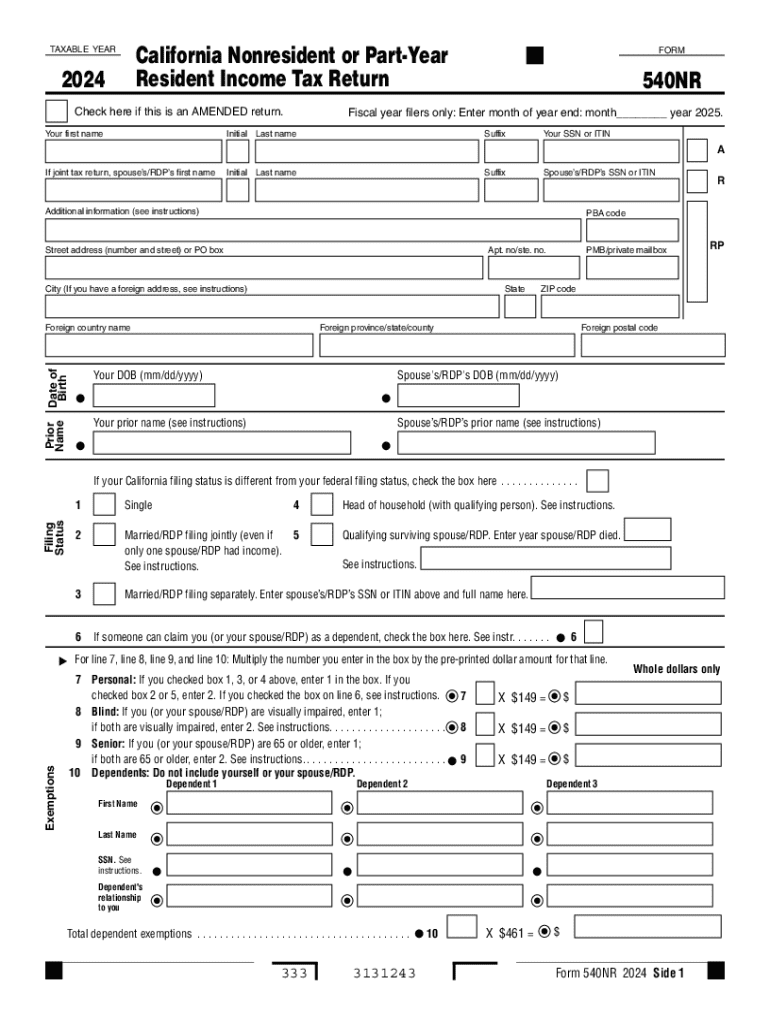
The 2024 Form 540NR California Nonresident or Part-Year Resident Income Tax Return serves as a crucial document for individuals who have either nonresident or part-year resident status in California. This form allows taxpayers to report their income, deductions, exemptions, and liabilities specific to their residency status, ensuring they comply with California state tax laws. It is tailored to provide clarity and structure for taxpayers whose income is derived from both within and outside of California during the tax year.
How to Use the Form
Understanding the Form Layout
The form consists of numerous sections, each designated for specific financial details such as:
- Personal Information: Capture essential details, including your name, address, and Social Security Number.
- Filing Status: Options are provided for single, married, filing jointly, etc., aligning with federal filing status.
- Income Reporting: Declare all income earned during the year, both from California sources and out of state.
- Exemption Calculations: Add claims for exemptions and dependents.
- Credits and Adjustments: Detail any credits or adjustments applicable to your tax situation.
Completing the Form
To accurately complete the form, gather all necessary financial documents, including W-2s, 1099s, and records of any other income. Follow instructions to enter this information precisely in the respective sections of the form.
How to Obtain the Form
Access Methods
Form 540NR is accessible through several channels:
- State Government Websites: Download directly from California’s Franchise Tax Board (FTB) site.
- Tax Preparation Software: Integrated into platforms like TurboTax or H&R Block.
- Postal Mail: Request a physical copy via mail from the FTB or obtain one from local tax offices.
Benefits of Different Access Options
- Digital Downloads: Quick access and ease of printing ensure timely filing.
- Tax Software Integration: Assists in automatic calculation and error checking.
- Physical Copies: Useful for those who prefer manual completion and mailing.
Steps to Complete the Form
- Gather Documentation: Compile all required tax documents, such as income statements and past tax returns.
- Review Instructions: Carefully read the included instructions to comprehend any recent changes or updates.
- Fill Out Personal and Filing Status Sections: Begin with the basic data and select the correct filing status.
- Enter Income Data: List all pertinent income, ensuring to differentiate between California and non-California sources.
- Calculate Deductions and Credits: Use provided worksheets and instructions to determine allowable deductions.
- Finalize and Review: Double-check all entries for accuracy and ensure compliance with instructions.
Filing Deadlines / Important Dates
- Filing Deadline: The standard deadline is April 15, unless it falls on a weekend or holiday, in which case it is extended.
- Extension Requests: If unable to file by the deadline, submit a request for an extension to October 15.
- Payment Due Dates: Ensure any taxes due are paid by the normal filing deadline to avoid penalties.
Who Typically Uses the Form


Eligible Taxpayers
- Individuals who moved into or out of California during the tax year.
- Nonresidents who earned California-based income, such as wage earners, freelancers, or service providers.
- Part-year residents managing estate or trust income from California sources.
Unique Scenarios
- Students: Studying temporarily in the state may require partial filing.
- Seasonal Workers: Those who work in California part of the year.
Key Elements of the Form
Critical Sections
- Income Allocation Worksheet: Assists in distinguishing income earned inside vs. outside California.
- Schedule CA (540NR): Breaks down changes to federal adjusted gross income specifically for California.
Highlights
- Detailed sections for health coverage verification and direct deposit arrangement for refunds.
Penalties for Non-Compliance
- Late Filing: Fines can accrue based on elapsed time past the due date.
- Underpayment: Interest on unpaid taxes may be applied if the remaining tax liability isn’t settled by the due date.
Avoiding Penalties
- Ensuring timely and accurate filings can prevent the imposition of additional financial burdens.
- Taxpayers should leverage software checks or professional tax services to mitigate mistakes.




