Definition & Meaning
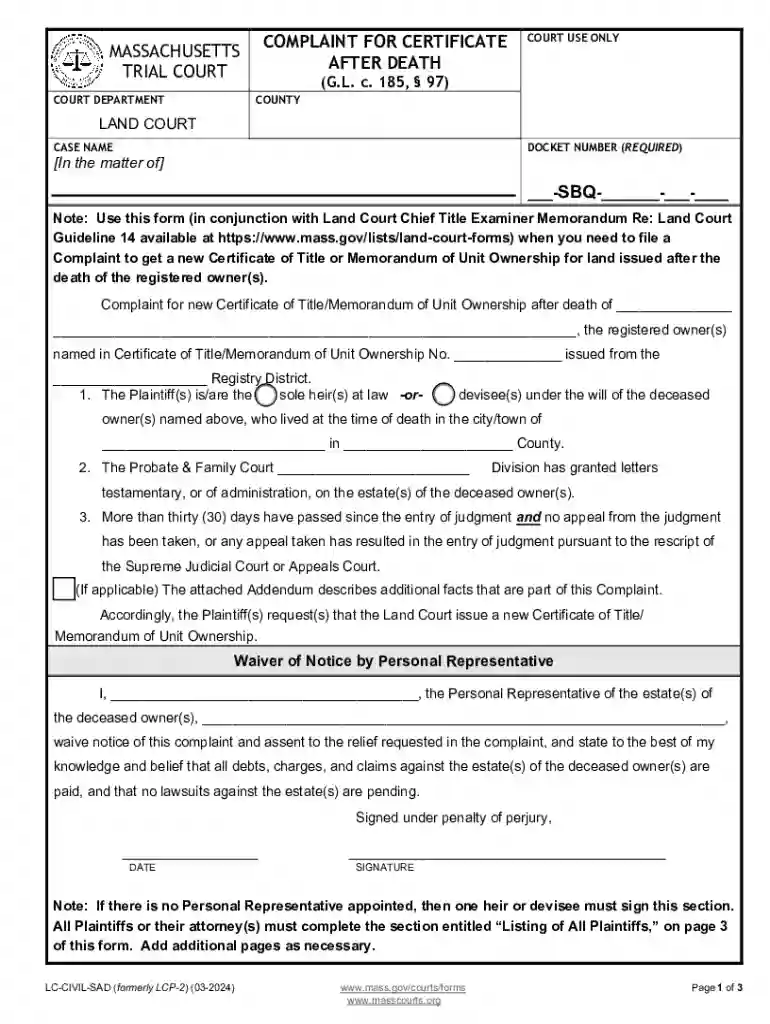
The "Complaint for Certificate After Death" is a legal form used primarily in Massachusetts to request a new certificate of title or memorandum of unit ownership following the death of the registered owner. This document facilitates the legal transition of property ownership to the rightful heirs or designated representatives. It ensures all legal standards and requirements are met for a smooth transfer of ownership.
Purpose of the Complaint
- Legal Transition: Assists in the transfer of ownership from a deceased individual to the rightful heirs.
- Property Rights: Helps establish the legal rights of heirs or beneficiaries to the property.
- Title Updating: Necessary for updating public records and titles to reflect new ownership.
How to Use the Complaint for Certificate After Death
To effectively utilize this form, one must adhere to specific procedural steps which ensure proper filing and processing.
Step-by-Step Usage Guide
- Obtain Necessary Information: Gather details about the deceased, including full name, date of death, and details of the property in question.
- Complete the Form: Fill out the form thoroughly, ensuring all sections are completed with accurate information.
- Attach Supporting Documents: Include certified copies of the death certificate and any pertinent probate court documents.
- File with Court: Submit the form to the appropriate probate court in the jurisdiction where the deceased resided.
Considerations
- Ensure accuracy in the provided details to avoid processing delays.
- Consult with a legal expert if unclear about any part of the form to ensure compliance with legal standards.
Steps to Complete the Complaint for Certificate After Death
Completing this form requires attention to detail and proper documentation.
Detailed Steps
- Personal Information: Begin by entering the personal information of the deceased, including legal name and date of death.
- Property Details: Provide a description of the property for which the title change is requested.
- Probate Details: Indicate whether probate proceedings have been initiated and include any docket numbers.
- Personal Representative Information: If applicable, include information for the personal representative handling the estate.
- Signatures: Gather required signatures from all interested parties, including heirs.
Documentation to Include
- Certificate of Death
- Probate court documents
- Any legal waivers from involved parties
Key Elements of the Complaint for Certificate After Death
Several critical elements must be acknowledged to ensure the document's acceptance by legal authorities.
Essential Components
- Decedent Information: Focuses on details regarding the deceased.
- Property Description: Provides specifics about the property or asset involved.
- Legal Proceedings: Covers necessary details about ongoing or completed probate proceedings.
- Interested Parties: Lists individuals who may have a vested interest in the property.
Common Errors to Avoid
- Missing required signatures can invalidate the form.
- Incomplete information can delay processing.
- Failing to include necessary documentation, such as death certificates and probate orders.
State-Specific Rules for the Complaint for Certificate After Death
While the form is standard in Massachusetts, its application can vary based on state-specific rules or regulations.
Variations by State
- Massachusetts Only: Primarily used within Massachusetts, aligning with local property and probate laws.
- Documentation Requirements: Other states may have different requirements regarding documentation or approval processes.
Legal Considerations
- Ensure that the form meets all state-specific legal stipulations by consulting with an attorney familiar with local laws.
- Recognize differing timelines and submission processes depending on local legal frameworks.
Important Terms Related to the Complaint for Certificate After Death
Understanding specific legal terms can aid in the effective completion and submission of the form.
Relevant Legal Terminology
- Decedent: The individual who has passed away.
- Heir: A person legally entitled to the deceased's property.
- Probate: The legal process of administering the deceased's estate.
- Personal Representative: An individual appointed to manage the estate.
Insights
- Familiarity with these terms can facilitate the effective communication and completion of the form.
- Proper use of legal language ensures clarity and precision in the documentation process.
Required Documents
A comprehensive list of documents is crucial for the successful filing and acceptance of the form.
Mandatory Documentation
- Death Certificate: A certified copy proving the passing of the individual.
- Probate Documentation: Any court documents related to the estate's administration.
- Legal Waivers: Signed statements from heirs or interested parties, if applicable.
Additional Documentation Tips
- Always provide original or certified copies to avoid questions about authenticity.
- Double-check document accuracy and completeness before submission to prevent delays.
Filing Deadlines / Important Dates
Adhering to specific deadlines is essential for compliance and successful processing of the form.
Key Deadlines
- Initial Submission: Typically required soon after death, conforming to local mandate timelines.
- Court Dates: Any associated court proceedings or hearings must be attended on specified dates.
Time-Sensitive Procedures
- Late submissions may result in additional fees or the rejection of the form.
- Consider any local holidays or court closures to ensure timely filing.
By understanding these comprehensive elements, individuals can accurately and efficiently navigate the "Complaint for Certificate After Death," ensuring a seamless transfer of property ownership in compliance with legal standards.