






Definition and Purpose of the 2023 IC-002 Form 4T
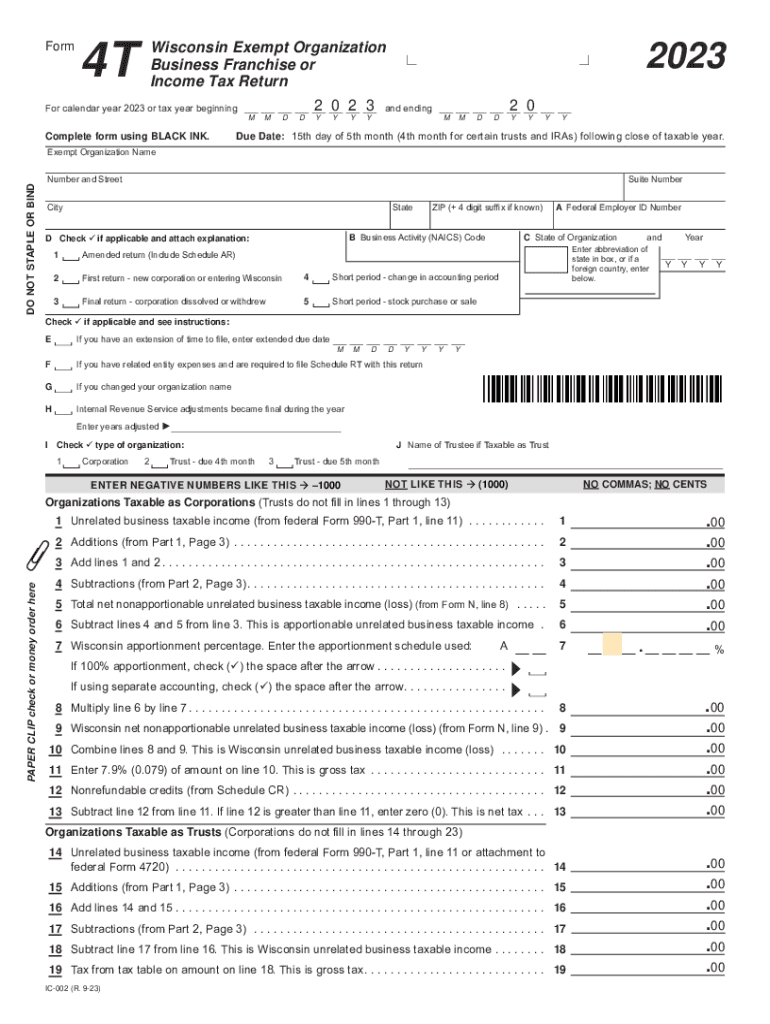
The 2023 IC-002 Form 4T, also known as the Wisconsin Exempt Organization Business Franchise or Income Tax Return, is essential for exempt organizations operating within Wisconsin. This form is specifically designed for organizations that need to report unrelated business taxable income. While these entities are generally exempt from income taxes, they must report any revenue derived from activities unrelated to their primary exempt purpose. The 2023 IC-002 Form 4T provides a structured layout to help organizations detail this income, along with any additions, subtractions, and applicable credits.
How to Obtain the Form
Acquiring the 2023 IC-002 Form 4T is straightforward. The form is available online through the Department of Revenue's website. Organizations can download the fillable PDF version, which is convenient for digital completion and submission. Alternatively, a paper version can be requested from the department for those who prefer to fill out forms manually. Ensure that you have the latest version of the form, as using outdated forms can result in processing delays.
Steps to Complete the Form
-
Gather Required Information: Before filling out the form, collect all necessary documentation that reflects your organization’s income, expenses, and credits related to unrelated business activities.
-
Fill Out Income Section: Enter details of the unrelated business taxable income. This includes revenue from sales or services unrelated to the organization’s primary purpose.
-
Complete Additions and Subtractions: Report any modifications to income such as state disallowed deductions or other adjustments.
-
Apply Credits: If applicable, document any tax credits that your organization is entitled to, as this can reduce the overall tax liability.
-
Verify and Submit: Double-check all entered information for accuracy, sign the form, and submit by the due date. Ensure submission aligns with the filing method approved by the Wisconsin Department of Revenue.
Who Typically Uses the Form
The 2023 IC-002 Form 4T is predominantly used by tax-exempt organizations such as nonprofits and certain governmental entities in Wisconsin. These may include charities, educational institutions, and religious organizations that engage in income-generating activities outside their primary exempt functions.


Filing Deadlines and Important Dates
The form must be filed annually. For organizations following a calendar year, the due date is typically May 15th of the following year. If your organization operates on a fiscal year, the form is due by the 15th day of the fifth month after the close of the fiscal year. Extensions may be available but must be applied for beforehand.
Required Documents and Information
To ensure a complete submission, gather:
- Financial statements detailing all sources of income.
- Documentation of expenses related to generating unrelated business income.
- Any correspondence that may affect tax credit eligibility.
- Current identification details of the organization, including a registered business address and tax identification number.
Form Submission Methods
Organizations have the flexibility to file the 2023 IC-002 Form 4T using either digital or traditional methods:
-
Online Submission: Available through the Wisconsin Department of Revenue’s website. Online filing offers faster processing times and instant confirmation of receipt.
-
Mail Submission: Printed forms can be mailed to the relevant department address. Ensure that all pages are signed and dated.
Penalties for Non-Compliance
Failure to file the 2023 IC-002 Form 4T by the provided deadline can result in penalties and interest. Late submissions may incur fines based on a percentage of the tax owed. Continued non-compliance could impact an organization's tax-exempt status, making timely and accurate submission crucial.
Integration with Document Management Tools
Users can leverage platforms like DocHub to fill, sign, and manage the 2023 IC-002 Form 4T digitally. DocHub offers a suite of tools for editing and signing documents, which can streamline the tax return process for exempt organizations. Given the need for precision and security in tax documents, integrating such tools ensures accuracy and ease of collaboration among team members responsible for filing.