





Definition and Meaning of a Bill of Sale
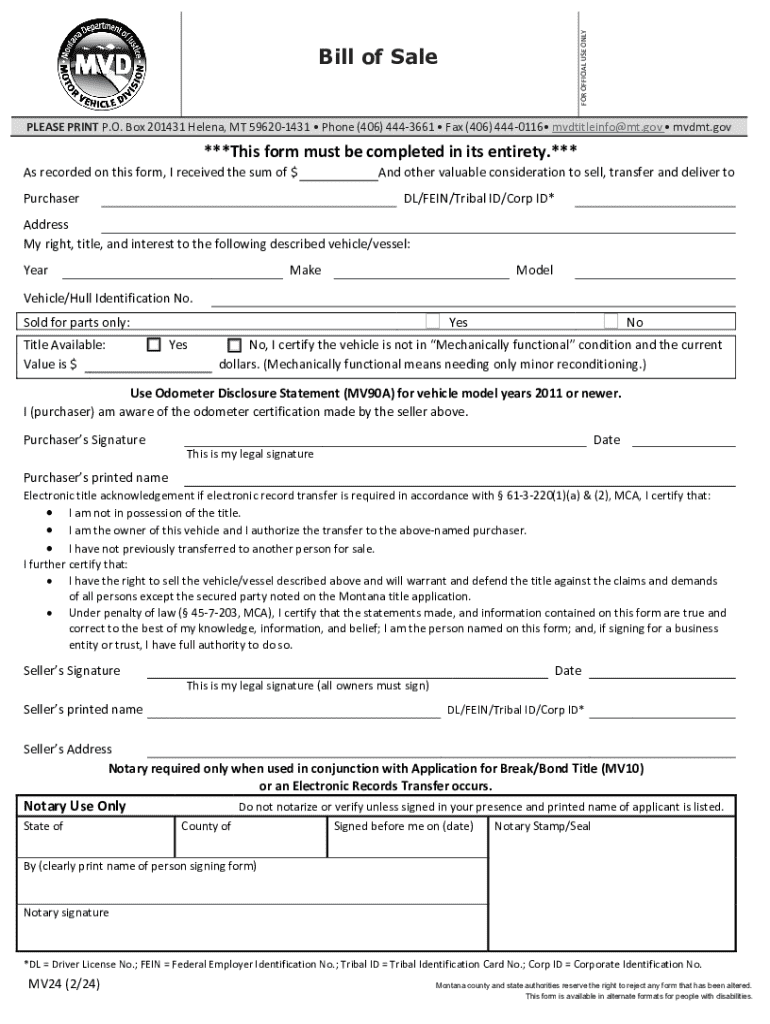
A Bill of Sale constitutes a legal document that serves as tangible evidence of the sale, transfer, or delivery of ownership for vehicles or vessels. It details critical transaction information, including the buyer and seller's names, the asset's description, and terms of sale, validating ownership transfer in legal contexts. In Montana, the form is mandatory for vehicle and vessel transactions, documenting the odometer reading and providing a legal framework for ownership disputes. Such documents are essential in affirming the exchange, safeguarding both parties against potential misunderstandings about the terms and conditions of the sale.
Steps to Complete the Bill of Sale
- Gather Required Information: Collect details about the purchaser and seller, including contact information and identification numbers.
- Describe the Vehicle or Vessel: List the make, model, year, and Vehicle Identification Number (VIN). Specify the vessel registration numbers if applicable.
- Input Sale Terms: Note the transaction date, sale price, and any relevant conditions, such as warranties or "as-is" clauses.
- Record Odometer Reading: Termed the 'Odometer Disclosure’, this step is crucial in motor vehicle sales to legally capture mileage.
- Ensure Legal Certifications and Signatures: Secure signatures from both parties to verify agreement, ensuring compliance with legal ownership transfer mandates.
Key Elements of the Bill of Sale
A Bill of Sale must encompass essential elements to ensure its validity and enforceability. This includes the specific identification of the asset, the buyer's and seller's full names and addresses, the date of transaction, and clear terms of sale. Notably, the legally binding signature sections are crucial, as well as additional details such as the condition status of the item and whether there are any liens or outstanding claims. Each element collectively forms a comprehensive legal document, eliminating ambiguities that could arise post-transaction.
Importance of the Bill of Sale
Executing a Bill of Sale is vital as it delineates the responsibilities and rights of each party involved in the transaction, serving as a protective measure against future disputes. It provides a written record that details the exact terms under which the asset was transferred, which becomes legally binding once signed. Furthermore, this document is invaluable in situations requiring proof of ownership, such as registration processes or legal disputes, affirming the integrity of the transaction.
State-Specific Rules for the Bill of Sale
Different states, including Montana, impose specific regulations for what a Bill of Sale must include. For instance, Montana necessitates odometer disclosure and could require notarization for certain types of transactions. Variations across states mean that while some states have template forms, others may demand additional assurances or disclosures. Awareness of legislative differences is crucial, particularly for transactions involving high-value assets like vehicles or vessels, to ensure compliance with local laws.
Legal Use of the Bill of Sale
Legally, a Bill of Sale serves as proof of transaction, often required for asset registration or in court to resolve disputes over ownership. It binds both parties to the transaction terms and can confirm details such as the sale price, item condition, and responsibilities concerning defects or warranty. This document assumes heightened importance in litigation related to ownership rights, acting as documentary evidence of the agreed terms at the time of sale.
Who Typically Uses the Bill of Sale?
Vendors, private sellers, and purchasers engaging in transactions of high-value items like vehicles or boats commonly utilize Bills of Sale. The form is instrumental when assets change hands but is equally important for individuals who frequently trade used vehicles or dealers selling pre-owned inventory, assuring all involved parties have a verifiable record of the transaction. Legal professionals and financial institutions may also reference these documents during ownership verification or dispute resolution.


Required Documents for Completing a Bill of Sale
To successfully generate a Bill of Sale, one typically needs:
- Personal identification for both parties (driver's license or state ID)
- Vehicle title documentation or vessel registration
- Completed odometer reading statement
- Pertinent transaction details including sale price and asset condition
- Any existing loan payoff documentation if there's a lien on the asset
These documents collectively ensure all necessary information is captured, aiding in smooth transaction processing and state registration requirements.
Examples of Using the Bill of Sale
Consider a case where a Montana resident sells a used car: the successful buyer and seller will complete a Bill of Sale citing the vehicle's ID, purchase price, and sale conditions, thus safeguarding both parties from future discrepancies. Another instance is in vessel sales, where the document captures intricate details such as boat specifications and legal ownership transfers. By providing complete transactional documentation, the Bill of Sale minimizes the risk of later conflicts and supports buyer confidence and seller peace of mind.