




01. Edit your dlse nte online
Type text, add images, blackout confidential details, add comments, highlights and more.

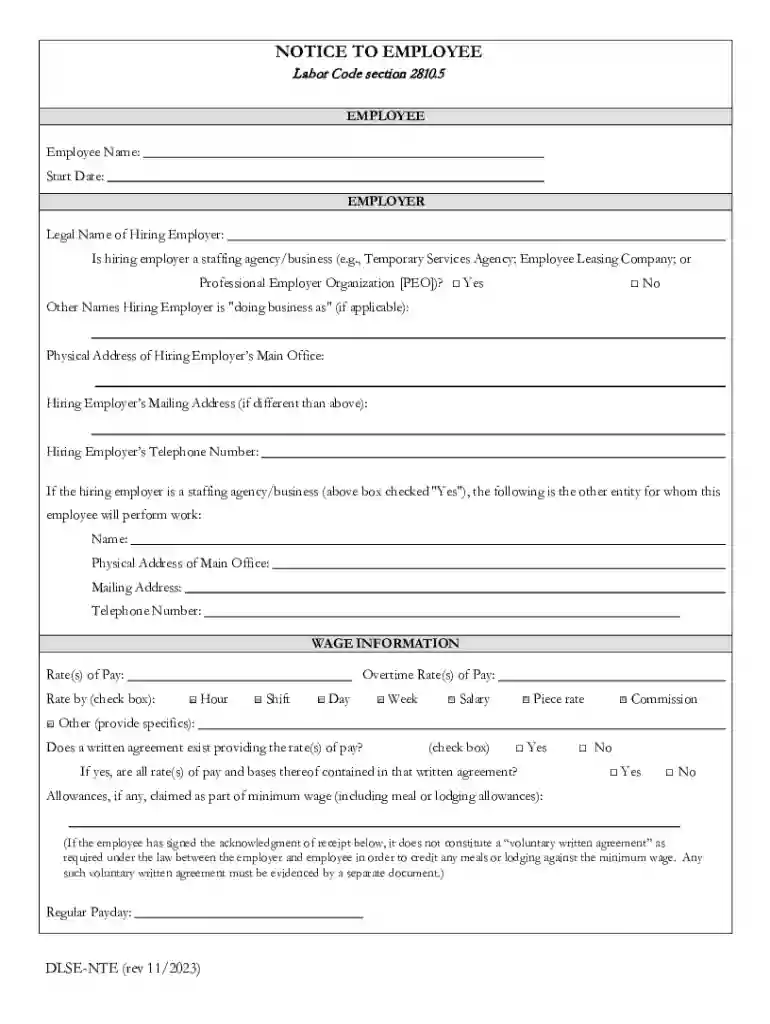
Type text, add images, blackout confidential details, add comments, highlights and more.

Draw your signature, type it, upload its image, or use your mobile device as a signature pad.

Send it via email, link, or fax. You can also download it, export it or print it out.
A "Notice to Employee" is a legally mandated document that informs employees of critical employment details as specified in Labor Code section 2810.5. It typically includes essential information such as employee and employer identification, wage details, workers' compensation coverage, and paid sick leave entitlements. This document serves as an official communication channel to provide employees with transparency regarding their employment conditions and rights. The Notice to Employee is an important part of employment paperwork because it ensures that both the employer and the employee have a clear and mutual understanding of employment terms. It helps prevent misunderstandings and disputes by clearly outlining the terms of employment, which can include job responsibilities, pay rates, and work schedule expectations.
The Notice to Employee contains several critical components that ensure comprehensive communication of employment terms:
The legal use of a Notice to Employee is anchored in compliance with labor laws. It is a foundational document to uphold the employer's obligation to inform employees of their rights and working conditions. Through this notice, employers fortify their defense against potential labor disputes by proving that proper notice was provided. This legal requirement also assures employees that they are informed of their entitlements under the law. Failure to provide this notice can expose employers to legal actions, fines, and penalties. Therefore, it is vital for businesses to include this notice in their hiring process as it is both a legal obligation and a best practice for maintaining transparency in employment.
Using the Notice to Employee involves several clear steps to ensure that the communication is effective:
Completing the Notice to Employee requires attention to detail and understanding of labor law requirements:
State-specific rules may affect the contents or delivery of the Notice to Employee. Each state might have unique requirements regarding wage disclosure, minimum wage laws, or additional employee rights. Employers should familiarize themselves with their state's labor laws to ensure compliance. For instance, California mandates compliance with Labor Code section 2810.5, which can have distinct requirements compared to other states. Local regulations can influence what must be disclosed, such as employment classification or specific benefits contributions. Ensuring that the notice adheres to state laws helps employers avoid non-compliance penalties.
The Notice to Employee is commonly used by employers, especially human resources departments, in organizations. It is an integral part of the onboarding process for new hires. Legal and compliance teams also refer to it to ensure the business adheres to state and federal labor laws. Additionally, employees use the notice to understand their wages, benefits, and rights, allowing them to confirm that they are being compensated according to their employment agreement. This notice serves both the employer and employee by ensuring clarity and legality in their working relationship.


Consider the case of a new hire in a manufacturing company. The HR team provides a Notice to Employee outlining the new employee’s hourly wage, overtime policies, and workers' compensation information. This document also details the company's sick leave policy, aligning with state regulations. The new hire reviews the document, signs it to confirm understanding, and keeps a copy for personal records. In another example, a tech company uses the notice to communicate wage changes due to a promotion, ensuring the employee is informed of the new terms in writing and compliant with labor law requirements.
Failing to provide a Notice to Employee or providing an incomplete notice can result in significant penalties. Employers might face fines from labor boards or even lawsuits for failure to comply with labor laws. The lack of documentation could lead to disputes over wages or working conditions. Non-compliance not only has legal repercussions but also affects employer credibility and employee trust. Employers must ensure that they adhere to all regulations to avoid the financial and reputational damage that comes with non-compliance.
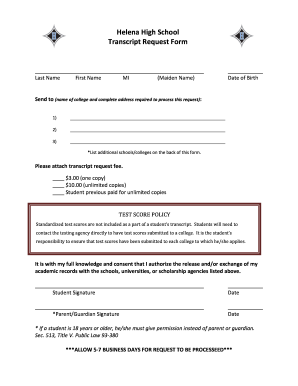
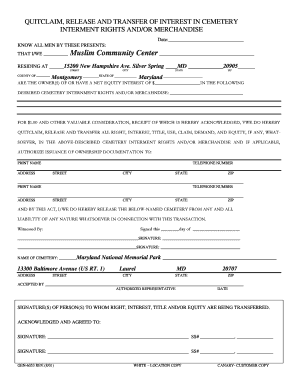
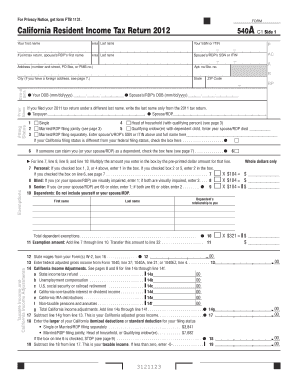
We've got more versions of the dlse nte form. Select the right dlse nte version from the list and start editing it straight away!
At DocHub, your data security is our priority. We follow HIPAA, SOC2, GDPR, and other standards, so you can work on your documents with confidence.
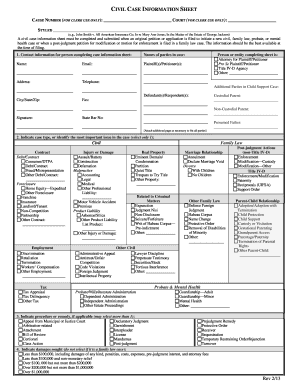


Labor Code section 2810.5(b) requires that the employer notify you in writing of any changes to the information set forth in this Notice within seven calendarRead more
Jan 1, 2026 On or before February 1, 2026, and each year after that, an employer must provide employees a required workplace rights notice.


