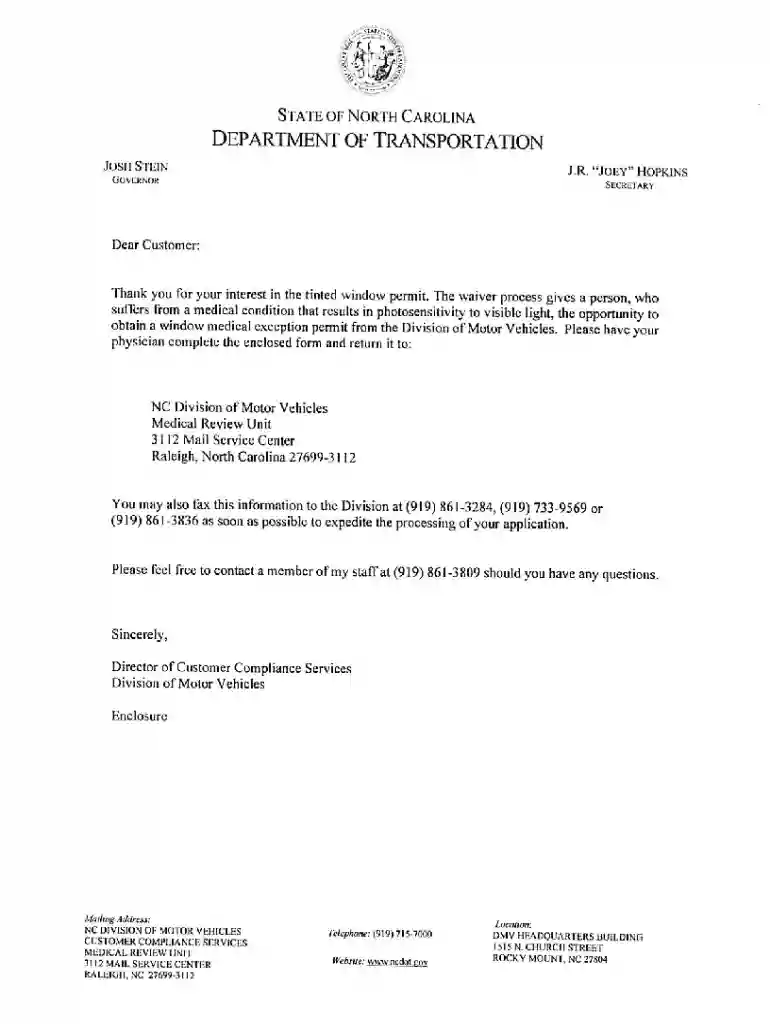
01. Edit your nc medical exemption window tint online
Type text, add images, blackout confidential details, add comments, highlights and more.

Type text, add images, blackout confidential details, add comments, highlights and more.

Draw your signature, type it, upload its image, or use your mobile device as a signature pad.

Send nc tint waiver via email, link, or fax. You can also download it, export it or print it out.
A Window Tint Waiver is a document that allows the legal use of window tints on vehicles beyond the standard limits set by state regulations. This waiver typically caters to individuals with medical conditions that necessitate reduced sunlight exposure. The waiver varies by state, and applicants must meet specific criteria to be eligible. By understanding the fundamental purpose of the waiver, applicants can better navigate the application requirements.
Standard window tinting laws regulate the amount of light allowed through vehicle windows to ensure driver visibility and safety. The waiver provides an exemption from these restrictions due to medical necessities, ensuring comfort and safety for affected individuals.
The utilization of a Window Tint Waiver requires understanding the responsibilities and privileges it grants. Primarily, it permits the vehicle owner to install window tints that exceed the normal legal limits.
While the waiver provides additional privileges, it does not exempt the vehicle owner from all legal responsibilities. Drivers must still comply with other traffic laws and remain aware of their surroundings, ensuring safety on the road.
Obtaining a Window Tint Waiver involves a specific application process which varies by state. Typically, this process ensures that only those with legitimate medical needs receive the waiver.
Processing times may vary based on the state and completeness of the application. Typically, it takes a few weeks to receive a decision, so applicants should apply well in advance of any planned vehicle modifications.
Understanding the terminology associated with the Window Tint Waiver can aid applicants and waiver holders in navigating related processes and legal stipulations.
Each state in the U.S. has different regulations governing window tint waivers. These rules dictate the application process, eligibility, and specific allowances under the waiver.
To obtain specific details, applicants should consult their local DMV or equivalent agency's website or contact them directly for guidance on state-specific rules and processes.
Applicants need to prepare and compile several important documents before submitting their application for a Window Tint Waiver.
In certain cases, additional documents might be necessary, such as proof of vehicle ownership or past medical records supporting the current certification.
Each state designates a specific governmental department or agency responsible for the issuance of the Window Tint Waiver.
In some states, collaboration between health departments and the DMV ensures that all medical exemptions are valid and up-to-date.
Failing to comply with the regulations tied to the Window Tint Waiver can result in penalties, which may vary by state.
Maintaining up-to-date documentation, understanding the terms of the waiver, and adhering strictly to state guidelines can help prevent penalties.
We've got more versions of the nc medical exemption window tint form. Select the right nc medical exemption window tint version from the list and start editing it straight away!
At DocHub, your data security is our priority. We follow HIPAA, SOC2, GDPR, and other standards, so you can work on your documents with confidence.