







Definition & Meaning
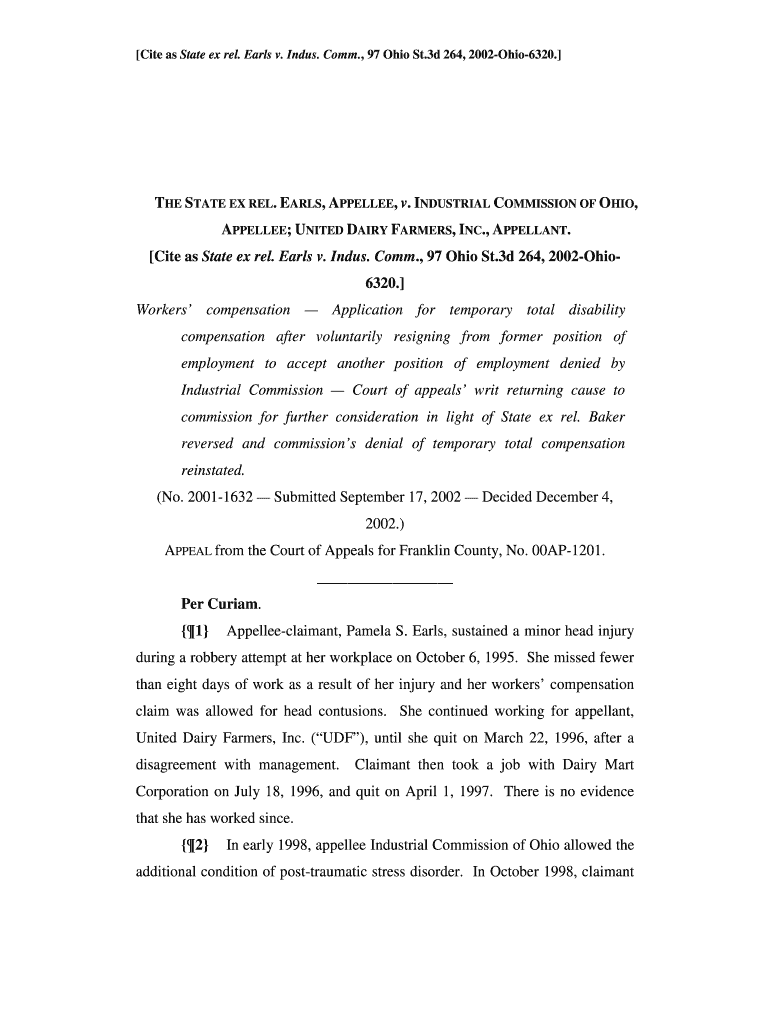
The "Earls v - sconet state oh" refers to a legal case summary regarding Pamela S. Earls' appeal against the Industrial Commission of Ohio and United Dairy Farmers, Inc. It is centered around Earls' application for temporary total disability compensation following her voluntary resignation. Ultimately, the court reinstated the commission's denial of her compensation request, citing a lack of sufficient medical evidence linking her inability to work to work-related injuries. This case underscores the complexities and nuances inherent in workers' compensation claims and appeals within Ohio's legal framework.
Key Elements of the Earls v - Sconet State OH
This form involves several critical components that legal professionals, claimants, and stakeholders must understand:
- Compensation Claim: The primary issue in the Earls case was a claim for temporary total disability compensation after voluntary job resignation.
- Evidence Requirements: A lack of medical evidence to support the claim was a decisive factor in the case's outcome.
- Judicial Outcome: Court rulings that reinstated the commission's initial denial highlight the stringent requirements for substantiating claims.
These elements emphasize the importance of robust evidence and documentation when contesting workers' compensation decisions in Ohio.
Legal Use of the Earls v - Sconet State OH
The case's legal framework is paramount for understanding how voluntary resignation affects the ability to claim disability compensation:
- Voluntary Resignation Implications: Earls' voluntary resignation was central to determining her eligibility for benefits, as resignation without adequate medical justification may impede claims.
- Precedent for Future Cases: This case can inform similar disputes by offering insights into judicial reasoning when medical evidence is scant.
- Judicial Support for Commission Decisions: The court's support for the commission's decision illustrates judicial deference to administrative agency evaluations without compelling contrary evidence.
How to Use the Earls v - Sconet State OH
Understanding how to navigate similar legal scenarios is crucial for legal practitioners and claimants:
- Gather Comprehensive Documentation: Ensure thorough medical and employment records are compiled to support the claim.
- Legal Representation: Engage a competent attorney familiar with Ohio's workers' compensation laws for guidance through appeals.
- Filing an Appeal: If a claim is denied, file an appeal promptly, adhering to established timelines and procedural rules.
These steps can enhance the probability of a favorable outcome in similar compensation claim scenarios.
Important Terms Related to Earls v - Sconet State OH
Understanding the terminology is essential for grasping the nuances of such legal cases:
- Temporary Total Disability (TTD) Compensation: Benefits intended to cover lost wages for employees unable to work temporarily due to job-related injuries.
- Industrial Commission of Ohio: The body responsible for adjudicating workers' compensation disputes in the state.
- Voluntary Resignation: An employee's decision to leave their position without being compelled by the employer, impacting benefit eligibility.
These terms contextualize the legal and procedural aspects of the Earls case and similar scenarios.
State-Specific Rules for the Earls v - Sconet State OH
Ohio's specific regulations play a pivotal role in handling such cases:
- Proof of Injury: Claimants must provide convincing evidence connecting their medical condition to a workplace injury.
- Administrative Hearings: Ohio mandates that workers' compensation disputes be initially addressed administratively.
- Appeal Procedures: Claimants dissatisfied with initial outcomes can seek recourse through the courts by abiding by established appeal protocols.
Understanding these state-specific rules is crucial to effectively navigate similar legal processes.
Examples of Using the Earls v - Sconet State OH
Real-world scenarios can illustrate the application of the Earls case principles:
- Case Study: Another employee in Ohio, who voluntarily resigns but presents substantial medical evidence linking their injury to their job, may challenge a denial more effectively.
- Comparative Analysis: Contrast cases where robust vs. insufficient medical documentation affects outcomes, aiding in strategic preparation.
These examples demonstrate the practical utility of lessons derived from the Earls case.
Steps to Complete the Earls v - Sconet State OH
For those directly handling cases similar to "Earls v," follow these procedural steps:
- Documentation Collection: Compile all relevant medical records and employment history.
- Legal Counsel Consultation: Seek advice from attorneys specializing in workers' compensation.
- Submit Claims: File claims with supporting documents to the Industrial Commission of Ohio.
- Appeal Preparation: In the event of a denial, prepare to file an appeal within the stipulated timeline.
- Court Procedures: Attend hearings and present evidence, both administratively and judicially, as required.
These steps provide a structured approach for effectively addressing and appealing workers' compensation cases.
Penalties for Non-Compliance
Failure to adhere to procedural requirements and timelines in workers' compensation cases like Earls' can result in:
- Denial of Benefits: Missing critical deadlines may lead to automatic denial of claims or appeals.
- Legal Costs: Non-compliance may necessitate additional legal representation, leading to increased expenses.
- Adverse Career Impacts: Sustained disputes without resolution may impact future employment opportunities.
Understanding and avoiding these penalties is essential for maintaining eligibility for workers' compensation benefits.




