






Definition & Meaning
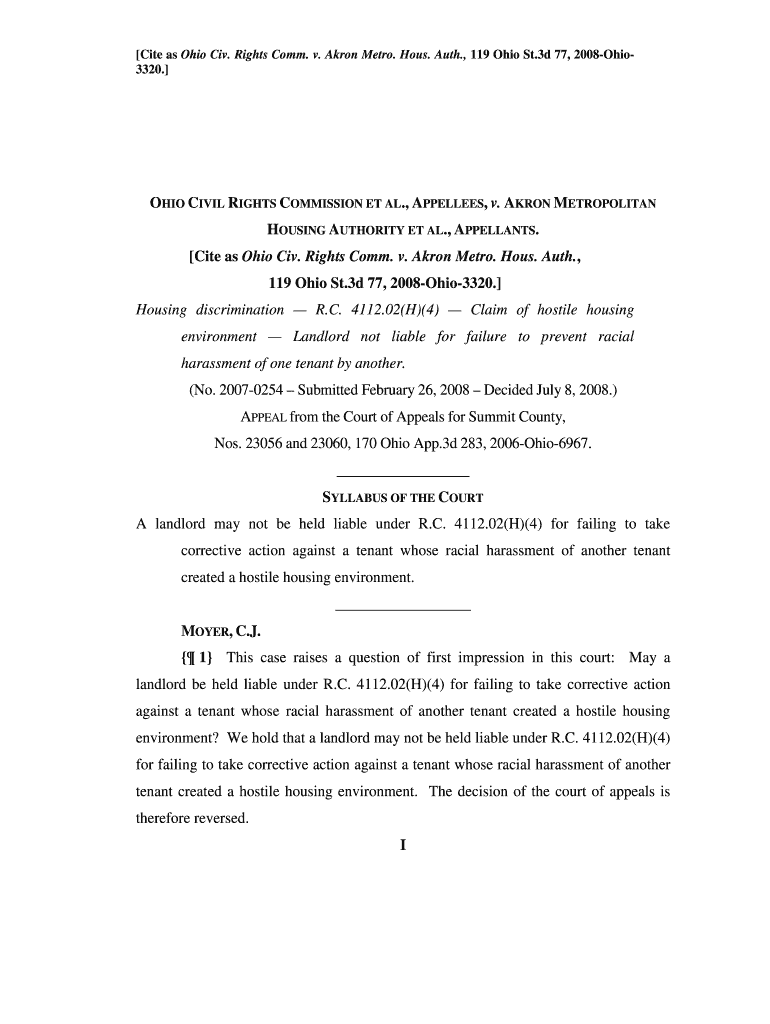
The Supreme Court of Ohio case, Ohio Civ. Rights Comm. v Akron Metro. Hous. Auth., addresses the scope of landlord responsibility concerning racial harassment between tenants under Ohio Revised Code 4112.02(H)(4). This pivotal case clarifies whether landlords can be held liable for failing to prevent racially charged hostile housing environments created by tenant-on-tenant harassment.
Key Concepts in the Case
- Landlord Liability: Examines the extent of responsibility a landlord holds over tenant interactions.
- Hostile Housing Environment: Centers on whether tenants can raise claims against landlords for racial harassment by fellow tenants.
- R.C. 4112.02(H)(4): The Ohio statute discussed within the case, detailing prohibited discriminatory practices in housing.
How to Use the Decision in Legal Contexts
The ruling from this case can set a precedent in similar legal disputes involving tenant harassment and landlord duties in Ohio. It serves as a reference point for determining landlord liability in matters related to hostile housing environments.
Utilization Scenarios
- Legal Representation: Lawyers might leverage this case to argue for or against landlord liability in new housing discrimination cases.
- Tenant Advocacy: Tenants might refer to the case to understand their rights and landlords’ responsibilities or consult legal counsel based on the outcome.
- Property Management: Understanding of the case can guide property managers in crafting tenant policies and dispute resolution mechanisms.
Who Typically Uses This Case
This ruling is particularly relevant to multiple parties involved in housing law and disputes:
Potential Users
- Landlords and Property Managers: To understand legal obligations and how to protect themselves from litigation.
- Attorneys and Legal Scholars: To interpret landlord responsibilities within the purview of Ohio housing laws.
- Tenants and Advocacy Groups: To seek redress or raise awareness about tenant rights concerning racial harassment.
Important Terms Related to the Case
Several terms are pivotal in understanding the intricacies of this ruling, some of which are crucial for all parties involved:
Glossary
- Racial Harassment: Unwanted and discriminatory behavior based on race, leading to a hostile living environment.
- Liability: Legal term for being responsible for something, particularly in the context of legal proceedings.
- Tenant Interaction: How tenants coexist and engage within a shared housing environment.
Legal Use of the Decision
This case decision is a vital legal tool for interpreting host-based harassment regulations in Ohio.
Practical Legal Applications
- Court Arguments: Can form the backbone for legal strategies in court when similar landlord-tenant issues arise.
- Drafting Legislation or Policy: Use insights from the case to legislate clearer responsibilities for landlords regarding tenant disputes.
State-Specific Rules
The ruling reflects the specificities of Ohio laws and may differ significantly compared to similar statutes in other states.
State Considerations
- Ohio Revised Code: Specific to Ohio, detailing landlord responsibilities related to tenant harassment.
- State Precedents: Ohio courts may apply the ruling strictly within state jurisdiction, without crossover to other state laws unless similar statutes exist.
Examples of Applying the Decision
Real-world scenarios and potential applications of this decision highlight its relevance and utility.
Illustrative Cases
- Previous Claims: Reviewing past cases where tenant harassment was involved to analyze how this decision could change outcomes.
- Hypothetical Scenarios: Understanding theoretical applications — such as if a landlord implements inadequate measures to prevent tenant disputes, referencing this ruling.
Penalties for Non-Compliance
While this case decision itself does not prescribe penalties, it outlines potential liabilities for landlords, placing significant emphasis on adherence to housing laws.
Possible Consequences
- Legal Action: Defendants might face lawsuits if found failing to adhere to the precedents set by this case.
- Financial Damages: Monetary compensation might be sought from non-compliant landlords by affected tenants.