






Definition & Meaning
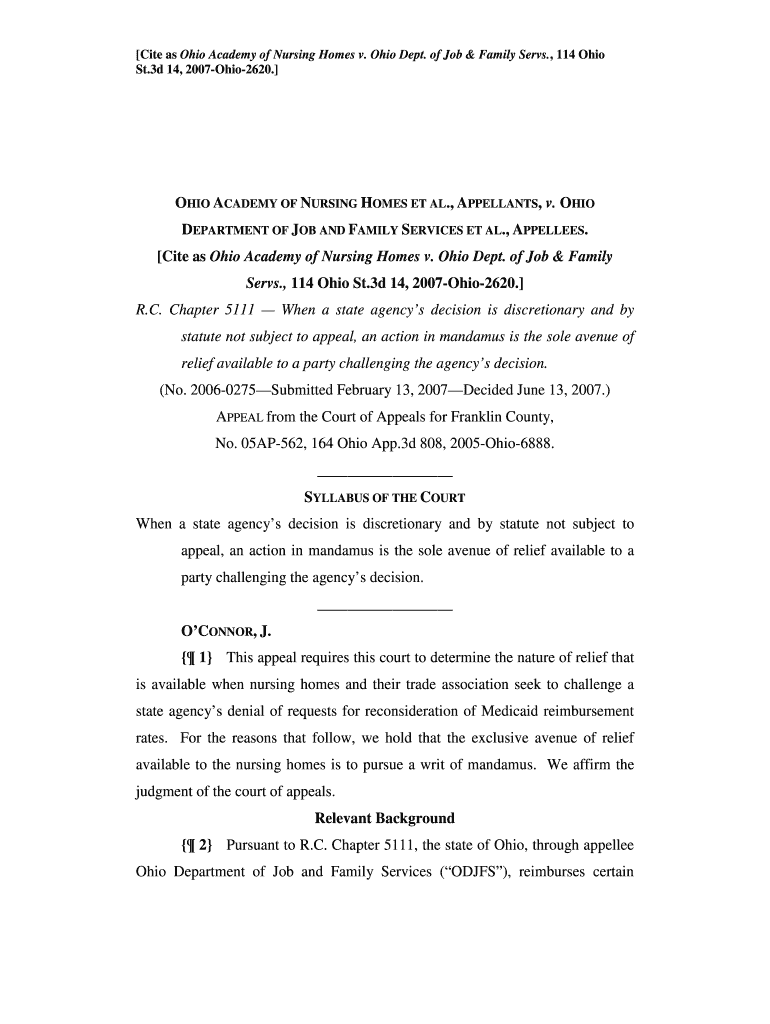
In the legal case "Ohio Academy of Nursing Homes v. Ohio Dept. of Job & Family Services," the Supreme Court of Ohio addressed the procedural rights of nursing homes when challenging a state agency’s decision concerning Medicaid reimbursement rates. This case is pivotal in determining the legal avenues available to healthcare institutions seeking adjustments in reimbursement rates. The court emphasized the importance of due process through a writ of mandamus when the agency’s decisions are discretionary and not subject to standard appeals. A writ of mandamus is a judicial remedy compelling a government department to execute a duty they are legally obligated to complete.
Legal Use of the Ohio Academy of Nursing Homes v. Ohio Department of Job & Family Services
The Ohio Supreme Court's ruling in this case is a crucial resource in legal proceedings involving disputes over Medicaid reimbursements. The decision confirms that nursing homes can pursue a writ of mandamus when the Ohio Department of Job & Family Services exercises discretion over rate adjustments. Legal professionals must understand the parameters set by this case to effectively guide their clients through the mandamus process, which involves demonstrating a clear legal right to the requested relief and a duty by the state agency to perform the act.
Important Criteria for Mandamus
- Clear Legal Right: Petitioners must show a defined right to a reimbursement rate adjustment.
- No Other Adequate Remedy: The lack of an appeal process necessitates this extraordinary relief.
Key Elements of the Case
Several essential components form the basis of the Ohio Academy of Nursing Homes case. These include the role of Medicaid as a funding source for nursing homes, the state's discretion in setting reimbursement rates, and the legal pathway available when disputing these decisions.
- Medicaid Funding Structure: Understanding the financial relationship between state and federal contributions.
- Discretionary Decisions: Examination of how state departments interpret and apply these decisions.
Steps to Complete the Ohio Academy of Nursing Homes v. Ohio Dept of - Supreme Court
If engaged in a case similar to "Ohio Academy of Nursing Homes v. Ohio Dept.," specific steps should be followed to align with the precedent:
- Determine Standing: Assess the nursing home’s eligibility to file for a writ of mandamus.
- Gather Documentation: Collect evidence demonstrating the discretionary denial of reimbursement rates by the state agency.
- File Petition: Submit a writ of mandamus in the proper court jurisdiction.
- Present Case: Argue the merits of mandamus due to the lack of other remedies.
Important Terms Related to the Case
Understanding the legal terminology associated with this case is crucial for comprehending its implications:
- Writ of Mandamus: A court order compelling government action.
- Discretionary Action: Decisions left to the judgment of a state entity without mandated guidelines.
- Reimbursement Rates: Financial compensation to nursing homes for services rendered under Medicaid.
State-Specific Rules for the Ohio Academy of Nursing Homes v. Ohio Dept.
Ohio's specific statutes and rules are critical in understanding the implementation of the case ruling:
- Mandamus Process: The state has outlined specific steps and standards for mandamus applications, highlighting the need for clear documentation and compelling evidence.
- Administrative Discretion: Detailed examination of how administrative bodies wield their discretionary powers is necessary.
Practical Examples of Using the Case
Legal scenarios where this case becomes applicable often involve institutions seeking to rectify perceived unfair denial of funds:
- Example 1: Nursing Home A receives insufficient Medicaid reimbursements due to arbitrary rate decisions. Following the court's precedent, they successfully petition for a writ of mandamus to challenge the decision.
Filing Deadlines and Important Dates
Understanding the timeline for engaging with a writ of mandamus is vital for legal success:
- Petition Deadline: Typically set by Ohio’s court rules, petitioners must adhere closely to these deadlines to avoid dismissal.
Who Typically Uses this Case
The primary users of this case’s ruling are nursing homes in Ohio, legal professionals specializing in healthcare law, and governmental agencies tasked with overseeing Medicaid reimbursement processes.
- Healthcare Lawyers: Professionals advising nursing homes on legal strategies regarding reimbursement issues.
- State Agencies: Entities must understand the limits of their discretionary powers to ensure compliance with the legal standards set forth in this ruling.
By breaking down the case into these comprehensive sections, individuals and entities involved in similar disputes can gain a clear understanding of their legal avenues and obligations under Ohio law.