
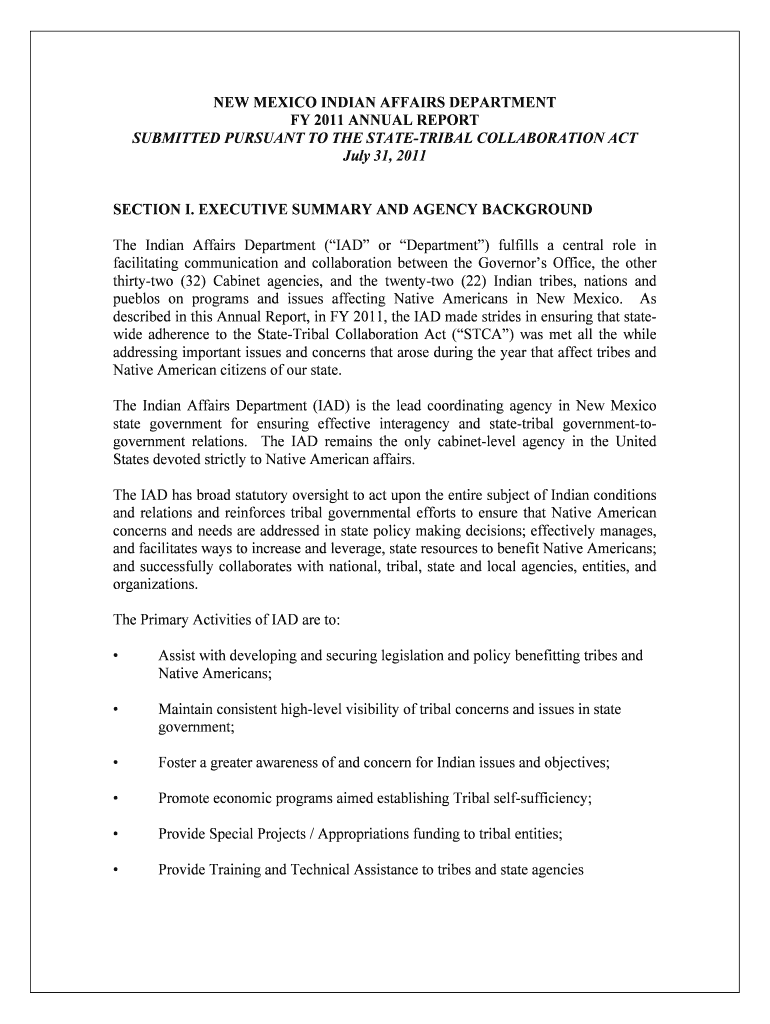







Definition and Role of the New Mexico Indian Affairs Department
The New Mexico Indian Affairs Department plays a crucial role in facilitating relationships and communication between the state government and Native American tribes within New Mexico. Established to uphold the State-Tribal Collaboration Act, the department works towards advocating for Native American issues in diverse realms such as economic development, legislative resources, and health services. It aims to improve the quality of life for Native Americans by promoting cultural competency and effective management of community-oriented programs. This department's significance lies in its commitment to fostering collaboration and ensuring the representation of Native American interests in statewide matters.
Steps to Engage with the New Mexico Indian Affairs Department
Engaging with the New Mexico Indian Affairs Department involves several steps that ensure comprehensive communication and collaboration.
- Identify Needs: Clearly outline the specific needs or issues requiring involvement from the department. This can include topics like legislative support, economic development, health services, or educational initiatives.
- Contact the Department: Reach out to the department via their official channels to initiate communication. This can be done through phone calls, emails, or submitting a request through their official website.
- Schedule a Meeting: Arrange meetings with department officials to discuss your requirements in more detail. This is essential for aligning goals and establishing a collaborative framework.
- Provide Necessary Documentation: Ensure all relevant documents, reports, or proposals are prepared and submitted as required. These documents help in articulating and substantiating your needs clearly.
- Follow Up: Maintain consistent communication with the department to track the progress of your requests or collaborative efforts. Regular updates ensure that all parties remain aligned and informed throughout the process.
Key Elements of the New Mexico Indian Affairs Department
Several critical components define the functionality and effectiveness of the New Mexico Indian Affairs Department:
- State-Tribal Collaboration: The department's core responsibility is facilitating communication and collaboration between state governments and Native tribes.
- Issue Advocacy: It actively advocates for Native American issues across legislative and socioeconomic fronts.
- Resource Management: The department manages capital outlay projects geared towards community and cultural development.
- Program Implementation: It implements various programs addressing health, education, and economic needs of Native American communities.
- Cultural Competency Promotion: Promoting understanding and respect for Native American cultures within and beyond the state is a key mission.
Legal Implications and Compliance
Understanding the legal requirements and implications related to the New Mexico Indian Affairs Department is important for effective collaborations:
- State-Tribal Collaboration Act: This act mandates collaboration and communication channels between the state government and Native tribes. Compliance ensures smooth implementation of joint initiatives.
- Legally Binding Agreements: Any documents or agreements facilitated by the department carry legal weight and must be adhered to in conjunction with state laws.
- Regulatory Guidelines: Stakeholders must align their activities with regulatory requirements governed by state and tribal laws, ensuring all projects are developed lawfully and ethically.
Examples of Successful Collaborations
Historical examples showcase how collaborations with the New Mexico Indian Affairs Department have led to impactful results:
- Economic Development Initiatives: Joint efforts have successfully facilitated infrastructure and economic projects that bolster tribal and state economies alike.
- Health Programs: Collaborations have led to the implementation of health programs that cater to specific needs within Native American communities, significantly improving healthcare accessibility.
- Legislative Changes: The department has successfully advocated for legislative amendments that accommodate and benefit Native American tribes.
Required Documentation for Engagement
Engaging with the New Mexico Indian Affairs Department necessitates certain key documents, which help in facilitating discussions and outlining proposals:
- Project Proposals: Clear and comprehensive documentation outlining project goals, needs, and expected outcomes.
- Legislative Requests: Documents indicating legislative changes or support requirements.
- Collaborative Agreements: Agreements specifying areas of collaboration, responsibilities, and expectations from each party involved.
Submission Methods and Procedures
Collaborators can interact with the New Mexico Indian Affairs Department through various methods:
- Online Submissions: Digital submissions via the department’s official website ensure quick and efficient delivery of documents and requests.
- Mailing and In-Person: Traditional submission methods via mail or in-person meetings can also be utilized, allowing for direct interaction and discussion.
- Regular Follow-Ups: Consistent follow-ups post-submission ensure that requests are prioritized and addressed promptly.
State-Specific Rules and Variations
The New Mexico Indian Affairs Department operates under a set of unique state-specific rules and variations:
- State-Tribal Partnerships: Based on New Mexico's unique demographic and cultural makeup, rules focus heavily on state-tribal partnerships and mutual benefits.
- Cultural Sensitivity: Regulations emphasize respect for cultural practices and ensure that all initiatives uphold and respect tribal customs and traditions.
- Resource Allocation: Unique guidelines exist regarding the allocation and management of resources focused on tribal community development, ensuring financial and operational accountability.




