







Definition & Meaning
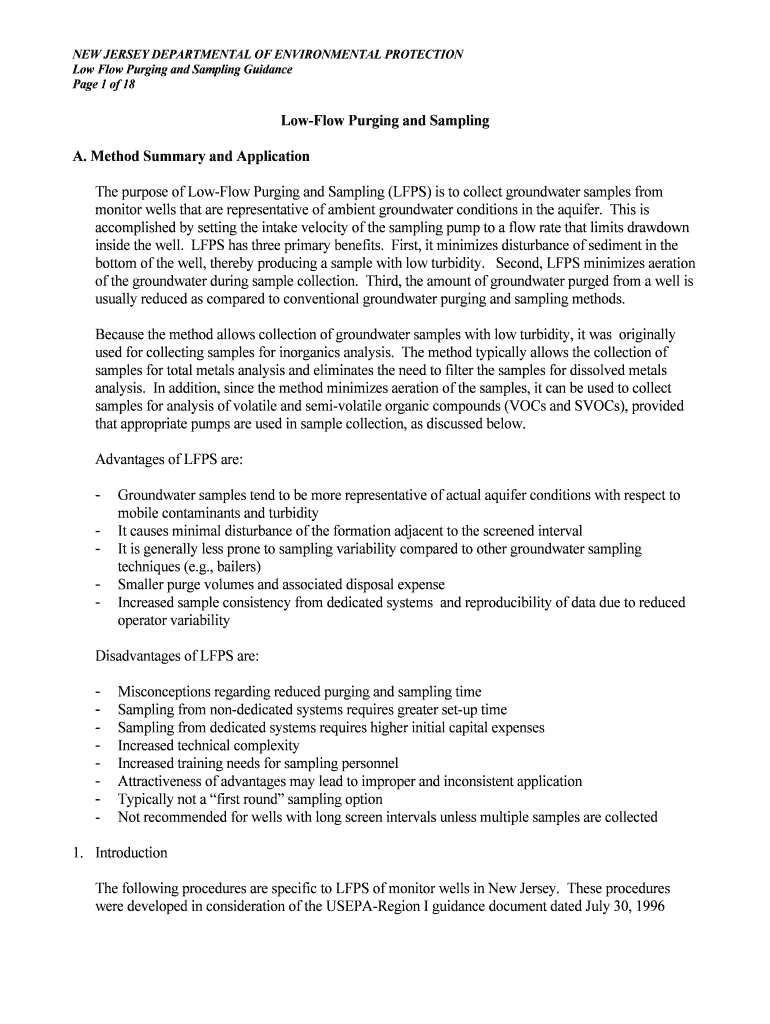
Low Flow Purging and Sampling (LFPS) is a process used in groundwater monitoring, focusing on the precise collection of water samples from monitoring wells with minimal disturbance. This technique is particularly effective in reducing sediment disruption and preventing aeration, thereby ensuring the accuracy of the sample's chemical properties. LFPS is crucial for environmental assessments, particularly in regions like New Jersey where groundwater conditions are routinely monitored.
Important Terms Related to Low Flow Purging
When discussing LFPS, it's essential to understand key terms such as:
- Water Quality Indicator Parameters (WQIPs): Metrics that include pH, temperature, dissolved oxygen, and turbidity, which must stabilize before sampling.
- Monitor Wells: Wells specifically designed for sampling and observing groundwater levels and quality.
- Sediment Disturbance: The unwanted mixing of various sediment layers, which can alter sample integrity.
These terms are fundamental for comprehending the LFPS process and its goals.
Steps to Complete the Low Flow Purging
Completing LFPS involves several steps:
- Equipment Setup: Assemble necessary tools, including pumps, tubing, and measurement instruments.
- Calibration: Ensure all instruments are accurately calibrated with reference standards.
- Purging Process: Start the pump at a low flow rate, typically between 0.1 and 0.5 liters per minute, to gradually remove water from the well.
- Monitoring WQIPs: Continuously monitor and record WQIPs to identify when stabilization occurs.
- Sample Collection: Once parameters stabilize, collect the groundwater sample for analysis.
These actions help ensure the reliable collection of representative groundwater samples.
Key Elements of the Low Flow Purging
Several critical elements are integral to the LFPS process:
- Pump Selection: Choosing an appropriate pump capable of low flow rates essential for effective purging.
- Tubing Specifications: Selecting chemically stable tubing to prevent sample contamination.
- Stabilization Time: Allowing sufficient time for WQIPs to stabilize before collecting samples.
- Training Needs: Due to the technical complexity, thorough training is necessary for personnel performing LFPS.
Each element plays a vital role in the overall success of the LFPS method.
How to Use the Low Flow Purging in NJ
Using LFPS in New Jersey involves specific regional considerations:
- Regulations Compliance: Follow state-specific environmental guidelines and protocols.
- Geological Considerations: Account for New Jersey's diverse hydrogeological settings when planning LFPS activities.
- Permit Requirements: Ensure any required permits for conducting groundwater sampling are obtained.
These steps are necessary for legally compliant and effective LFPS within the state.
State-Specific Rules for Low Flow Purging
New Jersey imposes particular requirements on LFPS activities:
- State Environmental Standards: Adherence to New Jersey Department of Environmental Protection standards is mandatory.
- Documentation Requirements: Proper documentation and reporting of sampling techniques and results.
- Frequency of Testing: Understand the mandated frequency of groundwater sampling events based on local environmental policies.
Such state-specific rules ensure the consistency and reliability of groundwater monitoring efforts.
Examples of Using the Low Flow Purging
Based on real-world applications, LFPS in New Jersey is beneficial in scenarios such as:
- Contamination Assessment: Effective in evaluating areas suspected of industrial pollution.
- Site Remediation Monitoring: Utilized in ongoing monitoring of sites undergoing contamination cleanup.
- Water Resource Management: Assists in the sustainable management of the state's groundwater resources.
These examples highlight LFPS's diverse utility across different environmental sectors.
Legal Use of the Low Flow Purging
LFPS's legal framework ensures:
- Adherence to Environmental Laws: Compliance with both state and federal environmental laws.
- Legal Protection: Ensuring accuracy in sampling to support environmental litigation and policy-making.
- Confidentiality Obligations: Maintaining confidentiality of site-specific data collected during sampling.
Understanding and following legal protocols is vital to the legitimate application of LFPS techniques.




