01. Edit your form online
Type text, add images, blackout confidential details, add comments, highlights and more.

Type text, add images, blackout confidential details, add comments, highlights and more.

Draw your signature, type it, upload its image, or use your mobile device as a signature pad.

Send it via email, link, or fax. You can also download it, export it or print it out.
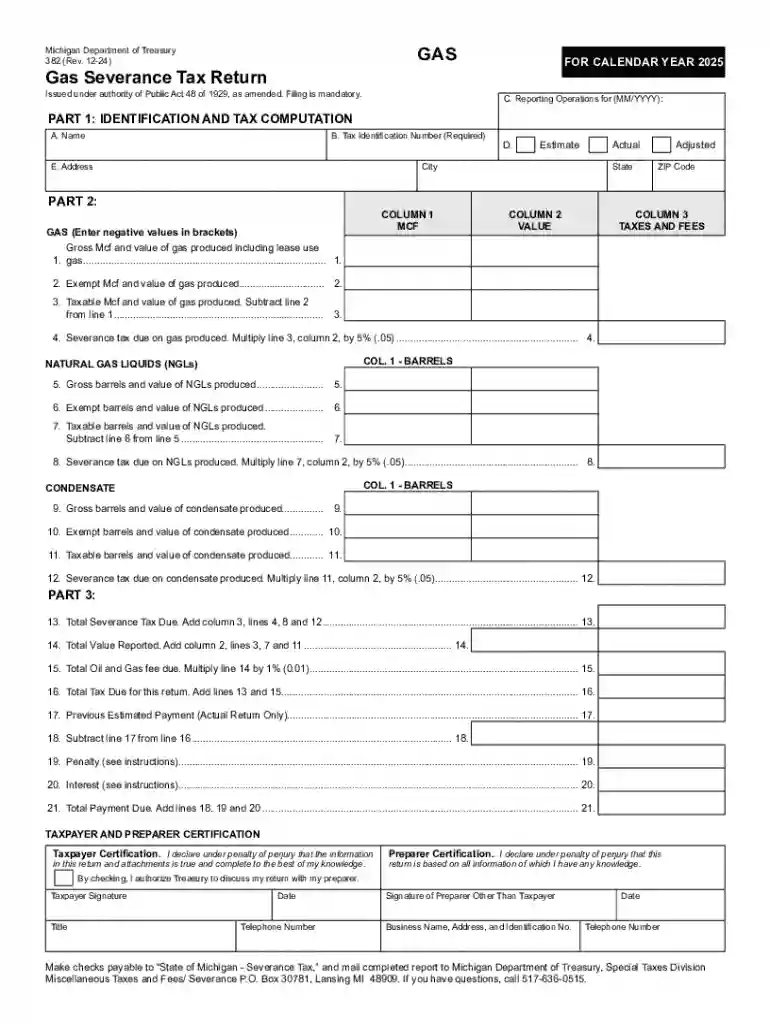
The form "382, Gas Severance Tax Return" is a critical document issued by the Michigan Department of Treasury that must be completed by oil and gas producers operating within Michigan. This form is essential for reporting the production of natural gas and associated natural gas liquids. The form provides a systematic approach to calculate the severance taxes due, ensuring that producers are compliant with the state's tax regulations. It requires detailed information on the types and quantities of gas extracted, and it forms the basis for determining the financial obligations that producers owe to the state.
Using the "382, Gas Severance Tax Return" effectively involves understanding its structure and purpose. Producers need to fill in specific sections corresponding to their operations, such as different types of gas production and associated values. The form contains instructions for calculating taxes, which involves detailed input of production data and subsequent tax rates. Producers must ensure accuracy in reporting as discrepancies can result in penalties. This form also requires taxpayer and preparer certification to verify the correctness of the information provided.
To obtain the "382, Gas Severance Tax Return," producers can access it directly from the Michigan Department of Treasury's official website. This ensures they use the most current version, which reflects all recent changes and updates in tax legislation. Producers may also receive this form through direct mail if they are already registered with the department as oil and gas producers. Alternatively, tax professionals often provide access to these forms as part of their service packages for preparing tax returns for clients.
The form consists of several key components that require precise attention:
Filing the "382, Gas Severance Tax Return" entails meeting strict deadlines established by the Michigan Department of Treasury. Typically, returns must be filed annually alongside other business tax obligations. Producers should consult the department's official resources to confirm specific due dates to avoid penalties. Late filings can result in monetary penalties and interest, making timely submissions critical.
Failure to comply with the filing requirements for the "382, Gas Severance Tax Return" can lead to several penalties. These include fines for late submission, interest charges on overdue taxes, and potential audits by the Michigan Department of Treasury. To mitigate these risks, producers should ensure complete compliance with all requirements, accurate reporting, and on-time submissions. Non-compliance might also affect the producer's ability to operate smoothly, as unresolved issues with tax filings could lead to further complications with state authorities.
The Michigan Department of Treasury allows various submission methods for the "382, Gas Severance Tax Return." Producers can file their returns online through the department's secure portal, which provides immediate confirmation of receipt and processing. Alternatively, returns can be mailed to a designated address as specified in the form instructions. In-person submissions might also be an option, however, producers should confirm this with the department due to potential changes in policies or office hours.
We've got more versions of the 382, Gas Severance Tax Return form. Select the right 382, Gas Severance Tax Return version from the list and start editing it straight away!
At DocHub, your data security is our priority. We follow HIPAA, SOC2, GDPR, and other standards, so you can work on your documents with confidence.