Definition and Purpose of the Michigan Flow-Through Entity (FTE) Tax Overview
The Michigan Flow-Through Entity (FTE) Tax Overview provides a detailed guide to the tax obligations for flow-through entities in Michigan, such as partnerships, S corporations, and certain LLCs. Flow-through entities are unique in that the income taxes are not paid at the entity level; instead, they pass through to individual owners who report their share of income on their personal tax returns. This document offers a comprehensive look at how these businesses can fulfill their tax reporting and payment requirements in Michigan.
- Pass-through Taxation: The primary principle of flow-through taxation is that the entity itself is not taxed on its income. Instead, profits or losses are distributed among the owners and reported on their individual tax returns.
- Eligibility and Compliance: Understanding which entities qualify as flow-through and how they need to comply with Michigan tax regulations is a critical component of the tax overview.
Important Terms Related to the Michigan Flow-Through Entity (FTE) Tax Overview
Grasping certain key terminologies is essential for efficiently navigating the Michigan FTE tax system. Knowing these terms aids in comprehending tax obligations and processes.
- Flow-Through Entity (FTE): A business structure where profits pass directly to owners or investors, allowing them to pay taxes on their personal tax returns.
- K-1 Form: A document used to report each owner's share of the earnings, losses, deductions, and credits from a business entity.
- Apportionment Factor: A method to calculate the portion of an entity's income subject to Michigan tax based on sales, property, and payroll within the state.
- Withholding Requirement: Guidelines that determine when and how taxes should be withheld for non-Michigan resident members of the entity.
Key Elements of the Michigan Flow-Through Entity (FTE) Tax Overview
The FTE tax overview includes various elements critical for correctly assessing and fulfilling tax obligations.
- Tax Filings and Payments: Ensures entities make necessary filings using forms like Michigan City-Form 5278 for annual tax obligations.
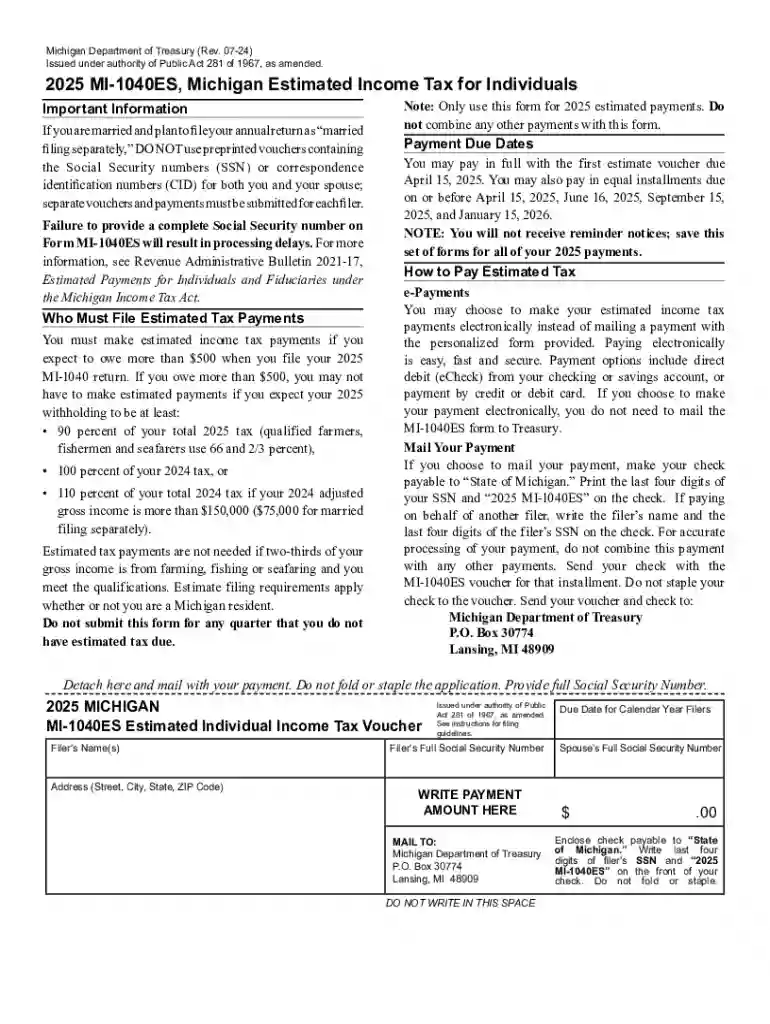
- Quarterly Estimates: FTEs may need to file quarterly estimated tax payments if the annual liability exceeds a certain threshold.
- Nonresident Member Taxation: Special rules apply to the taxation of income for nonresident members of a Michigan FTE.
Steps to Complete the Michigan Flow-Through Entity (FTE) Tax Overview
Navigating the FTE tax overview involves several steps, each critical for ensuring compliance and avoiding penalties.
- Determine Liability: Identify whether your entity qualifies as a flow-through entity and assess its tax obligations.
- Collect Information: Gather financial records and relevant forms, including federal tax information and state withholding details.
- Prepare Required Forms: Complete all necessary forms such as Michigan Form 4567 and Form 5278.
- Review and Submit: Double-check the forms for accuracy, then submit them through appropriate channels such as e-filing, mail, or in-person delivery.
Filing Deadlines and Important Dates for the Michigan FTE Tax
Adhering to important deadlines is crucial to maintaining compliance for Michigan flow-through entities.
- Annual Return Deadline: Typically due by the 15th day of the third month following the close of the tax year.
- Quarterly Estimates: Estimated payments are due on April 15, June 15, September 15, and January 15 of the subsequent tax year.
- Extension Requests: Entities may file for an extension, granting additional time for filing annual returns, though payments are still due by the original deadline.
Penalties for Non-Compliance with Michigan FTE Tax Regulations
Failing to comply with Michigan’s FTE tax obligations can result in penalties and interest charges.
- Late Filing Penalties: A penalty is imposed on entities that do not file required forms by the due date.
- Underpayment Penalties: Penalties apply if an entity underpays estimated taxes. It's crucial to accurately estimate and pay quarterly obligations to avoid these charges.
- Interest Charges: Interest accrues on unpaid tax from the original due date until the liability is paid off.
Examples of Michigan Flow-Through Entity (FTE) Tax Overview in Action
For a practical understanding of how the FTE tax overview applies in real-world scenarios, consider the following examples:
- Scenario One: A Michigan-based LLC elected as an S corporation with non-resident shareholders must withhold Michigan tax on the flow-through income allocated to those non-resident members.
- Scenario Two: A partnership incorrectly calculating its apportionment factor results in underpaid state taxes and subsequent penalties. Correct usage of Michigan sourcing rules helps avoid such pitfalls.
Business Entity Types Affected by Michigan FTE Tax Regulations
Different business structures feel the impact of Michigan FTE tax guidelines in distinct ways. Understanding these can help in tax planning and compliance.
- Partnerships: General and limited liability partnerships must pass their income to owners, who report it individually.
- S Corporations: These corporations pass income, losses, and deductions through to shareholders for federal and Michigan tax reporting purposes.
- LLCs: Depending on the chosen tax treatment (partnership or corporation), LLCs must adhere to flow-through taxation principles if electing as an S corporation.
Exploring these entities and their obligations under the Michigan FTE tax overview provides critical insight into compliance and strategic planning for businesses operating within the state.