




01. Edit your form online
Type text, add images, blackout confidential details, add comments, highlights and more.

Type text, add images, blackout confidential details, add comments, highlights and more.

Draw your signature, type it, upload its image, or use your mobile device as a signature pad.

Send it via email, link, or fax. You can also download it, export it or print it out.
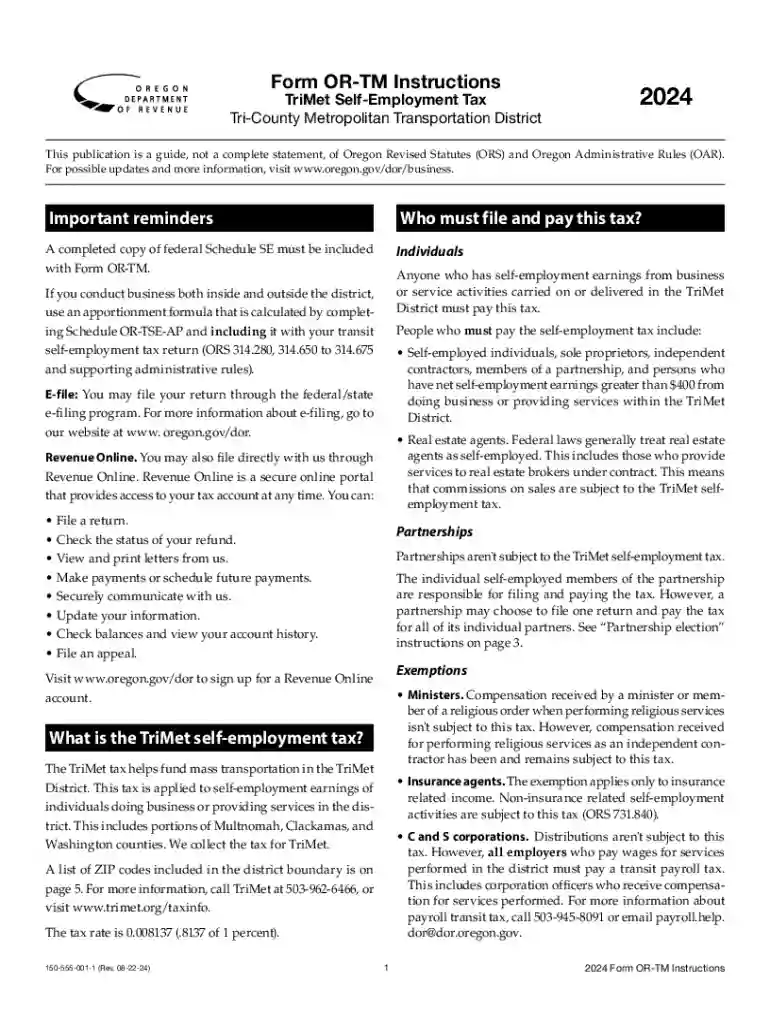
The 2023 Form OR-TM Instructions are designed to guide individuals through the process of filing the TriMet Self-Employment Tax in the Tri-County Metropolitan Transportation District of Oregon. This tax is essential for funding mass transportation improvements and services within the district. Self-employed individuals, including independent contractors earning more than $400, are required to file using this form if they operate within the designated counties.
You can access the 2023 Form OR-TM Instructions through multiple channels to ensure you have the correct information needed for filing. While physical forms may be requested from the Oregon Department of Revenue, the most efficient method is downloading them online.
To accurately file the 2023 Form OR-TM, follow a detailed series of steps that cover all necessary information submission areas. This ensures compliance with state tax laws and proper funding of district services.
The 2023 Form OR-TM Instructions outline various critical components necessary for correct form submission. Understanding these elements facilitates accurate completion.
Eligibility for filing the 2023 Form OR-TM mainly hinges on self-employment income levels and geographical operation limits within the TriMet District.


Understanding the proper timing for filing is crucial to avoid penalties associated with late submission.
Adhering to filing requirements is essential to prevent financial penalties associated with late or incomplete submissions of the 2023 Form OR-TM.
Submitting the 2023 Form OR-TM effectively may depend on whether you choose to use a digital submission method or adhere to the traditional paper method.
We've got more versions of the 2023 Form OR-TM Instructions, Tri-County Metropolitan Transportation District TriMet Self-Employment form. Select the right 2023 Form OR-TM Instructions, Tri-County Metropolitan Transportation District TriMet Self-Employment version from the list and start editing it straight away!
At DocHub, your data security is our priority. We follow HIPAA, SOC2, GDPR, and other standards, so you can work on your documents with confidence.

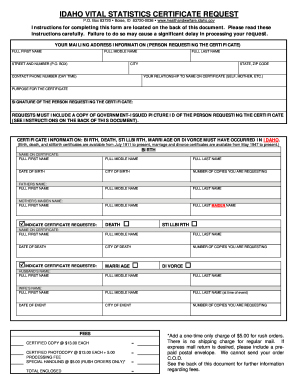




Anyone who has self-employment earnings from business or service activities carried on or delivered in the TriMet. District must pay this tax. People who mustRead more
by D Purohit 2025 Polycentrism is a system where multiple semi-independent authorities share decision-making power in a choreographed dance. Tri-County Metropolitan


