
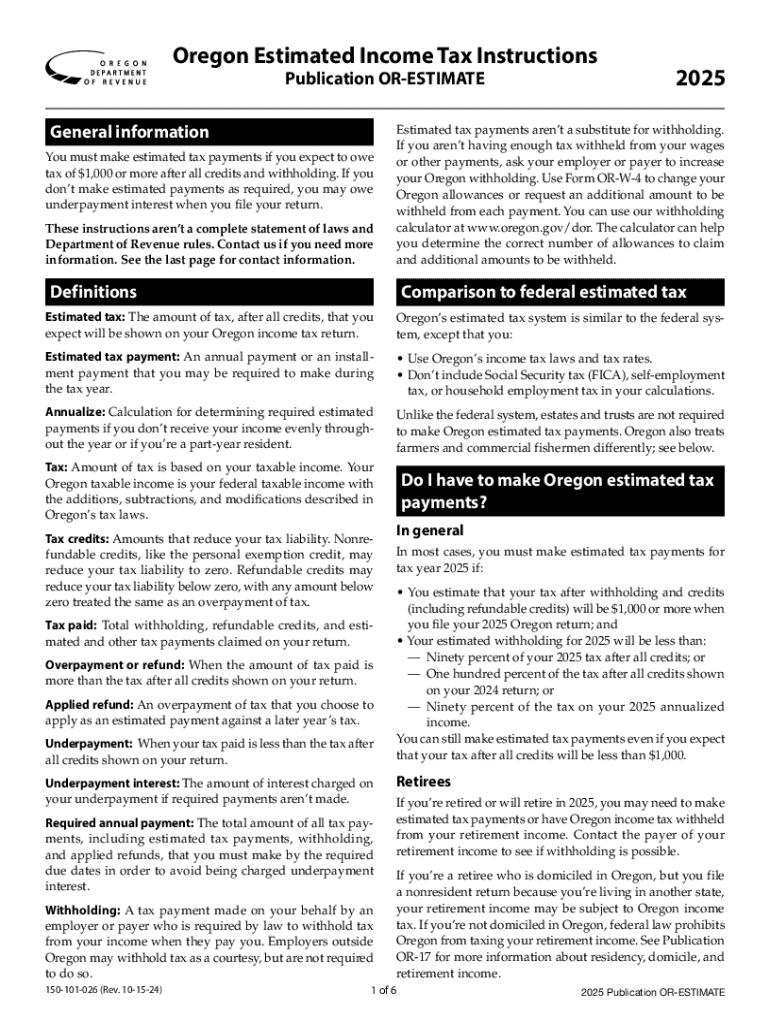







Definition & Meaning
The 2025 Publication OR-ESTIMATE, Oregon Estimated Income Tax Instructions, 150-101-026, provides a comprehensive guide to understanding Oregon's estimated income tax requirements for the tax year 2025. This document outlines the conditions under which taxpayers must make estimated payments to the state. It explains how these payments are calculated, which is pertinent for residents and nonresidents dealing with income or anticipated income from Oregon sources. Key to this publication is its role in clarifying the estimated tax process, helping taxpayers avoid underpayment penalties by ensuring they pay the right amount through the year.
Importance of Estimated Tax Payments
For many taxpayers, making estimated payments throughout the year is crucial to prevent a large tax bill come filing season. The publication highlights scenarios where estimated taxes are necessary, such as when withholding from wages is not enough to cover total tax obligations. Typically, if you expect to owe $1,000 or more after accounting for credits and withholding, these payments are critical.
Key Elements of the 2025 Publication OR-ESTIMATE
The publication is structured to help taxpayers navigate the specifics of estimated taxes in Oregon. Some key elements include:
- Calculation Methods: Provides various methods to calculate estimated payments, ensuring taxpayers can choose the one that best matches their situation.
- Special Provisions: Details exceptions for specific groups such as farmers and commercial fishermen, who may have different rules due to the nature of their income.
- Installment Deadlines: Lists due dates for quarterly payments, aligning taxpayers with the schedule needed to avoid late payment penalties.
How to Use the 2025 Publication OR-ESTIMATE
To use the publication effectively, taxpayers should familiarize themselves with its structure and contents. It is designed to be user-friendly, allowing individuals to follow a logical order of consideration:
- Determine Necessity: Assess whether you need to make estimated payments based on projected tax liabilities.
- Select Calculation Method: Choose the most appropriate method to estimate your payments accurately.
- Monitor Payment Schedule: Keep track of payment deadlines to ensure timely payments.
Practical Use Case
Consider a self-employed individual in Oregon who anticipates earnings that would not adequately be covered by withholding alone. By using this publication, they can determine if they're required to make estimated payments, calculate what those payments should be, and adhere to the necessary deadlines.
State-Specific Rules for Oregon Taxpayers
Oregon has unique rules in comparison to federal tax codes, and the publication elaborates on these. State-specific instructions might differ slightly in calculation methods and deadlines, emphasizing the importance of understanding these distinctions for compliance.
Differences from Federal Guidelines
One significant factor is how Oregon treats certain income and deductions compared to federal calculations. Understanding these differences is crucial in applying the correct figures when using the publication.
Important Terms Related to the Publication
Several terms within the publication are worth noting for clarity:
- Adjusted Gross Income (AGI): The income measure used for various deductions and overall tax computation.
- Withholding: The portion of income tax automatically taken from earnings, which may not be sufficient for covering full tax obligations.
- Safe Harbor Rules: Guidelines that prevent taxpayers from incurring penalties if they pay a certain percentage of last year's tax liability.
Penalties for Non-Compliance
Failing to comply with estimated tax payment requirements can result in penalties. The publication outlines the consequences of underpayment, which can include both financial penalties and interest charges on unpaid amounts.
Avoiding Penalties
Adhering to the guidance and deadlines set out in the publication ensures compliance and can help avoid these potential financial burdens. Timely and accurate payments are the best defense against accruing additional charges.
Filing Deadlines and Important Dates
The Oregon Estimated Income Tax Instructions emphasize critical deadlines for estimated payments. Quarterly installment deadlines typically fall on:
- April 15
- June 15
- September 15
- January 15 of the following year
Staying on schedule with these dates is essential to avoid late fees and penalties.
Notable Exceptions
For individuals who did not have taxable income until later in the year, there might be exceptions for catching up on payments, which is also elucidated in the document.
Who Typically Uses the 2025 Publication OR-ESTIMATE
The document is aimed primarily at self-employed individuals, retirees with pensions, and those with significant non-wage income streams, such as rental or investment income. These groups often lack sufficient withholding from wages and must thus rely on estimated payments.

Business Use
For businesses, especially those structured as pass-through entities (LLCs, partnerships), understanding the requirements for estimated tax payments is critical for both compliance and financial planning.
Steps to Complete the 2025 Publication OR-ESTIMATE
Completing the instructions effectively involves several steps:
- Assessment: Determine your necessity for estimated payments.
- Calculation: Accurately compute the amount due using the suggested methods.
- Document Preparation: Ensure all relevant forms are filled accurately for each installment.
- Payment Submission: Transfer payments by the outlined deadlines using the preferred submission method.
Examples of Using the 2025 Publication OR-ESTIMATE
Real-world application examples provide clarity on the utility of this publication:
- Retiree: A retiree might use investment earnings forecasts to calculate and apply estimated payments.
- Independent Contractor: A contractor with fluctuating income uses this guidance to determine safe payment estimates per quarter.
These examples highlight the essential nature of the publication in maintaining compliance through proactive taxpayer behavior.
Conclusion of Use Cases
In summary, the use of the 2025 Publication OR-ESTIMATE is an indispensable tool for taxpayers in Oregon. It allows for better financial planning and reduces the risk of penalties through comprehensive guidelines tailored for various income scenarios and needs. By adhering to its instructions, taxpayers can effectively meet their obligations while maintaining control over their fiscal responsibilities.




