01. Edit your form online
Type text, add images, blackout confidential details, add comments, highlights and more.

Type text, add images, blackout confidential details, add comments, highlights and more.

Draw your signature, type it, upload its image, or use your mobile device as a signature pad.

Send it via email, link, or fax. You can also download it, export it or print it out.
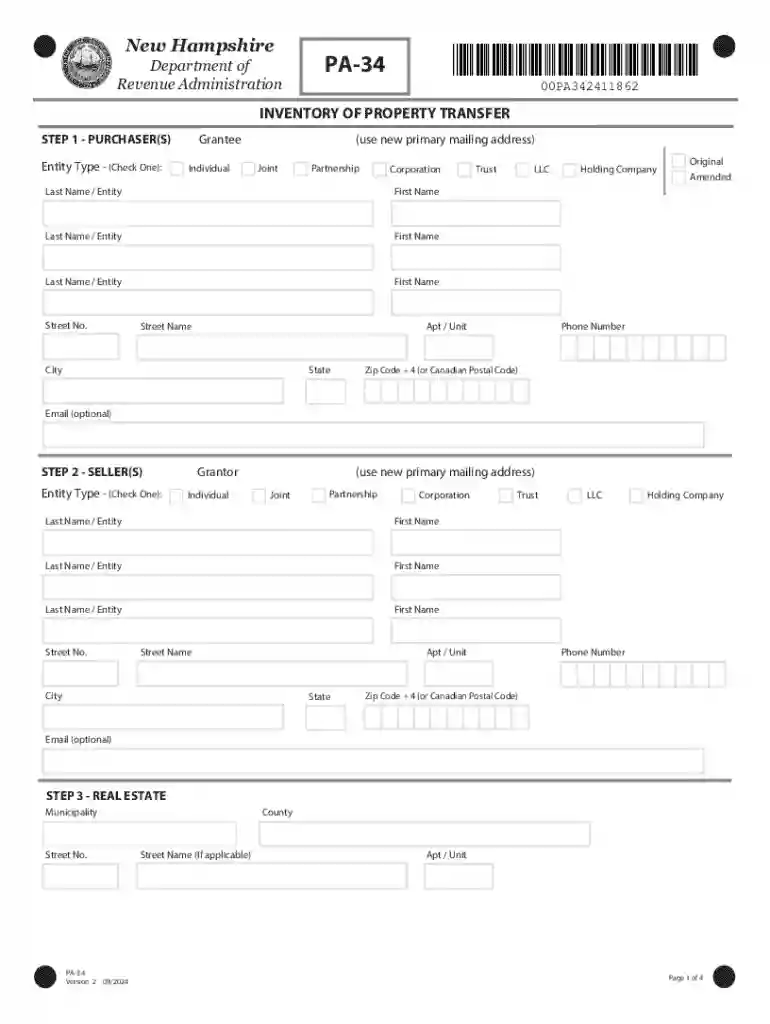
The PA-34 Form, officially named the "Inventory of Property Transfer," is a document used by the New Hampshire Department of Revenue Administration. It is essential in recording real estate transactions to comply with state regulations. This form requires parties involved in a property transfer to disclose specific information, helping in maintaining accurate records of real estate ownership and taxation data within the state.
The PA-34 Form serves as a channel for documenting crucial details during a property transfer. It is used by both buyers and sellers to provide comprehensive information about the transaction. This includes identifying details of both parties, a description of the property, and the type of transfer occurring. The form ensures that all necessary data is collected, contributing to the transparent and accurate documentation of property exchanges.
The PA-34 Form can be acquired directly from the New Hampshire Department of Revenue Administration's website. Alternatively, it may be available through real estate agents or attorneys who manage property transactions. Accessing the form online ensures you have the latest version with up-to-date requirements.
Gather Required Information: Before starting the form, collect all necessary details, including the names of the buyer and seller, property description, and transaction specifics.
Complete Personal Details: Fill out the sections that require personal information of the parties involved in the property transfer.
Property Description and Transfer Type: Accurately describe the property being transferred and specify the type of transfer (e.g., sale, gift).
Transaction Details: Include information about the agreed transaction value and terms.
Signatures: Ensure all required parties sign the document to validate the information provided.
Review and Submission: Double-check all entries for accuracy before submitting the form to the specified department.
The PA-34 Form is primarily used by individuals engaging in real estate transactions in New Hampshire. This includes buyers, sellers, real estate agents, and attorneys who assist with property deals. It is a crucial element for anyone involved in the procedural aspects of property transfers, ensuring that their transactions are documented in a manner compliant with state regulations.


The PA-34 Form plays a significant role in legal compliance for real estate transactions in New Hampshire. By ensuring that all pertinent information is recorded accurately, this form aids in the lawful documentation of property transfers. It thereby provides a legal foundation for property taxation and ownership records, safeguarding involved parties against potential disputes or legal challenges.
The PA-34 Form is unique to New Hampshire, reflecting state-specific requirements for property transfers. As such, it aligns with local laws and regulations, ensuring compliance for transactions within the state. Understanding these provincial rules is critical for anyone involved in property transfers, as failing to adhere can lead to complications or penalties. Working with professionals familiar with New Hampshire law can be invaluable in navigating these requirements.
The PA-34 Form is comprised of several critical elements:
We've got more versions of the PA-34 Form form. Select the right PA-34 Form version from the list and start editing it straight away!
At DocHub, your data security is our priority. We follow HIPAA, SOC2, GDPR, and other standards, so you can work on your documents with confidence.