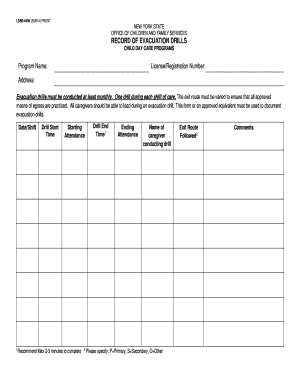
Publication 5428 (Rev 10-2024)-2026

Get Form
Publication 5428 (Rev 10-2024) Preview on Page 1

Here's how it works

01. Edit your form online
Type text, add images, blackout confidential details, add comments, highlights and more.

02. Sign it in a few clicks
Draw your signature, type it, upload its image, or use your mobile device as a signature pad.

03. Share your form with others
Send it via email, link, or fax. You can also download it, export it or print it out.

Definition and Meaning of Publication 5428 (Rev 10-2024)

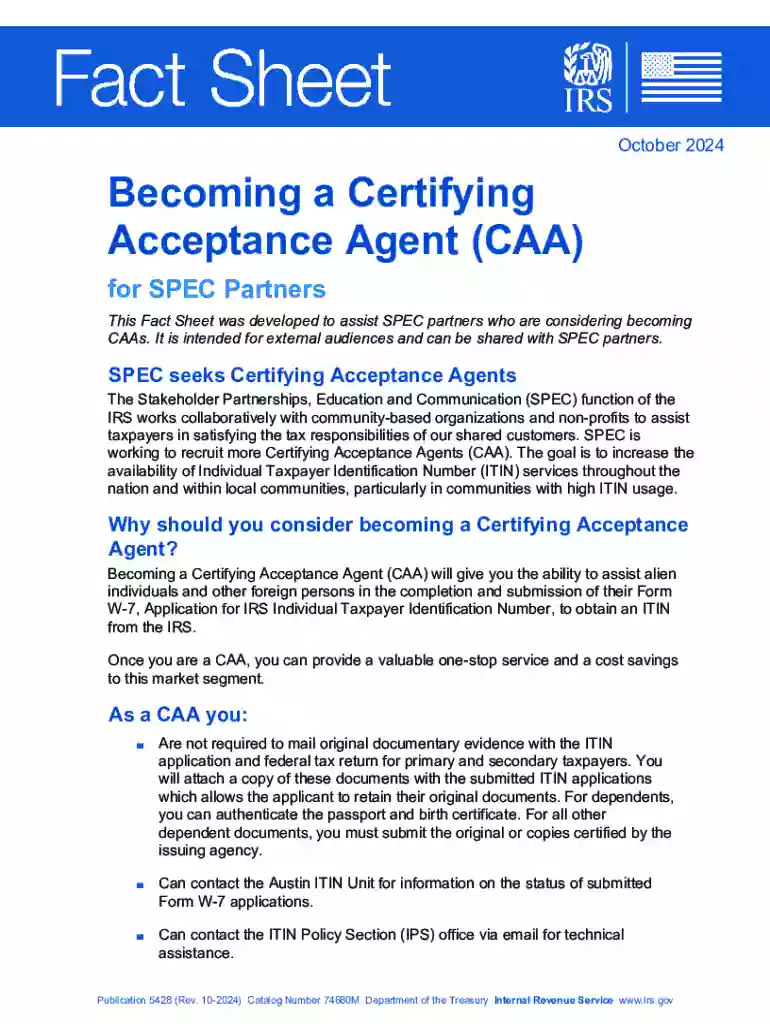
Publication 5428 (Rev 10-2024) is a document issued by the Internal Revenue Service (IRS) designed to guide community-based organizations and non-profits on becoming Certifying Acceptance Agents (CAAs) under the IRS Stakeholder Partnerships, Education, and Communication (SPEC) program. CAAs are essential for providing Individual Taxpayer Identification Number (ITIN) services, especially in areas with high ITIN usage, facilitating tax processing for those without Social Security numbers.

Key Functions

  • Guidance on Becoming CAAs: Explains the process and requirements for organizations to become CAAs.
  • Importance of ITIN Services: Highlights the role of CAAs in managing ITIN applications.
  • Program Overview: Provides details about the SPEC program and its benefits.

How to Use the Publication 5428 (Rev 10-2024)

Understanding how to utilize this publication is crucial for organizations seeking to enhance their tax service roles.

Practical Steps

  1. Review Eligibility Criteria: Determine if your organization meets the necessary qualifications to become a CAA.
  2. Follow Application Procedures: Use the publication to navigate the application process step-by-step, ensuring all requirements are met.
  3. Implement Training Programs: Follow the guidelines for training required for applicants to provide competent ITIN services.

Benefits of Using the Document

  • Streamlined Processes: Clear instructions help organizations efficiently manage their application and training processes.
  • Compliance Assurance: Ensures all IRS guidelines are followed, minimizing risk of penalties.

Steps to Complete the Publication 5428 (Rev 10-2024)

Completing forms and meeting requirements can be daunting, but this publication simplifies the task with detailed steps.

Procedural Outline

  1. Gather Required Documentation: Identify and collect all necessary documents as outlined in the publication.
  2. Fill Out Forms Accurately: Enter information carefully to avoid delays in processing.
  3. Submit Application Materials: Follow outlined procedures for submission to ensure they are received and processed timely.

Common Missteps to Avoid

  • Incomplete Submissions: Ensure all sections are addressed and required fields completed.
  • Missed Deadlines: Adhere to any specified submission deadlines to avoid setbacks.

Who Typically Uses the Publication 5428 (Rev 10-2024)

Understanding the primary audience for this publication can help in tailoring its use effectively.


decoration image ratings of Dochub

Typical User Groups

  • Community-Based Organizations: Entities providing localized support services often utilize this guide.
  • Non-Profit Agencies: Organizations needing to assist clientele with ITIN services.
  • IRS Partners: Entities collaborating with the IRS under the SPEC program.

Specific Needs Met

  • Enhanced Service Capability: Helps users offer comprehensive tax-related services.
  • Increased Compliance and Efficiency: Supports adherence to regulatory requirements.

Important Terms Related to Publication 5428 (Rev 10-2024)

Comprehending key terminology can enhance understanding and effective use of this document.

Glossary of Terms

  • Certifying Acceptance Agent (CAA): A role specializing in assisting individuals with tax identification needs.
  • ITIN (Individual Taxpayer Identification Number): A tax processing number for individuals ineligible for a Social Security Number.
  • SPEC Program: An IRS initiative focused on partnerships and education in tax preparation.

Relevance of Terms

  • Clarifies Document Content: Ensures all users have a basic understanding of relevant concepts.
  • Facilitates Accurate Communication: Encourages precise dialogue between agencies and clients.

Legal Use of the Publication 5428 (Rev 10-2024)

Ensuring legal compliance is a cornerstone of using this document effectively.

Legal Considerations

  • Adherence to IRS Regulations: Failing to comply could lead to fines and penalties.
  • Use for Official Purposes Only: This publication should only be used in the context of official CAA applications and ITIN services.

Case Examples

  • Non-Profit Organizations: Legal constraints require adherence to IRS guidelines in all service activities.
  • Community Services: Must operate within legal frameworks to maintain good standing.

Filing Deadlines and Important Dates

Meeting deadlines is critical for successful use of this publication.

Timeline Overview

  • Application Submission Period: Specific periods may be designated for submission; always check for updates.
  • Training Completion Dates: Ensure training is completed within required time frames to remain eligible.

Impact of Deadlines

  • Processing Delays: Missing deadlines can result in processing delays and service interruptions.
  • Lost Opportunities: Delays in submitting applications might limit an organization's ability to become a CAA.

Required Documents for Publication 5428 (Rev 10-2024)

Proper documentation is vital for successful form completion and submission.

Document Checklist

  • Identification Documents: Valid government-issued ID for verification of personnel.
  • Organizational Eligibility Proof: Documentation proving non-profit status and community service.

Tips for Document Preparation

  • Verify Document Validity: Ensure all documents are current and verifiable.
  • Organize for Clarity: Present documents in a logical, clear order to facilitate efficient processing.
be ready to get more

Complete this form in 5 minutes or less

Get form

Got questions?

We have answers to the most popular questions from our customers. If you can't find an answer to your question, please contact us.
Contact us
Beginning January 1, 2024, partnerships were required to file Form 1065 and related forms and schedules electronically if they file 10 or more returns of any type during the tax year, including information, income tax, employment tax, and excise tax returns. Certain exceptions apply. See Electronic Filing , later.
IRS Publication 524 is the official document that explains the credit for the elderly or the disabled. It breaks down who qualifies, how to calculate the credit and how to claim it. The publication is intended to help taxpayers understand eligibility requirements, such as income limits and age or disability criteria.
What is the senior tax credit? Formally known as the Credit for the Elderly or the Disabled, the federal senior tax credit is a credit of $3,750 to $7,500 that lowers federal tax bills for older adults and people who retired on permanent and total disability.
Publication 524 will no longer be revised after tax year 2023. Instead, all the information on who is eligible for the credit for the elderly or disabled and how to figure the credit is now included in the Instructions for Schedule R (Form 1040). Prior revisions of Publication 524 will remain on IRS.gov.
The tax law definition of totally and permanently disabled is: The person cant perform docHub duties over a reasonable period of time while working for pay or profit in a competitive work situation for at least the minimum wage because of a physical or mental condition.

Security and compliance

At DocHub, your data security is our priority. We follow HIPAA, SOC2, GDPR, and other standards, so you can work on your documents with confidence.

Learn more
ccpa2
pci-dss
gdpr-compliance
hipaa
soc-compliance
be ready to get more

Complete this form in 5 minutes or less

Get form

People also ask

Rev. Rul. 2024-11 5/9/24 Provides rates for interest determined under Section 6621 for the calendar quarter beginning July 1, 2024, will be 8% for overpayments (7% in the case of a corporation), 8% for underpayments, and 10% for large corporate underpayments.
Certified Acceptance Agents (CAAs): The IRS authorizes CAAs to help individuals complete the ITIN application process. Their fees typically range from $50 to $200 or more, depending on their location, experience, and additional services offered.

Related links