




01. Edit your form online
Type text, add images, blackout confidential details, add comments, highlights and more.

Type text, add images, blackout confidential details, add comments, highlights and more.

Draw your signature, type it, upload its image, or use your mobile device as a signature pad.

Send it via email, link, or fax. You can also download it, export it or print it out.
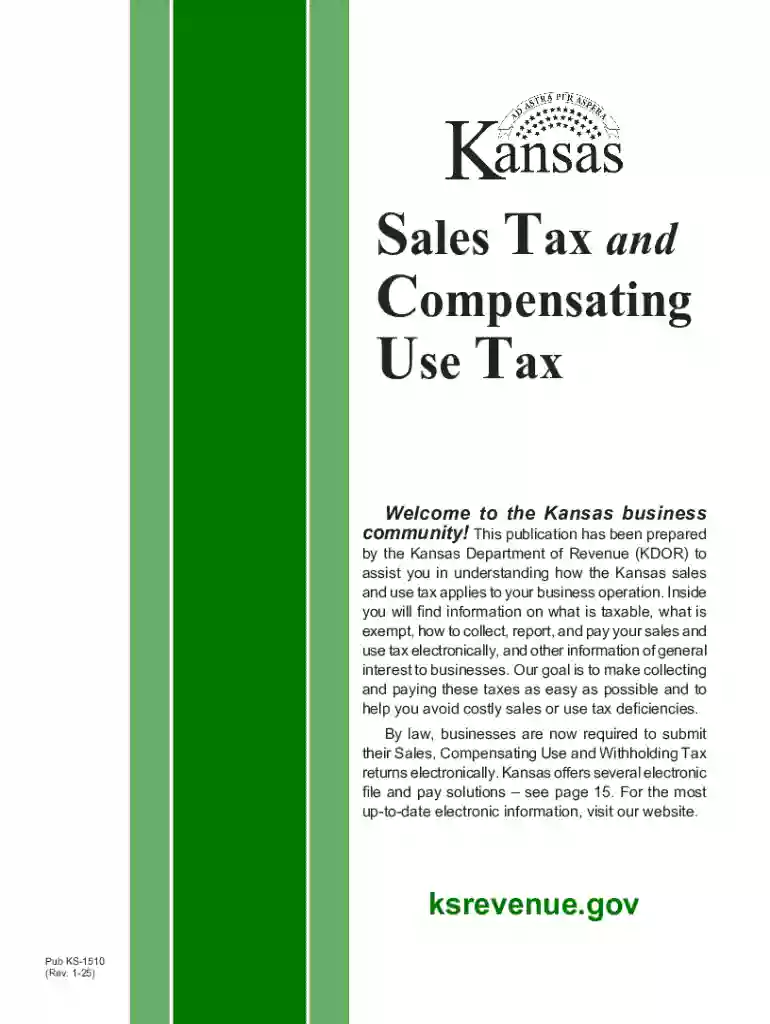
The Pub KS-1510 Sales Tax and Compensating Use Tax Booklet Rev 11-24 is a comprehensive guide prepared by the Kansas Department of Revenue. It outlines the obligations of businesses concerning sales tax and compensating use tax within the state. The publication serves as an educational tool to help businesses understand various tax-related responsibilities, including the collection, reporting, and payment of these taxes. The booklet is vital for ensuring compliance with Kansas tax laws and provides an in-depth explanation of taxable and exempt transactions, making it an essential resource for businesses operating in the state.
Understand the Tax Categories: Familiarize yourself with the different categories of goods and services that are taxable. This will help you accurately determine which transactions require sales tax collection.
Gather Required Information: Compile all necessary information regarding your business transactions, including sales records, exempt sales certificates, and other supporting documents needed for accurate reporting.
Calculate Total Taxable Sales: Calculate the total amount of sales that are subject to sales or compensating use tax. Ensure all exempt sales are correctly documented.
Apply Applicable Tax Rates: Determine the correct tax rate for each transaction category, as these can vary based on product type and location.
Prepare the Tax Form: Fill out the tax sections of the Pub KS-1510 form accurately. Double-check the entries to ensure no errors in calculations or documentation.
Submit the Completed Form: Submit the booklet along with any payments electronically or by mail, adhering to the outlined deadlines.


These sections offer a deep dive into the requirements and processes outlined in the publication while enhancing understanding through practical application and examples.
We've got more versions of the Pub KS-1510 Sales Tax and Compensating Use Tax Booklet Rev 11-24 form. Select the right Pub KS-1510 Sales Tax and Compensating Use Tax Booklet Rev 11-24 version from the list and start editing it straight away!
At DocHub, your data security is our priority. We follow HIPAA, SOC2, GDPR, and other standards, so you can work on your documents with confidence.


FORM 990PF, PART I - TAXES REVENUE AND NET ADJUSTED EXPENSES. SALES AND USE TAX 115,922. UNRELATED BUSINESS INCOME TAX 38,395.
Inside you will find information on what is taxable, what is exempt, how to collect, report, and pay your sales and use tax electronically, a maximum sales tax


