




01. Edit your st 36 pdf online
Type text, add images, blackout confidential details, add comments, highlights and more.

Type text, add images, blackout confidential details, add comments, highlights and more.

Draw your signature, type it, upload its image, or use your mobile device as a signature pad.

Send kansas sales tax form st 36 via email, link, or fax. You can also download it, export it or print it out.
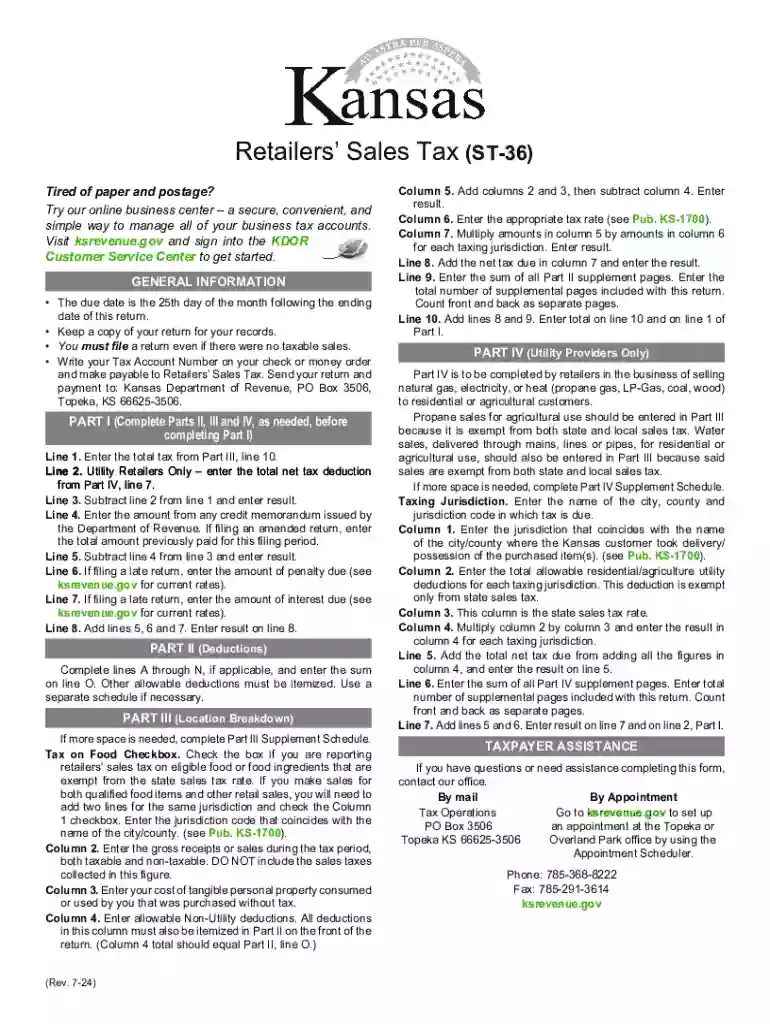
The Retailers' Sales Tax Return and Instructions ST-36 Rev 7-24 is a tax form used by businesses operating in Kansas to report and remit sales tax collected from customers. This form is essential for ensuring compliance with state tax laws and maintaining proper financial records. Retailers must itemize and report their taxable sales, deductions, and any taxes owed to the Kansas Department of Revenue.
This form serves as a crucial document for businesses to demonstrate adherence to tax regulations and calculate the correct amount of sales tax due. By accurately completing the ST-36 form, businesses avoid potential penalties and maintain a transparent relationship with tax authorities.
Proper documentation is vital for substantiating claimed deductions and exemptions. In the event of an audit, these documents serve as evidence to support the information reported on the ST-36 form.
The due date for submitting the Retailers' Sales Tax Return and Instructions ST-36 Rev 7-24 varies depending on the reporting period. Typically, monthly filings are due on the 25th of the following month. Late submissions can result in penalties.
Businesses failing to submit accurate or timely sales tax returns may incur penalties, which can include:
Timely and accurate filing, along with diligent record-keeping, helps businesses avoid these punitive measures and maintain good standing with the Kansas Department of Revenue.
The ST-36 form is accessible through various tax software platforms, facilitating easier completion and submission. Compatible applications include TurboTax and QuickBooks, which offer features for calculating and filing sales taxes efficiently.
Kansas has particular regulations governing sales tax that businesses must adhere to while completing the ST-36 form. These include specific exemptions and deductions applicable within the state.
Different business types and ownership structures might encounter unique scenarios while dealing with the ST-36 form. Below are examples:


Understanding these scenarios allows businesses to adopt tailored strategies for effective sales tax collection and reporting.
We've got more versions of the st 36 pdf form. Select the right st 36 pdf version from the list and start editing it straight away!
At DocHub, your data security is our priority. We follow HIPAA, SOC2, GDPR, and other standards, so you can work on your documents with confidence.


The data showed that the total effective corporate tax rate is 15.3% for all companies, and 29% for companies that made a profit.
by J YOUNGMAN A tax that has been capitalized into property values reduces the economic burden on purchasers; an asset tax can help balance increasing reliance on regressiveRead more
Only current period tax forms are available online. Instructions for Sales and Use Tax Accounts on a Quarterly and Prepayment Filing Basis


