Understanding the 2024 Maine Individual Income Tax Form 1040ME
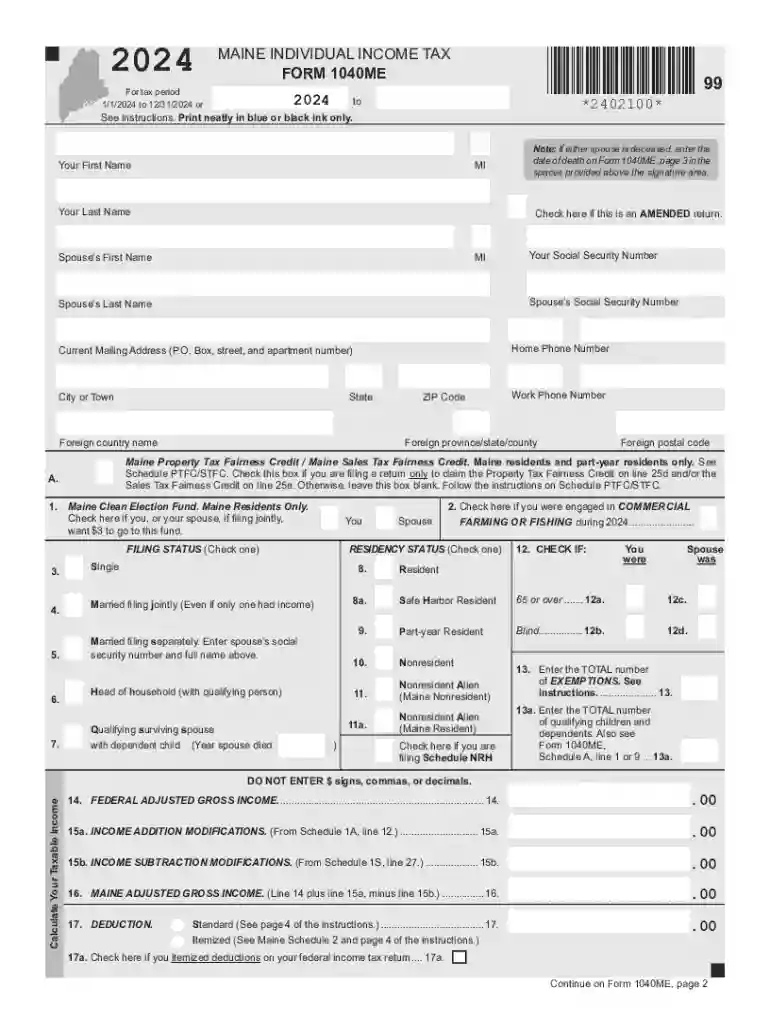
The 2024 Maine Individual Income Tax Form 1040ME is designed to help residents of Maine file their state income taxes, covering income reporting, deductions, exemptions, and tax credits. This form is essential for ensuring taxpayers comply with state regulations and accurately report their financial obligations. Designed with the taxpayer in mind, it provides a comprehensive framework for both individuals and professionals involved in tax preparation.
Components of the Form 1040ME
- Personal Information: Includes sections for name, address, and Social Security number, ensuring accurate identification.
- Residency Status: Determines if the taxpayer is a full-year, part-year, or nonresident for the purpose of tax calculations.
- Filing Status: Options such as single, married filing jointly, or head of household affect the tax rates and available deductions.
Steps to Complete the Form 1040ME
Completing the Form 1040ME requires careful attention to detail and adherence to instructions to ensure accuracy:
- Gather Required Documents: Collect all necessary documents, such as W-2s, 1099s, and receipts for deductions.
- Fill in Personal Information: Enter your personal details as required in the pertinent sections.
- Determine Filing Status and Residency: Select the appropriate options based on your individual situation.
- Calculate Taxable Income: Compile total income and apply deductions to arrive at taxable income.
- Apply Tax Credits and Calculate Tax Owed: Use any applicable credits to reduce your tax liability and determine the amount owed or refund due.
Important Considerations
- Deductions and Exemptions: Ensure all eligible deductions and exemptions are applied to minimize taxable income.
- Contributions to the Maine Clean Election Fund: Consider making a voluntary contribution if desired, as indicated on the form.
Key Elements of the Form 1040ME
The form encompasses several critical areas that taxpayers need to focus on:
- Taxable Income Calculation: Accurate reporting here is crucial for compliance and minimizing errors.
- Health Care Coverage Options: Sections related to health insurance compliance and potential penalties.
- Tax Payments: Documenting payments made throughout the year via withholdings or estimated payments affects the final amount due or refundable.
Potential Challenges and Solutions
- Understanding Tax Credits: Thoroughly review each available credit to determine eligibility.
- Amending Returns: Procedures are outlined for filing amended returns if necessary corrections or changes arise after initial submission.
Filing Deadlines and Important Dates
Adherence to specific deadlines is crucial to avoid penalties for late filing or payment:
- Filing Deadline: Generally, the deadline for submitting the Form 1040ME aligns with the federal tax deadline, typically April 15th.
- Extension Requests: Taxpayers needing additional time can apply for an extension, although this does not delay the payment of any taxes due.
Key Dates
- Estimated Tax Payment Due Dates: Regular payments across quarters help avoid underpayment penalties.
- Amendment Deadlines: Should you need to amend a filed return, ensure compliance with state guidelines on timeframes for adjustments.
Obtaining and Submitting the Form 1040ME
Taxpayers can acquire and submit the Form 1040ME through various channels:
- Online Access: Downloadable from the Maine Revenue Services website for digital completion.
- Physical Copies: Available at state tax offices or by request for mail delivery.
- Submission Methods: Options include online electronic filing, mailing, or direct submission to local tax offices.
Submission Tips
- Electronic Filing: Provides verification and immediate acknowledgment of receipt.
- Mail Submission: Certified mail is recommended to ensure delivery confirmation.
Penalties for Non-Compliance
Non-compliance with filing, payment, or procedural requirements can lead to penalties:
- Late Filing Penalties: A percentage of the tax due is assessed for each month the filing is late.
- Late Payment Penalties: Interest accrues on unpaid taxes from the due date until payment is made.
Avoiding Penalties
- Timely Filing and Payment: Adhere to all deadlines and arrangements for the payment of any owed taxes.
- Using Reliable Software: Leveraging tax software can help in ensuring correct calculations and timely submissions.
Software Compatibility and Digital Filing
For those who prefer doing taxes digitally, software options exist to facilitate completion and submission:
- TurboTax, QuickBooks: Both are compatible with state tax forms and can streamline the preparation process.
- Online Platforms: Services like DocHub support document management and form completion for multiple file types.
Advantages of Digital Filing
- Efficiency: Electronic systems reduce errors and improve processing time.
- Accessibility: Allows taxpayers to easily access forms and documentation anytime.
By thoroughly exploring these blocks, taxpayers can navigate the complexities of the 2024 Form 1040ME with greater ease and confidence.