







Understanding the Certificate of Garage Insurance - DFS NY
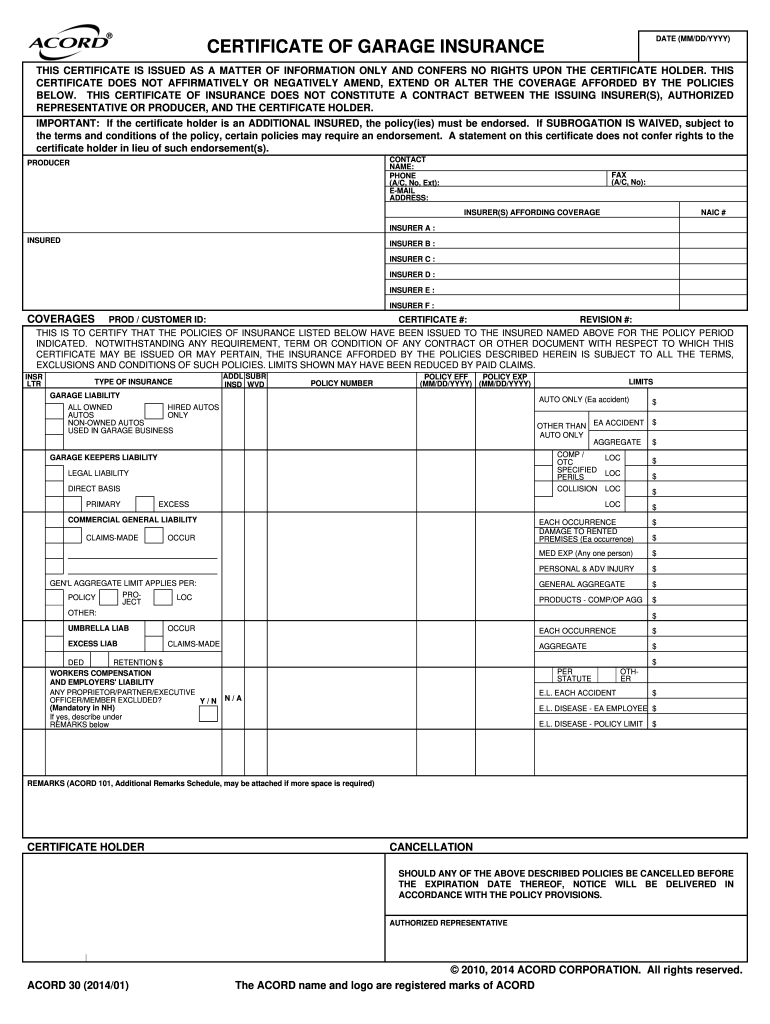
A Certificate of Garage Insurance issued in New York state by the Department of Financial Services (DFS) serves as a formal document confirming that specific insurance coverage has been granted to a garage owner. It provides proof to third parties that the insured entity complies with state-mandated coverage requirements without altering the terms contained within the insurance policies themselves. Typically, it encompasses coverages for garage liability, workers’ compensation, and additional liabilities pertinent to the auto service industry.
Steps to Obtain the Certificate of Garage Insurance
To acquire a Certificate of Garage Insurance in New York, follow these crucial steps:
- Assess Insurance Needs: Evaluate the types of coverages required for your business, like liability and workers' compensation insurance.
- Contact Insurers: Reach out to licensed insurance providers in New York. Obtain quotes and compare policy terms and coverage limits.
- Purchase Insurance: Opt for a policy that meets your coverage needs and provides a certificate issuance upon purchase.
- Request Certificate: Once your insurance policy is active, request a Certificate of Garage Insurance from your insurer or the authorized agent.
- Submit to DFS: Some instances may require submission to the New York DFS, particularly for renewals or compliance checks.
Key Elements of the Certificate of Garage Insurance
The certificate encompasses essential components, including:
- Insured Details: This includes the name, address, and contact of the garage owner or the insured entity.
- Policy Information: Lists the policy number, effective dates, and coverage types.
- Coverages: Specifies coverage types, such as general liability and workers' compensation.
- Coverage Limits: Outlines the monetary limits of each coverage type to clearly define the extent of liability protection.
- Authorized Signature: Must contain an authorized signature confirming its authenticity.
Who Typically Uses the Certificate of Garage Insurance
The Certificate of Garage Insurance is predominantly used by:
- Auto Repair Shops: To validate insurance coverages to clients and regulatory bodies.
- Car Dealerships with Service Departments: Especially those engaging in vehicle storage or repair activities.
- State and Municipal Agencies: For compliance verification purposes when licenses or permits are issued.
- Clients and Partners: To ensure the garage meets required safety and liability standards.


State-Specific Rules for the Certificate of Garage Insurance in New York
New York imposes distinct regulations for garage insurances:
- Mandatory Coverages: Must include minimum liability, bodily injury, and property damage coverages.
- Workers’ Compensation: Required if a business employs one or more employees.
- Compliance: Must comply with the New York DFS standards to remain operational.
- Renewal Rules: Certificates should be renewed periodically; failure to maintain coverage leads to penalties or business operation suspensions.
Legal Use of the Certificate of Garage Insurance
The certificate legally serves as:
- Proof of Insurance: Establishes proof of having the appropriate insurance that satisfies state-mandated requirements.
- Verification Document: Agencies and clients can verify compliance with regulatory standards.
- Non-Binding Document: While it confirms issued policies, it doesn’t provide additional or modified coverage not already stated in the actual policy documents.
Important Terms Related to the Certificate of Garage Insurance
Understanding these terms is crucial:
- Garage Liability: Covers damages or injuries that occur within the premises or arise from business operations.
- Named Insured: The individual or entity to whom the coverage applies.
- Subrogation: The right for an insurer to legally pursue a third party responsible for an insurance loss to the insured.
- Endorsement: Amendments or additions to the existing insurance policy terms or coverage.
Penalties for Non-Compliance with Certificate of Garage Insurance Requirements
Non-compliance with Garage Insurance regulations can lead to serious repercussions:
- Fines and Penalties: Businesses may face monetary penalties from regulatory bodies for failing to maintain adequate coverage.
- License Revocation: Persistent non-compliance may result in the suspension or revocation of business licenses.
- Legal Actions: Clients may pursue legal claims if coverage is inadequate during loss events.
- Increased Premiums: Subsequent policy renewals may result in higher premium costs due to previous lapses in coverage compliance.
These blocks collectively offer comprehensive coverage and guidance on the "CERTIFICATE OF GARAGE INSURANCE - dfs ny" form's understanding, acquisition, key attributes, usage, and compliance implications within the New York context.




