






Definition & Meaning
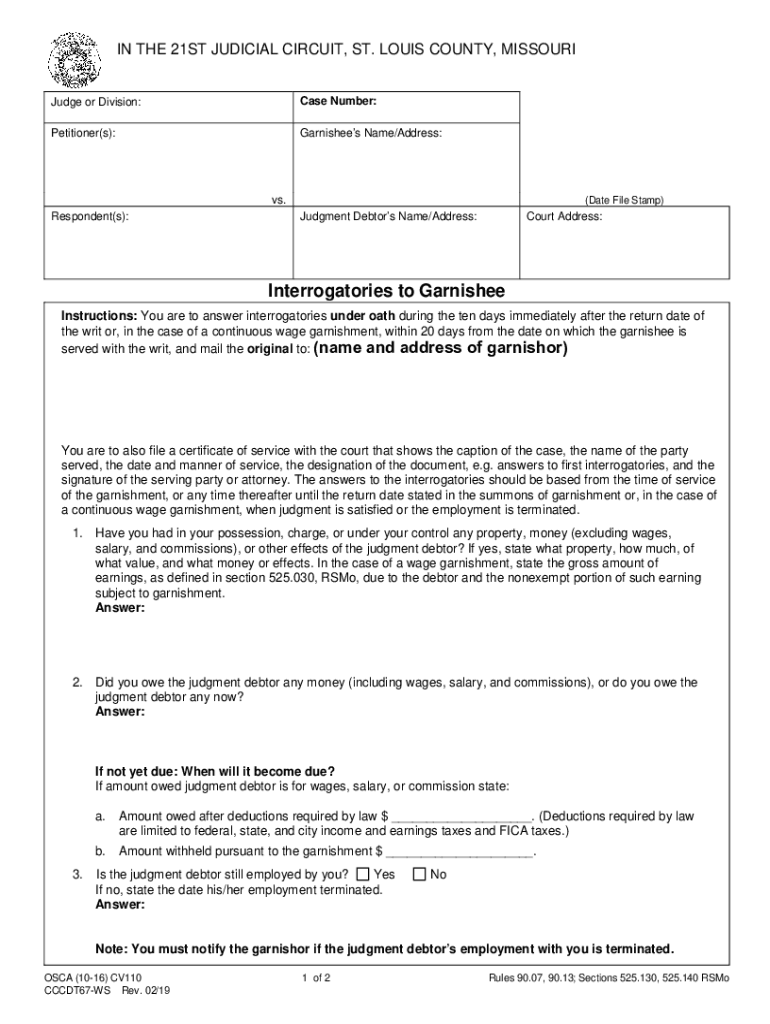
The Missouri Garnishment Application and Order is a legal process used to enforce a judgment by seizing a portion of a debtor's assets or earnings to satisfy a debt. Typically initiated after obtaining a court judgment, this process compels a third party (garnishee)—such as an employer or bank—to withhold funds from the debtor's wages or accounts. The procedure is an essential tool for creditors in Missouri seeking recovery of unpaid debts, ensuring compliance with both state and federal garnishment laws. Numerous statutes and regulations govern its execution, reflecting its intricate nature within the judicial system.
Steps to Complete the MISSOURI Garnishment Application and Order
-
Gather Required Information: Collect the debtor's personal details, such as full name, address, and Social Security number, along with the specifics of the judgment being enforced.
-
Prepare the Application: Complete the garnishment application form, accurately detailing the creditor's claims and the amount owed.
-
File with the Court: Submit the completed form to the relevant court where the judgment was issued, often accompanied by a filing fee.
-
Court Approval: Once filed, the court evaluates the application and may issue a garnishment order if conditions are met.
-
Serve the Garnishee: Deliver the garnishment order to the third party responsible for withholding funds.
-
Monitor Compliance: Ensure the garnishee withholds the specified amount, directing it towards the debt until fully settled.
Following these steps systematically ensures adherence to legal procedures and maximizes the chances of successful debt recovery.
Who Typically Uses the MISSOURI Garnishment Application and Order
- Creditors: Primarily used by businesses and individuals to collect on unpaid judgments.
- Lawyers and Legal Firms: Legal representatives act on behalf of creditors to manage and file applications efficiently.
- Collections Agencies: Engage in garnishment procedures as part of their debt recovery strategies.
- Financial Institutions: Banks and mortgage companies use garnishment orders to recover money owed from defaulters.
This tool serves those needing legal means to enforce financial obligations and ensure compliance with Missouri laws.


Key Elements of the MISSOURI Garnishment Application and Order
- Judgment Details: Includes case number, amount owed, and date of judgment.
- Garnishee Information: Details of the entity responsible for asset withholding.
- Debtor Identification: Comprehensive debtor information to facilitate accurate garnishment.
- Legal Authority: Documentation proving the legal basis for the garnishment order.
- Calculation of Garnishable Amount: Based on statutory limits and debtor’s income.
These components are critical for ensuring the application’s validity and effective enforcement of the order.
Legal Use of the MISSOURI Garnishment Application and Order
Missouri's legal framework supports creditors using garnishment applications to enforce judgments. Compliance with state-specific regulations, such as exemptions for specific earnings and property under Missouri law, is mandatory. The legal process requires adherence to procedures for obtaining court-issued garnishment orders, serving them to garnishees, and following up on the compliance and remittance of garnished funds. Misuse or failure to comply with legal requirements can result in penalties or dismissal of the garnishment action.
State-Specific Rules for the MISSOURI Garnishment Application and Order
Missouri imposes specific rules:
- Exemption Limits: Incorporates state and federal exemption percentages for wage garnishments.
- Frequency of Garnishment: Restrictions on how often funds can be garnished per pay cycle.
- Notification Requirements: Obligatory notice to debtor detailing their rights and amount garnished.
- Non-Exemptions: Protection of specific income types, like Social Security benefits, from garnishment.
Understanding these jurisdictional nuances is crucial for executing garnishment orders legally and effectively.
Filing Deadlines / Important Dates
- Judgment to Garnishment: Garnishment must typically be pursued within a specific time post-judgment.
- Renewal Periods: Garnishment orders may need periodic renewal, following court guidelines.
- Response Times: Defined periods within which garnishees must begin fund withholding after receiving an order.
- Appeal Windows: Debtor’s timeframe to contest the garnishment action.
Adhering to these timelines is quintessential for maintaining legal validity and avoiding procedural setbacks.
Penalties for Non-Compliance
Failure to comply with the garnishment process can result in significant penalties:
- Monetary Fines: Courts may impose fines on non-compliant entities or individuals.
- Legal Sanctions: Potential contempt of court for willful noncompliance, leading to additional legal consequences.
- Dismissal of Garnishment Action: Inadequate adherence to procedures might result in dismissed applications.
Understanding the implications of non-compliance ensures that both creditors and garnishees maintain procedural integrity.
Required Documents
- Judgment Copy: Certified copy of the judgment being enforced.
- Completed Garnishment Application Form: Official form detailing the garnishment request.
- Notice to Garnishee: Legal notice attached to the order instructing the garnishee.
- Certificate of Service: Documentation proving service of the order to all relevant parties.
These documents collectively validate the garnishment action and facilitate its legal enforcement.