




01. Edit your iowa tax exemption online
Type text, add images, blackout confidential details, add comments, highlights and more.

Type text, add images, blackout confidential details, add comments, highlights and more.

Draw your signature, type it, upload its image, or use your mobile device as a signature pad.

Send it via email, link, or fax. You can also download it, export it or print it out.
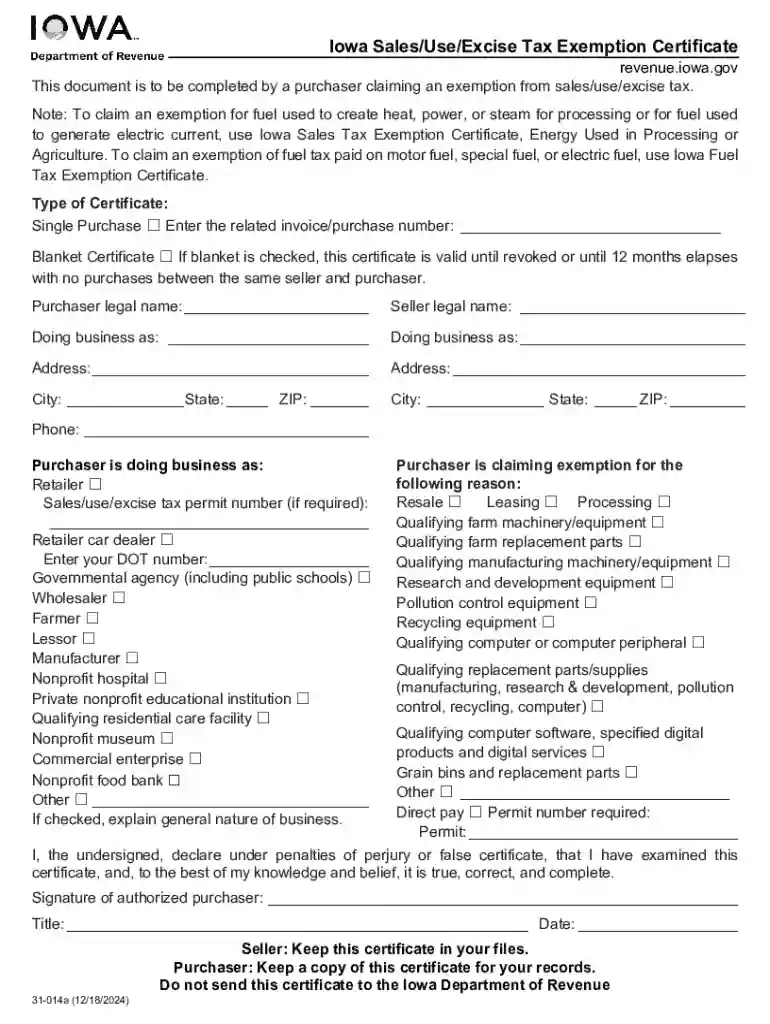
The Iowa Exemption Certificate is a crucial document for purchasers looking to claim exemptions from sales, use, or excise tax within the state of Iowa. This certificate is used to substantiate the buyer's claim of exemption from these taxes during a transaction. Including details such as the nature of the exemption (e.g., resale, processing, qualifying farm machinery), this certificate helps ensure the proper tax compliance and documentation.
Using the Iowa Exemption Certificate correctly is essential for both buyers and sellers. The purchaser must complete the certificate accurately, detailing the seller's information, their own identification, and specifying the exemption type being claimed. Once completed, the seller retains the certificate as proof of the transaction being exempt from certain taxes. This process applies whether it is a single purchase or a blanket certificate intended for multiple transactions.
Obtaining the Iowa Exemption Certificate can be accomplished through several channels. Typically, you can download the form directly from the Iowa Department of Revenue's website. Alternatively, it may be available from an authorized tax consultant who can guide you through the process. Having this certificate on hand eases tax documentation and audit situations by providing clear evidence of exempt transactions.
Understanding the components of the Iowa Exemption Certificate is vital:
The legal framework surrounding the use of the Iowa Exemption Certificate demands strict adherence to Iowa tax laws. The certificate must be complete and accurate to lawfully exempt a purchase from taxes. Incorrect or fraudulent use of the certificate can result in penalties. It's vital for businesses to conduct due diligence when accepting these certificates to maintain compliance.
Iowa state law dictates specific conditions under which an exemption can be claimed. Types of exemptions include those for resale purposes, direct use in manufacturing, processing, or processing of agricultural products. Some exemptions require annual renewal; thus, buyers must remain updated on Iowa’s tax legislation to ensure compliance with all state-specific rules.
Several key terms are associated with the Iowa Exemption Certificate:
Various businesses and individuals primarily utilize the Iowa Exemption Certificate, including:
These purchasers benefit significantly by legally minimizing tax liabilities on eligible purchases.


We've got more versions of the iowa tax exemption form. Select the right iowa tax exemption version from the list and start editing it straight away!
| Versions | Form popularity | Fillable & printable |
|---|---|---|
| 2025 | 4.9 Satisfied (34 Votes) | |
| 2024 | 4.7 Satisfied (49 Votes) | |
| 2021 | 4.8 Satisfied (115 Votes) | |
| 2020 | 4.4 Satisfied (148 Votes) | |
| 2019 | 4.3 Satisfied (139 Votes) | |
| 2018 | 4.3 Satisfied (100 Votes) | |
| 2017 | 4.2 Satisfied (59 Votes) | |
| 2014 | 4.2 Satisfied (50 Votes) | |
| 2013 | 4.2 Satisfied (44 Votes) | |
| 2012 | 4.4 Satisfied (38 Votes) | |
| 2009 | 4.4 Satisfied (40 Votes) |
At DocHub, your data security is our priority. We follow HIPAA, SOC2, GDPR, and other standards, so you can work on your documents with confidence.

Sep 8, 2025 This exemption certificate must be completed by the purchaser claiming an exemption from sales, use, or excise tax and given to the seller.
IOGCC claims an exemption from both state- and federal-level open records law requests. IOGCC has claimed this exemption its most recent Certificate of Good
An Iowa Sales Tax Exemption Certificate is required when normally taxable items or services are sold tax free. 319-335-3500


