01. Edit your conveyance hawaii online
Type text, add images, blackout confidential details, add comments, highlights and more.

Type text, add images, blackout confidential details, add comments, highlights and more.

Draw your signature, type it, upload its image, or use your mobile device as a signature pad.

Send it via email, link, or fax. You can also download it, export it or print it out.
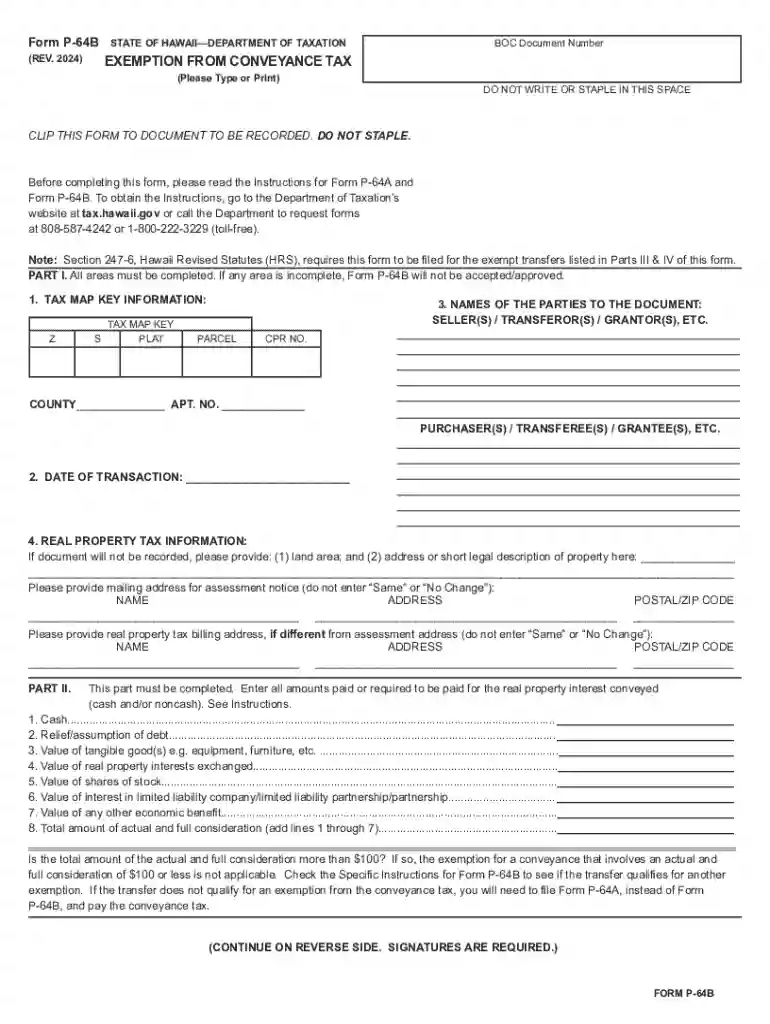
Form P-64B is an essential document used in Hawaii for claiming an exemption from the state's conveyance tax during real property transfers. This form requires detailed information about the transaction, including parties involved, property details, and the nature of the transfer. Accurate completion of this form is crucial, as it must be accepted by the Department of Taxation to grant the exemption. The form includes sections addressing both cash and non-cash considerations, ensuring that all financial aspects of the property transfer are properly documented. Parts III and IV of the form outline specific exemptions; adhering to these sections is necessary to qualify for tax exemption.
To effectively utilize Form P-64B, follow these steps to ensure accurate completion and submission:
Adhering to these guidelines will help streamline the process and enhance the likelihood of securing an exemption.
Accessing Form P-64B is straightforward, as it is available through several channels. You can download the form directly from the Hawaii Department of Taxation's website. Alternatively, physical copies can be obtained from local taxation offices. Utilizing electronic versions is increasingly popular as it allows for easy data entry and submission, and aligns with efforts to reduce paper use. When downloading, ensure you are accessing the most current version of the form to avoid compliance issues.
Completing Form P-64B requires attention to detailed information. Here is a structured approach to filling out the form:
Following this step-by-step process will facilitate complete and correct form submission, aiding in the exemption approval process.
Understanding the structure of Form P-64B is crucial for proper completion. Key elements include:
Attention to these elements promotes a seamless filing process, increasing the likelihood of the exemption being granted.
The legal applicability of Form P-64B is confined to real property transactions within Hawaii. The state requires this form to document and justify conveyance tax exemptions, creating a formal record that benefits both the taxpayer and the government. Misrepresentation or erroneous filing can attract penalties or disqualification from exemption eligibility. Therefore, strict compliance with the form's requirements is necessary to ensure its legal acceptance and effectiveness.
Form P-64B can be used in various scenarios where property conveyance tax exemptions are applicable:
Each example highlights the need for detailed and accurate form completion to ensure rightful tax exemptions are applied.
Proper submission of Form P-64B often necessitates supplementary documentation to verify the transaction and exemption claims:
Including these documents provides comprehensive support for the exemption claim, allowing for smoother and faster processing by the authorities.
We've got more versions of the conveyance hawaii form. Select the right conveyance hawaii version from the list and start editing it straight away!
At DocHub, your data security is our priority. We follow HIPAA, SOC2, GDPR, and other standards, so you can work on your documents with confidence.