
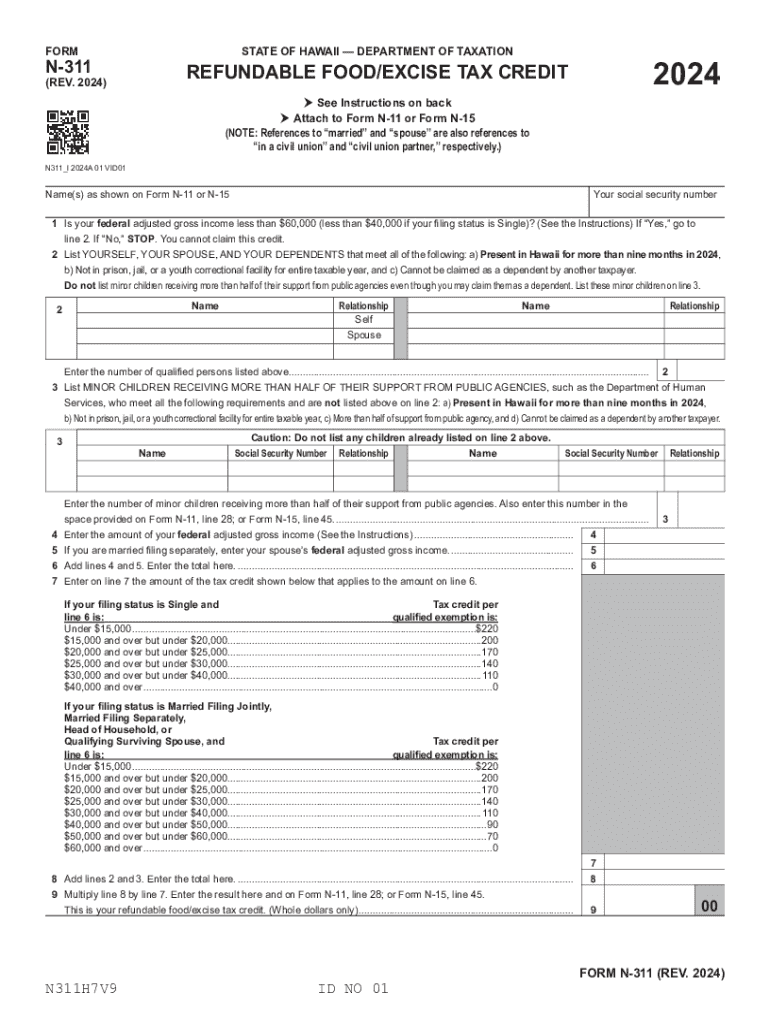







Definition and Purpose of Form N-311, Rev 2024, Refundable Food Excise Tax Credit
Form N-311, Rev 2024, serves as a tool for taxpayers in Hawaii to claim the refundable food/excise tax credit. This form is designed to provide financial relief by offsetting the excise taxes paid on food purchases. The tax credit aims to alleviate some financial burdens, especially for lower-income families, by allowing them to claim a credit against the excise taxes incurred on food expenses.
The primary beneficiaries of this form are residents of Hawaii whose federal adjusted gross income (AGI) meets specific thresholds. Detailed instructions help users understand which portions of income are considered and how exemptions like dependents or minor children are factored in. By completing this form accurately, taxpayers can ensure they receive the tax credit to which they are entitled.
Eligibility Criteria for Claiming the Tax Credit
It's crucial to determine eligibility for the refundable food excise tax credit before completing Form N-311, Rev 2024. Key criteria include:
- Income Requirements: Eligibility primarily depends on the taxpayer's federal adjusted gross income. Lower-income households are prioritized, with income thresholds adjusted according to household size and economic factors.
- Qualified Exemptions: Taxpayers can claim exemptions for themselves, their spouses, dependents, and minor children who receive public support. Each exemption reduces the taxable income and influences the credit amount.
- Residency Status: Only full-time residents of Hawaii can apply for this credit, ensuring that the tax relief is distributed to individuals contributing to the state's economy.


Steps to Complete Form N-311, Rev 2024
Completing Form N-311 requires careful attention to detail. Follow these steps to ensure all necessary information is accurately reported:
- Gather Personal and Financial Information: Collect all relevant financial documents such as W-2s, 1099s, and records of household size and dependents.
- Calculate Federal Adjusted Gross Income: Determine your AGI, considering any applicable deductions or adjustments.
- Fill in Exemptions: Clearly list all qualified exemptions, including dependents who qualify under state guidelines.
- Compute Tax Credit: Use the instructions provided to calculate the credit amount, based on income levels and exemptions.
- Review and Submit: Double-check all entered data for accuracy before submitting the form following the prescribed methods (online, mail, or in-person).
Important Terms Related to the Form
Understanding key terms used within Form N-311 is essential for accurate completion:
- Federal Adjusted Gross Income (AGI): A key figure derived from total income minus specific adjustments, which plays a crucial role in eligibility and credit calculation.
- Exemption: An allowance reducing taxable income for each qualifying household member.
- Excise Tax: A tax levied on specific goods and services, including food, which this credit aims to mitigate.
State-Specific Rules for Form N-311
Hawaii's Department of Taxation sets state-specific rules, crucial for applicants to heed:
- Documentation: Applicants must keep supporting documents for all exemptions claimed for potential audits.
- Changes in Legislation: Stay informed about any legislative changes affecting tax credits or income thresholds.
- Filing Requirements: Ensure the timely submission of the form, adhering to Hawaii's deadlines and submission protocols.
Required Documents for Form Submission
To successfully file Form N-311, prepare the following documents:
- Income Statements: Such as W-2s and 1099 forms demonstrating all forms of income.
- Proof of Residency: Documents confirming residency in Hawaii, like utility bills or rental agreements.
- Dependent Verification: Birth certificates or other legal documents proving the status of dependents being claimed.
Filing Deadlines and Important Dates
Adhering to specific deadlines and dates ensures compliance and avoids penalties:
- Form Submission Deadline: The due date is firmly established by Hawaii’s tax department, often aligning with federal tax deadlines.
- Amendments or Extensions: Procedures are in place for those needing to amend submissions or request filing extensions due to extraordinary circumstances.
Form Submission Methods
Hawaii offers multiple submission methods for ease and convenience:
- Online Submission: Available through the state's electronic filing portal, allowing for a faster, more streamlined process.
- Mail Submission: Accepted for those submitting physical copies, with appropriate addresses specified in form instructions.
- In-Person: Some taxpayers might prefer delivering documents directly to a local tax office.
The detailed content provided ensures a comprehensive understanding of Form N-311, Rev 2024, from its purpose and eligibility criteria to submission methods and deadlines, facilitating a seamless filing experience for taxpayers in Hawaii.


