





Definition and Purpose of the 2025 Form 901 Business Personal Property Rendition
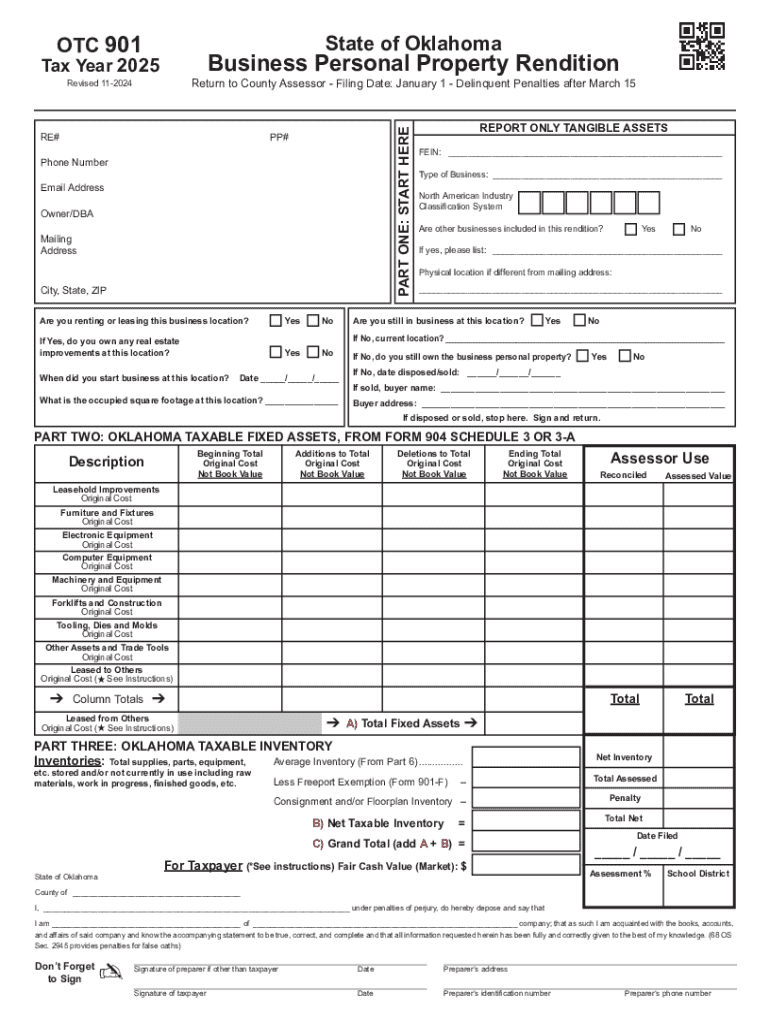
The 2025 Form 901 Business Personal Property Rendition, commonly referred to as Form 901, is an essential document for businesses operating in the state of Oklahoma. Its primary purpose is to facilitate the annual reporting of tangible assets and inventory for tax purposes as of January 1. Businesses are required to disclose detailed information about their physical assets, which assists local tax authorities in assessing property taxes owed. This legal document emphasizes transparency in asset reporting, ensuring that business owners meet their obligations for tax assessment accurately.
Steps to Complete the 2025 Form 901
-
Gather Required Information: Ensure you have access to comprehensive records of all tangible assets, including fixed assets, inventory, and any additions or deletions that occurred during the reporting year. Accurate and up-to-date records are crucial for completing the form efficiently.
-
Complete the Asset Sections: Begin with sections dedicated to fixed assets and inventory. List all physical assets owned by the business, including machinery, equipment, and office furnishings. Specify the nature of each asset, its purchase date, and its current value to facilitate proper tax assessment.
-
Report Additions and Deletions: Record any significant asset changes over the year. This includes new acquisitions or assets that are no longer with the company. Providing a detailed account of these changes ensures that records reflect the current state of your business’s assets.
-
Include Business Information: Fill out sections related to the general business details, such as the business name, owner or representative's name, and a contact address. This information helps local authorities associate the form with the correct business entity.
-
Sign and Submit the Form: The form must be signed by either a business owner or an authorized representative. Once signed, submit the completed document by the specified deadline to avoid penalties. Check the submission guidelines to choose between online and paper submission based on preference and convenience.
Filing Deadlines and Important Dates
For the 2025 tax year in Oklahoma, the Business Personal Property Rendition Form 901 should be filed by a specific date, generally early in the year. Missing the deadline can result in penalties, so it’s crucial to mark this date on your calendar. Filing early allows businesses to make corrections if any discrepancies are discovered before the due date, minimizing the risk of penalties.
Penalties for Non-Compliance
Non-compliance with the filing requirements of Form 901 can lead to various penalties. These may include financial fines imposed for late filing, inaccuracies, or failure to file at all. Such penalties are put in place to encourage accurate and timely reporting. Businesses should prioritize compliance to avoid these additional costs, which can significantly affect their financial standing.
Key Elements of Form 901
- Fixed Assets: Identify and report all tangible fixed assets, specifying details like purchase price and current market value.
- Inventory: Include all business inventory as of January 1, documenting quantity, type, and valuation.
- Additions and Deletions: Provide a detailed account of assets acquired or disposed of within the reporting period.
- General Business Information: Ensure accurate data about your business’s identity and contact information.
Types of Business Entities Required to File Form 901
Various types of business entities located in Oklahoma are obligated to file the Form 901. These typically include, but are not limited to, corporations, limited liability companies (LLCs), partnerships, and sole proprietorships. Essentially, any business holding tangible assets and inventory within the state must comply, regardless of size or industry. Understanding your business classification is crucial to ensure compliance.
Form Submission Methods: Online, Mail, and In-Person
Businesses have multiple options for submitting the 2025 Form 901. Online submissions are often the most convenient, allowing for quick processing and confirmation of receipt. Alternatively, businesses may choose to submit paper copies via mail or in-person at designated tax offices. Each method has distinct advantages, and businesses should select the one that best suits their operational needs and ensures timely filing.
State-Specific Rules for Form 901
Form 901 is specific to Oklahoma, underscoring state-specific regulations governing the reporting of tangible assets for taxation. It's essential for businesses to understand these local nuances, as requirements and valuation methods may differ from those in other states. Consulting with a local tax advisor can provide clarity on these state-specific rules and ensure your filing remains compliant with Oklahoma regulations.