







Understanding the 2024 AR1000D BC Form
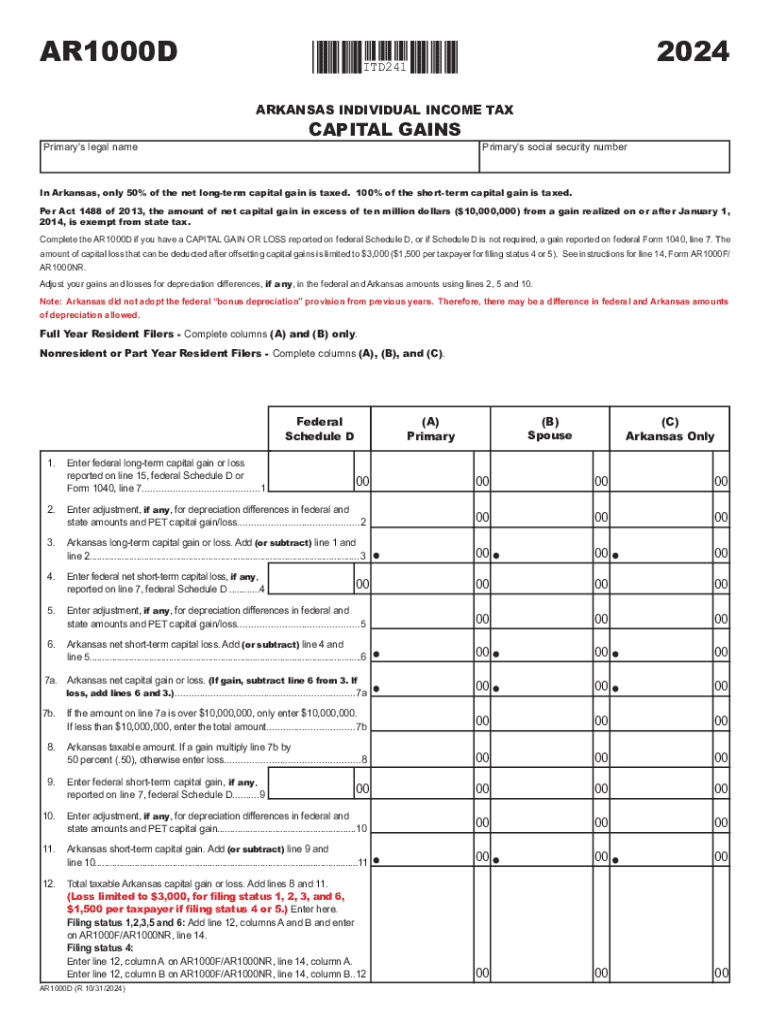
The 2024 AR1000D BC form is specifically designed for Arkansas residents to report their capital gains and losses. This document plays a pivotal role in ensuring accurate income tax calculations by accounting for both long-term and short-term capital gains or losses, along with necessary adjustments.
Definition and Core Purpose
- Purpose: The form is essential for reporting capital gains and losses, catering to both individuals and businesses in Arkansas. It helps in calculating taxable income with a focus on capital assets.
- Major Components: The form includes sections to report gains, losses, and depreciation adjustments.
How to Obtain the 2024 AR1000D BC
- Availability: The form can be downloaded from the Arkansas Department of Finance and Administration's website. It can also be acquired from tax preparation centers across the state.
- Formats: It is available in digital PDF format for online filing and print format for manual submissions.
Key Steps in Completing the Form
- Gather Necessary Documents: Collect details of all capital transactions, including documents showing purchase and sale prices.
- Fill Out Personal Information: Start by entering personal details such as name, address, and taxpayer identification number.
- Enter Financial Data: Report all relevant financial figures, including gains, losses, and depreciation adjustments.
- Review for Accuracy: Double-check all figures for accuracy to avoid discrepancies and potential penalties.
- Submit the Form: File the form online or via mail, aiming to meet the filing deadlines.
Who Typically Uses the 2024 AR1000D BC
- Arkansas Residents: Primarily used by Arkansas residents who have engaged in transactions involving capital assets.
- Business Entities: Corporations, LLCs, partnerships, and other business entities involved in capital transactions also utilize this form.


Critical Terms and Elements
- Capital Gains: The increase in value of an asset or investment over time, which must be reported even if the asset was not sold.
- Short-Term vs Long-Term: Classification based on the holding period of the asset; short-term refers to assets held for less than a year, and long-term to those held for one year or more.
Detailed IRS Guidelines
- Following Federal Procedures: The form requires adherence to IRS guidelines, especially concerning calculations of taxable gains and depreciation discrepancies.
- Depreciation Adjustments: Align state-level reporting with federal depreciation methods to ensure consistency.
Important Dates and Filing Deadlines
- Annual Deadline: Typically aligns with the federal tax filing deadline, usually on April 15th, unless extensions are granted.
- Estimated Tax Payments: If due, these need to be aligned with quarterly estimated tax payment deadlines.
State-Specific Rules for Arkansas
- Depreciation Differences: Arkansas may have unique methods of calculating depreciation that differ from federal norms, necessitating particular attention to instructions provided with the form.
- State Credits and Deductions: Some deductions specific to Arkansas residents can influence the final taxable income.
Digital vs. Paper Version
- Electronic Filing Benefits: Offers quicker processing, immediate confirmation, and reduces paperwork.
- Paper Filing: Available for those preferring traditional methods or without access to digital means.
Penalties for Non-Compliance
- Late Filing: Can result in penalties, typically a percentage based on the unpaid tax from the capital gains.
- Incorrect Reporting: Might lead to additional scrutiny or audits by tax authorities.
By comprehensively understanding the 2024 AR1000D BC, individuals and businesses can ensure accurate and timely reporting of capital gains, thereby avoiding potential penalties and ensuring compliance with state tax laws.




