





Definition & Meaning
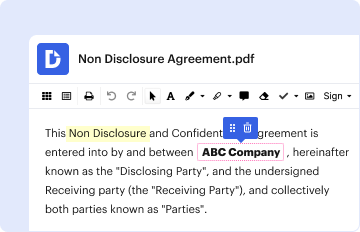
Filling out a "form online" refers to the process of entering required information into a digital version of a form that is accessible through a web platform. This approach is designed to make the experience more efficient and convenient, allowing users to submit necessary data electronically rather than via traditional paper methods. Online forms are typically used for applications, data collection, registrations, and compliance reporting. They streamline the process by reducing paperwork, allowing for real-time updates, and minimizing the risk of errors through built-in validation checks.
How to Use the Form Online
To use an online form, begin by accessing the platform hosting the form, such as DocHub. Once on the platform, follow these general steps:
- Access the Form: Navigate to the specific form you need by searching for it or selecting it from a provided list.
- Fill in the Required Fields: Enter all requested information into the designated fields. Mandatory fields are usually marked with asterisks.
- Attach Supporting Documents: If required, upload any additional documents that might be needed to accompany your form.
- Review Your Entries: Carefully check all information entered for accuracy and completeness.
- Submit the Form: Once satisfied, click on the “Submit” button to send your completed form.
Online forms often include tooltips or guidance sections to provide additional assistance while filling them out.
Steps to Complete the Form Online
Completing an online form involves a series of steps designed to ensure accuracy and completeness:
- Locate the Form: Find the form via the hosting platform or receive it through a direct link or email invitation.
- Fill Out Personal Details: Start with basic information such as name, address, and contact information.
- Input Specific Data: Enter any specific details requested, which may vary depending on the form type, such as tax information or registration details.
- Answer Eligibility Questions: Respond to any questions that determine eligibility or compliance with form requirements.
- Attach Files: Upload necessary documents by selecting files from your device or cloud storage.
- Select Consent or Acknowledgement: Agree to terms, conditions, or privacy policies if applicable, by checking consent boxes.
- Review for Errors: Use the review function to scan for errors or omissions.
- Submit Form: Finalize and send the form electronically for processing.
Key Elements of the Form Online
When using an online form, several key elements are typically present to facilitate ease of use and data accuracy:
- Input Fields: Various types such as text boxes for written responses, dropdown menus for selections, and checkboxes for multiple-choice questions.
- Validation Checks: Built-in mechanisms ensuring that data entered meets specific criteria, like valid email format or numerical range.
- Conditional Logic: Dynamic forms that adjust questions based on previous answers to ensure relevance.
- Guidance Prompts: Instructions or tooltips providing clarity on how to complete specific sections.
- Security Features: Encryption protocols and authentication requirements protect user data during the form submission process.
Legal Use of the Form Online
Online forms used for legal purposes, such as contracts or tax filings, must comply with specific regulations:
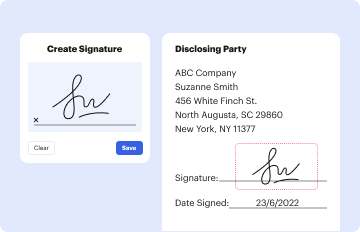
- E-Signature Legality: Forms that require signatures must adhere to laws like the ESIGN Act, ensuring that electronic signatures are legally recognized.
- Data Protection: Compliance with data protection laws, such as GDPR or state privacy laws, is mandatory to ensure the security and confidentiality of user information.
- Record-keeping Requirements: Online submissions often have to be stored for a set duration as per legal mandates, depending on the form type.
State-Specific Rules for the Form Online
Certain forms have rules that may differ based on the state in which they are filed. This is often the case with tax forms or business registration documents:
- Tax Forms: State-specific tax credits or deductions that must be applied may vary.
- Business Regulations: Licensing requirements or filing fees can often differ from state to state.
- Compliance Forms: Varying regulations based on local laws might affect how some compliance forms are filled out or submitted.
Who Typically Uses the Form Online
Online forms are used by a wide array of individuals and organizations, including:
- Individuals: For personal applications like job applications, university admissions, or membership sign-ups.
- Businesses: To collect information from clients, submit compliance documents, or manage administrative tasks.
- Nonprofits: For volunteer registrations, fundraising events, or grant applications.
- Government Agencies: To facilitate citizen services such as tax filings or benefit applications.

Software Compatibility
Online forms are often embedded or compatible with various software systems, enhancing functionality and user experience:
- Document Management Systems: Like Google Drive or OneDrive, enabling easy import and export of forms.
- Fiscal Software: Platforms such as QuickBooks or TurboTax, for forms associated with financial data entry or tax filing.
- API Integrations: Allow forms to be integrated with CRMs or other business management tools, ensuring seamless data synchronization.
Examples of Using the Form Online
Online forms are versatile tools, with numerous applications across different sectors:
- Job Applications: Potential employees can apply for positions by filling and submitting online forms that outline their qualifications and experiences.
- Tax Filings: Individuals and businesses use forms like the IRS 1040 to file their taxes online, often simplifying calculations through embedded tools.
- Feedback Surveys: Organizations use surveys sent through online forms to gather customer feedback or conduct market research efficiently and quickly.
These applications exemplify the diverse ways in which online forms can simplify and expedite essential tasks.