







Definition and Purpose of the OM-300B PDF Format
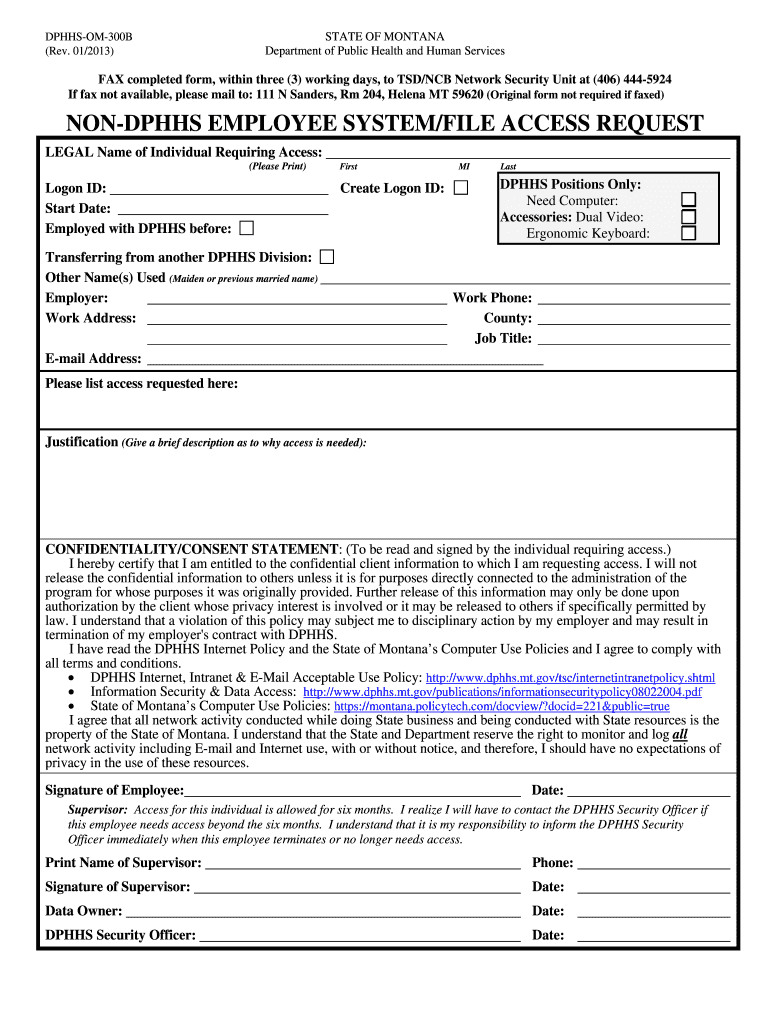
The OM-300B PDF format is a crucial document used by the Department of Public Health and Human Services (DPHHS) to facilitate access requests for confidential client information. This form serves to document the process by which non-DPHHS employees can gain authorized access to sensitive data, ensuring that all necessary security protocols are adhered to. The OM-300B form also acts as a record of compliance with confidentiality policies, capturing vital personal details and the justification for access.
Key Elements of the OM-300B Form
- Personal Information: The form collects essential personal details of the applicant, such as name, contact information, and organizational affiliation.
- Access Justification: Applicants must provide a clear explanation for their need to access confidential information, ensuring that the request is legitimate and aligns with their professional responsibilities.
- Approval Signatures: Both the employee and supervisor are required to sign the form, indicating their understanding of and compliance with data security policies.
Steps to Complete the OM-300B PDF Format
- Fill out Personal Information: Enter your name, contact details, and organization.
- Provide Access Justification: Clearly articulate the reasons for requesting access to confidential information.
- Gather Required Signatures: Ensure that both you and your supervisor sign the document.
- Review for Accuracy: Double-check all fields to avoid errors that could delay the approval process.
- Submit the Form: Follow the designated submission method, via fax or mail, as instructed by the DPHHS.
Submission Methods
- Fax: A traditional and secure method for submitting the form to the designated department.
- Mail: Allows for physical delivery, particularly important if fax access is unavailable.
Who Typically Uses the OM-300B Form
The primary users of the OM-300B form are non-DPHHS employees who require access to DPHHS databases or files for their work. This includes contractors, researchers, and other professionals who need to review confidential client data as part of their job duties. The form is a standard requirement to authenticate their eligibility and conformity to confidentiality agreements.

Legal Use and Compliance
Completing the OM-300B form is a legal prerequisite for accessing confidential client information within the jurisdiction of Montana's DPHHS. The form acts as a binding agreement, ensuring that the applicant acknowledges and agrees to comply with all data security and privacy requirements. Non-compliance or misuse of the form can result in penalties, including revocation of access and legal repercussions.
State-Specific Rules
The OM-300B form follows the confidentiality and data protection laws specific to Montana. It is essential for applicants to be aware of and adhere to state-specific guidelines regarding data privacy and the handling of sensitive information.
Important Terms Related to the OM-300B Format
- Confidential Client Information: Refers to any data about clients that is not publicly accessible and requires authorization for access.
- Data Security Protocols: Measures and guidelines designed to protect the integrity and confidentiality of client information.
- Authorization: The formal approval process by which access to sensitive data is granted.
Examples of Using the OM-300B Format
- Research Projects: University researchers collaborating with DPHHS may use the OM-300B form to gain access to data sets required for their studies.
- Consulting Services: External consultants working on DPHHS projects need the form to access relevant files for analysis and report preparation.
Software Compatibility and Digital Access
While the OM-300B PDF format is traditionally available as a paper document, it can be digitally processed using compatible software such as DocHub, TurboTax, or QuickBooks. These platforms enable users to fill, sign, and submit the form electronically, facilitating easier compliance and integration into digital workflows. The form's PDF format ensures it can be accessed and completed uniformly across various digital environments.




