
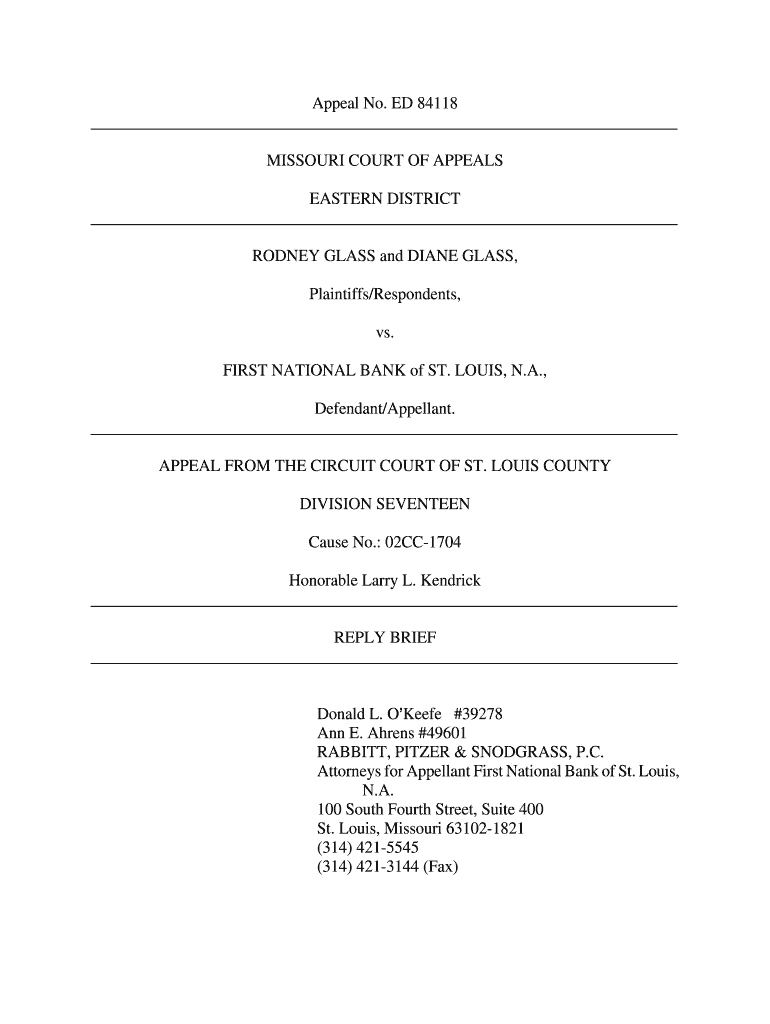







Definition and Purpose of SC87244 Reply Brief
The SC87244 reply brief is a legal document used in appellate court proceedings in Missouri. It is typically filed by an appellant as a response to a brief filed by an appellee, offering arguments intended to refute points made by the opposing party. The document is crucial in summarizing and reinforcing the appellant's case to the court, aiming to persuade the judges to favor the appellant's position. The brief requires careful construction to ensure that all arguments adhere to applicable laws and court rulings.
Key Elements of a Reply Brief
-
Introduction and Overview: A succinct introduction setting the stage for the arguments and providing a roadmap of the key points discussed.
-
Argument Sections: Detailed counterarguments addressing specific claims made by the appellee, and is structured logically and supported by legal statutes or previous case law.
-
Legal Citations: Proper inclusion of legal precedents and statutes that bolster the appellant's stance.
-
Conclusion: A summary of the main arguments presented, reiterating the desired outcomes the appellant seeks from the court.
How to Use the SC87244 Reply Brief
To effectively use the SC87244 reply brief, the appellant must strategically address the key arguments made by the appellee. This involves dissecting the entire argument and highlighting logical inconsistencies or legal errors. Including citations of relevant Missouri statutes or previous court decisions is critical for building a compelling case. Appellants should ensure that their writing remains clear and concise, focusing on the ultimate goal of overturning the lower court's decision or seeking another form of legal remedy.
Steps in Preparing a Reply Brief
-
Analyze the Appellee's Brief: Identify the key arguments made and determine which require a response.
-
Research: Gather appropriate legal precedents, statutes, or regulations that support your counterarguments.
-
Draft the Document: Outline the brief, focusing on clarity and logical flow, and make sure all points are backed by evidence.
-
Edit and Review: Refine the draft for clarity, coherence, and conciseness, and ensure compliance with court formatting rules.
Obtaining and Filing the SC87244 Reply Brief
The process of preparing a reply brief involves understanding both the legal requirements and filing procedures specific to Missouri courts. Filing requirements include compliance with formatting guidelines and adherence to submission deadlines. It is crucial to consult with legal counsel to ensure all procedural rules are followed.
Filing Methods
- Online Submission: Many courts allow electronic filing, which can expedite the submission process.
- Mail/In-Person Filing: Some jurisdictions may still require or offer the option to submit documents through traditional mailing or in-person delivery.
Legal Use and Compliance
Using the SC87244 reply brief requires a thorough understanding of legal principles and the procedural nuances of Missouri's appellate system. The document must comply with all applicable rules and statutes, addressing each point made by the appellee accurately. Failure to do so might result in the brief being rejected or ineffective in court. Seeking assistance from legal professionals can ensure the reply brief is compelling and meets all necessary legal standards.
Important Terms and Definitions
Legal Terms
-
Appellant: The party filing the appeal, often challenging the lower court's decision.
-
Appellee: The party responding to the appeal, typically seeking to uphold the lower court's ruling.
-
Statute: A written law passed by a legislative body, used as the basis for legal arguments.
Court System Terms
-
Missouri Supreme Court: The highest court in the state, which might hear cases after they pass through Missouri's intermediate appellate courts.
-
Circuit Court of St. Louis County: A lower court where the initial ruling took place before the appeal was filed.
Examples and Case Studies
Examples of the SC87244 reply brief might include cases where financial institutions challenge previous rulings related to contractual disputes, as seen in the application of Missouri statute 443.130 in the case of First National Bank of St. Louis, N.A. A hypothetical example might involve a business contesting a regulatory decision impacting its operations, using the reply brief to address the legal footing of the original ruling.
State-Specific Rules
Missouri courts have specific rules governing the format, submission, and content of legal documents like the SC87244 reply brief. Legal practitioners must be familiar with these regulations to ensure compliance and enhance the brief's effectiveness. Missouri may also have unique laws or precedents that could impact the arguments made in the brief, necessitating additional research and strategic consideration.
-
Formatting Guidelines: Adherence to font size, margin width, and page limits as specified by Missouri court rules.
-
Submission Deadlines: Awareness of the strict timelines for filing documents as late submissions may disqualify the appeal from consideration.
Understanding these elements and executing them correctly can determine the success of an appeal in Missouri's legal system.




