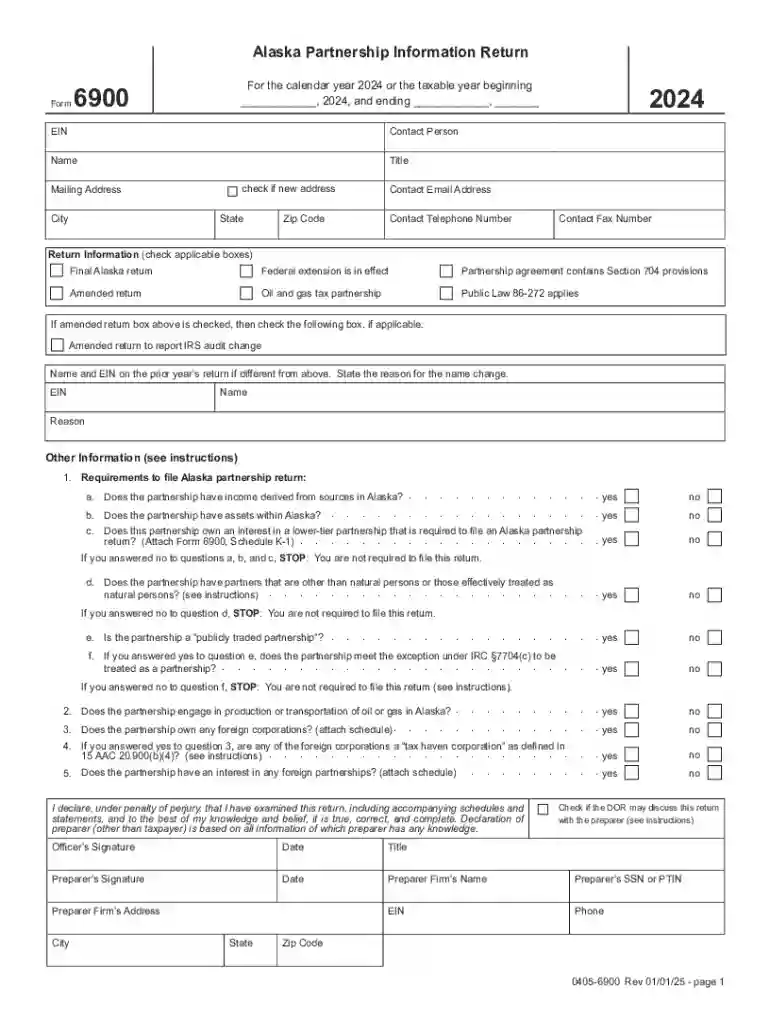
For the calendar year 2024 or the taxable year beginning-2026

Get Form
For the calendar year 2024 or the taxable year beginning Preview on Page 1

Here's how it works

01. Edit your form online
Type text, add images, blackout confidential details, add comments, highlights and more.

02. Sign it in a few clicks
Draw your signature, type it, upload its image, or use your mobile device as a signature pad.

03. Share your form with others
Send it via email, link, or fax. You can also download it, export it or print it out.

Definition & Meaning

The phrase "For the calendar year 2024 or the taxable year beginning" refers to a specified tax reporting period used by individuals or entities such as businesses and partnerships to file necessary documentation with tax authorities. It indicates that the documents, whether informational returns or tax forms, pertain to financial activity occurring within the calendar year 2024 or a fiscal year that begins within the 2024 timeframe. Acknowledging this period is crucial for compliance, ensuring that financial data aligns with tax laws and regulations for the stipulated year.

How to Use the Form

Understanding how to properly use the form associated with "For the calendar year 2024 or the taxable year beginning" is vital. The form is generally applied to file details about income, expenses, credits, and other financial data during the specified tax period. Key steps to use the form effectively include:

  1. Preparing Financial Documents: Gather all necessary records such as income statements, expense receipts, and prior year tax returns.
  2. Filling Out the Form: Accurately input data into each relevant section, ensuring that all figures reflect the activities of the 2024 calendar or related fiscal year.
  3. Reviewing for Accuracy: Double-check each entry to prevent errors, which could lead to compliance issues or delays.
  4. Submission: Utilize the chosen submission method—either online, by mail, or in person—following the specific instructions for each method.

Steps to Complete the Form

Filing this form requires a structured approach to ensure all necessary details are captured accurately. Here’s a step-by-step guide to completing the form:

  1. Identify the Correct Form: Determine the correct form relevant to your tax situation or entity, such as partnerships or corporations.
  2. Section-by-Section Completion: Begin with the entity's details, then proceed to financial data such as income and deductions, followed by partner or shareholder information.
  3. Incorporate Applicable Modifications: Include any state-specific modifications or credits, such as those related to industry-specific incentives.
  4. Attach Supporting Documents: Attach relevant schedules or statements that provide further detail on reported figures.
  5. Review and Certify: Perform a thorough review before signing the form to certify the accuracy and completeness of provided information.

Key Elements of the Form

A thorough understanding of the form's key elements helps streamline the filing process. Essential components include:

  • Entity Information: Name, address, and identification numbers of the filing entity.
  • Financial Summaries: Income, deductions, credits, and tax amounts.
  • Partner/Shareholder Details: Information relevant to each partner or shareholder, including ownership percentages.
  • State Modifications: Adjustments related to state-specific tax rules or credits.
  • Compliance Checks: A checklist or section that verifies the entity meets filing obligations based on income and type.

Legal Use of the Form

The form serves as a legal document for reporting financial activities and fulfilling tax obligations. Legal use involves:

  • Compliance with Tax Laws: Ensuring all instructions and regulations associated with the form are followed accurately.
  • Accurate Representation: Presenting all income and expenses in a truthful manner to prevent penalties.
  • Record Maintenance: Keeping a copy of the filed form and all supporting documentation to satisfy audits or inquiries.

Filing Deadlines / Important Dates

Key filing deadlines and dates are crucial for avoiding late penalties. Generally, these include:

  • Standard Filing Deadline: Typically April 15 for individual taxpayers, unless another date is specified for entities.
  • Extensions: Application deadlines for extensions if additional time is needed, usually up to six months.
  • State-Specific Deadlines: Variations in state filing dates which might differ from federal deadlines.

State-Specific Rules

Different states may have specific requirements or modifications when using this form. Examples include:

  • Additional State Schedules: Certain states might require supplementary schedules not mandated federally.
  • State-Specific Deductions and Credits: Opportunities for additional claims or incentives based on state law.
  • Filings Based on Business Type: Differences in filing obligations for various entities such as LLCs, S-corporations, and partnerships.

Penalties for Non-Compliance

Failing to properly complete or submit the form within required timeframes can result in penalties:

  • Late Filing: Fines or interest charged for submissions after the deadline without an approved extension.
  • Incorrect Information: Penalties for inaccuracies or omissions, which can include additional taxes or fines.
  • Failure to Report: Non-compliance may lead to more significant legal actions or auditing by tax authorities.

Who Typically Uses the Form

Entities that typically use this form span a range including:

  • Partnerships: Businesses collaborating with multiple owners needing to report financial activities.
  • Corporations: Entities responsible for filing tax reports reflecting their business activities and financial health.
  • Individual Filers with Complex Finances: People with diverse financial dealings, such as investments or multiple income sources, may also utilize this form.
decoration image ratings of Dochub
be ready to get more

Complete this form in 5 minutes or less

Get form

Got questions?

We have answers to the most popular questions from our customers. If you can't find an answer to your question, please contact us.
Contact us
WASHINGTON The Internal Revenue Service today announced Monday, Jan. 29, 2024, as the official start date of the nations 2024 tax season when the agency will begin accepting and processing 2023 tax returns.
Generally, taxpayers filing a version of Form 1040 use the calendar year. An individual can adopt a fiscal year if the individual maintains his or her books and records on the basis of the adopted fiscal year. Fiscal year comprises 12 full months, but not in the same calendar year.
Key takeaways for 2024 tax changes Tax bracket thresholds increased. Standard deduction increased. Contribution limits for retirement accounts increased. 1099-K reporting threshold dropped to $5,000. The EITC and Adoption Credit were updated. The refundable portion of the Child Tax Credit increased.
Additionally, if you submit your 2024 federal income tax return by Jan. 31, 2025, and pay the entire balance due, you wont have to make the final estimated payment for 2024, which would normally be due on Jan. 15, 2025.
WASHINGTON The Internal Revenue Service opened the 2025 tax filing season today and is accepting and processing federal individual tax year 2024 returns.

Security and compliance

At DocHub, your data security is our priority. We follow HIPAA, SOC2, GDPR, and other standards, so you can work on your documents with confidence.

Learn more
ccpa2
pci-dss
gdpr-compliance
hipaa
soc-compliance
be ready to get more

Complete this form in 5 minutes or less

Get form

People also ask

2024 tax rates for a single taxpayer Tax rateon taxable income from . . .up to . . . 10% $0 $11,600 12% $11,601 $47,150 22% $47,151 $100,525 24% $100,526 $191,9503 more rows Feb 13, 2025
Individual taxpayers (non-provisional): 15 July 2024 to 21 October 2024. Provisional taxpayers: 15 July 2024 to 20 January 2025.

Related links