




01. Edit your form online
Type text, add images, blackout confidential details, add comments, highlights and more.

Type text, add images, blackout confidential details, add comments, highlights and more.

Draw your signature, type it, upload its image, or use your mobile device as a signature pad.

Send it via email, link, or fax. You can also download it, export it or print it out.
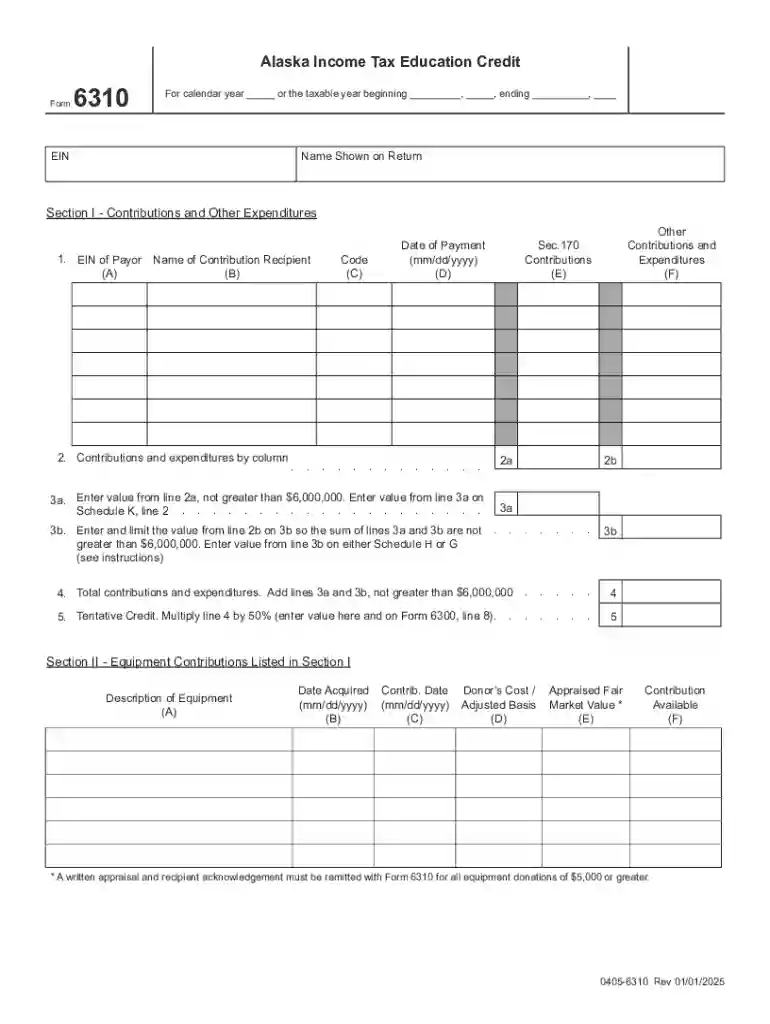
Section I - Contributions and Other Expenditures plays a pivotal role in detailing financial donations and related spending, particularly in contexts such as tax documentation for education credits. This section is crucial for accurately reporting the financial interactions that qualify for specific credits or deductions. It involves thoroughly documenting contributions given to eligible organizations or institutions, as well as expenses incurred during particular activities related to the form's purpose. These records are essential not only for compliance with taxation requirements but also for maximizing potential benefits.
Financial activities covered in this section include donations to educational institutions and documented spending on approved educational programs.
Using the Section I - Contributions and Other Expenditures involves systematic detailing of financial transactions. Initially, gather all paperwork that proves contributions and expenditures relevant to the form. This might include receipts, acknowledgment letters from organizations, and detailed expense logs.
For an individual who has donated to a local educational charity, recording the transaction involves listing the amount, the date, and attaching any acknowledgment letter from the charity.
Completing this section requires careful attention to detail and strict adherence to instructions. It's imperative that all entries are accurate and supported by evidence to ensure compliance and the realization of any potential tax benefits.
This form section is most frequently used by taxpayers who engage in philanthropic activities and those eligible for specific education-related financial credits. Users range from individual taxpayers to entities seeking to leverage tax benefits through eligible contributions.


A self-employed individual donating to a public university or a small business contributing to a scholarship fund would both use this section for tax purposes.
Understanding key terminology is essential for accurately navigating and completing the section.
A donation receipt from a public charity or a purchase invoice for educational supplies qualifies as documentation under these definitions.
The Internal Revenue Service (IRS) provides specific rules and recommendations for reporting contributions and expenditures. Proper adherence ensures compliance and might also enhance the chances of benefiting from available tax deductions.
Recording a contribution to a listed charitable organization with attached proof exemplifies proper IRS compliance.
The ability to provide consistent and accurate documentation is crucial when completing the section. Required materials facilitate the evaluation of claimed contributions and expenditures, thereby ensuring authenticity.
A university’s acknowledgment letter following a charitable donation or a detailed invoice from a supplier presenting educational materials are typical examples.
Non-compliance can result in penalties, including the loss of deductions or further tax implications. Hence, adhering to section requirements is essential for maintaining a favorable tax profile.
Ensure submissions are complete, accurate, and supported by necessary documentation to mitigate the risk of penalties.
In conclusion, comprehending the nuances and requirements of Section I - Contributions and Other Expenditures is crucial for financially leveraging charitable activities through allowable tax benefits.
We've got more versions of the Section I - Contributions and Other Expenditures form. Select the right Section I - Contributions and Other Expenditures version from the list and start editing it straight away!
At DocHub, your data security is our priority. We follow HIPAA, SOC2, GDPR, and other standards, so you can work on your documents with confidence.




No deduction shall be allowed for an expenditure for admission to any dinner or program, if any part of the proceeds of such event directly or indirectly inures
It is unlawful for any national bank, or any corporation organized by authority of any law of Congress, to make a contribution or expenditure in connection withRead more


