







Definition & Meaning
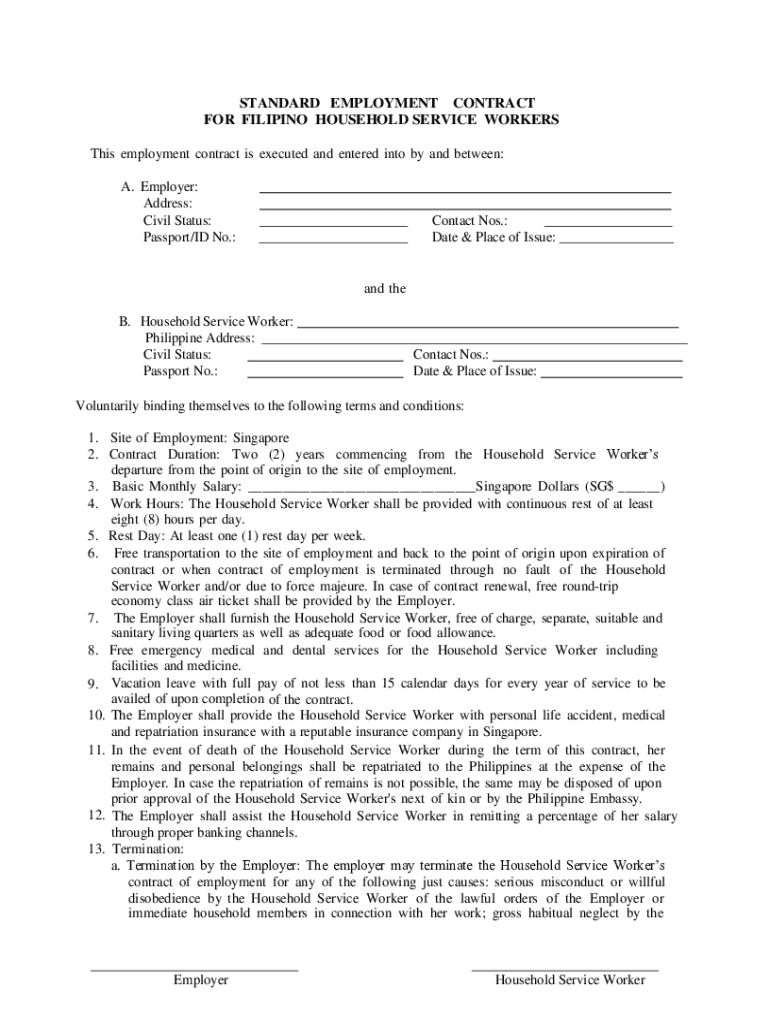
The "NEW STANDARD EMPLOYMENT CONTRACT - Department of Labor and Employment" serves as a formal agreement that outlines the employment terms between employers and Filipino household service workers overseas, such as in Singapore. It is designed to ensure fair treatment and establish the rights and obligations of both parties within the employment relationship. This contract serves as both a protective legal document and an instructional guide on acceptable employment practices, thereby aligning with labor standards established by the Department of Labor and Employment.
Importance of the Contract
- Ensures compliance with legal standards for both employers and employees.
- Provides a structured and clear framework for employment terms.
- Protects the rights of household service workers by outlining key responsibilities and rights.
How to Use the Contract
To effectively use the "NEW STANDARD EMPLOYMENT CONTRACT," employers and employees should engage in a detailed review of each section to ensure mutual understanding and agreement. Employers need to fill out the contract with precise information regarding job roles, responsibilities, salary, and other relevant details. Both parties should clearly understand and agree on the terms before signing.
Step-by-Step Guide
- Review Contract Terms: Both parties should read and comprehend each clause to ensure it matches the agreed-upon terms verbally discussed.
- Complete Necessary Fields: Fill in all required fields, including personal information and job details.
- Mutual Agreement: Discuss any discrepancies or points of concern so adjustments can be made prior to signing.
- Sign and Date the Document: Both employer and worker should sign and date the contract, ensuring that both keep a copy for their records.
Key Elements of the Contract
The contract comprises critical sections that define the parameters of employment. Each section is crafted to ensure clarity, fairness, and adherence to labor laws.
Essential Clauses
- Contract Duration: Defines the start and end date of employment.
- Salary: Outlines the monetary compensation for the service provided, along with payment frequency and mode.
- Work Hours: Specifies daily and weekly hours, including provisions for overtime.
- Rest Days and Leave: Details the number of rest days and types of leave available, ensuring rest and personal time.
- Termination Clauses: Addresses conditions and processes for legally terminating the contract by either party.
Steps to Complete the Contract
Completing the "NEW STANDARD EMPLOYMENT CONTRACT" requires attention to detail and thorough communication between both involved parties. From gathering personal details to understanding legal implications, each step must be followed meticulously.
Detailed Instructions
- Preparation and Review: Gather essential documents such as identification, and review legal requirements mandated by the Department of Labor and Employment.
- Filling Out Orderly: Input accurate information into each relevant segment, ensuring addresses, contact information, and employment details are up-to-date.
- Consultation with Legal Advisor: If necessary, seek legal advice to clarify any ambiguous legal terms or to ensure the contract meets local labor laws.
- Verification and Final Checks: Double-check all entries for accuracy to prevent complications.
- Execution: The contract is executed once both parties sign and date, marking the official commencement of their agreement.
Who Typically Uses the Contract
The contract is predominantly used by Filipino household service workers and their employers in places like Singapore, where regulatory standards require formal agreements. It is essential for:
- Household Service Workers: Ensures protection and fair work conditions abroad.
- Employers: Provides clarity on their roles and responsibilities as an employer, protecting them from potential legal disputes or misunderstandings.


Legal Use of the Contract
The "NEW STANDARD EMPLOYMENT CONTRACT" is legally binding and is crafted to comply with both Philippine labor laws and international agreements. Its use ensures:
- Compliance: Helps avoid legal repercussions by ensuring both parties adhere to regional labor laws.
- Fair Practices: Encourages ethical employment practices and protects vulnerable workers.
Legal Considerations
- Validation: Both parties should ensure the contract is notarized if required.
- Dispute Resolution: Includes clauses that outline methods for handling potential disputes, safeguarding worker rights.
Important Terms Related to the Contract
Understanding certain employment terms is crucial for both parties involved in the contract.
Glossary of Key Terms
- Employer: The individual or entity hiring the household service worker.
- Employee: The household service worker, often coming from the Philippines under specific employment terms.
- Rest Days: Specifically allocated days off within a work week.
- Salary: Monthly monetary compensation agreed upon within the contract.
State-Specific Rules and Differences
Although the contract is primarily forged in compliance with Filipino and Singaporean labor guidelines, there may be variations and legal requirements depending on the state or country in which the contract is executed.
Considerations for Employers and Employees
- Jurisdictional Compliance: Employers and employees must ensure they are meeting the legal requirements specific to their geographical location, which may affect working conditions, wage rates, and dispute resolutions.
- Customary Practices: Understand local customs that might affect employment, such as language use or cultural norms, to foster a harmonious work relationship.


