For the taxable year January 1, 2024 through December 31, 2024 or other taxable year:-2026

Get Form
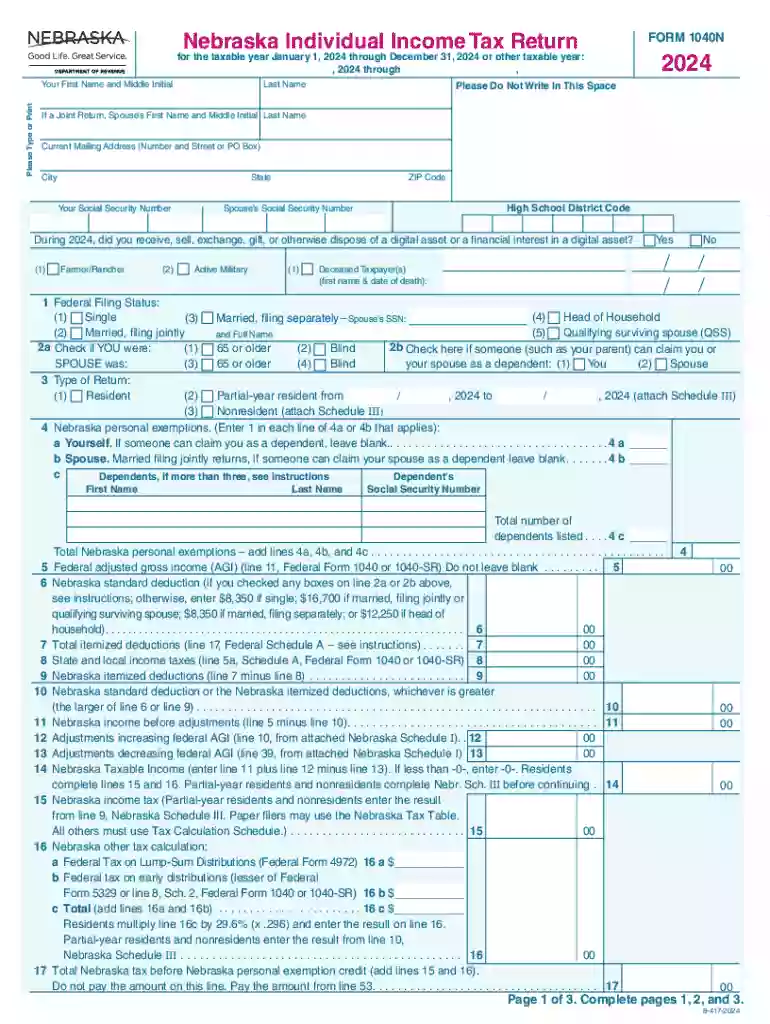
for the taxable year January 1, 2024 through December 31, 2024 or other taxable year: Preview on Page 1

Here's how it works

01. Edit your form online
Type text, add images, blackout confidential details, add comments, highlights and more.

02. Sign it in a few clicks
Draw your signature, type it, upload its image, or use your mobile device as a signature pad.

03. Share your form with others
Send it via email, link, or fax. You can also download it, export it or print it out.

Definition & Meaning

"For the taxable year January 1, 2024, through December 31, 2024, or other taxable year" refers to the period during which taxpayers must report their income, deductions, credits, and other financial details for taxation purposes. This timeframe defines the annual cycle for individual and business income tax filings in the United States. The default taxable year is the calendar year; however, taxpayers may adopt a fiscal year different from the calendar year if they receive approval from the IRS. This period is crucial for determining financial responsibility, ensuring compliance, and understanding tax obligations.

Key Terminology

  • Taxable Year: The 12-month period used for accounting purposes, typically aligning with the calendar year.
  • Fiscal Year: A 12-month period ending on the last day of any month except December.
  • Taxpayer: An individual or entity required to file a tax return.
  • Revenue: Income generated during the taxable year, impacting tax liability.

Practical Examples

  • An individual follows the calendar year, reporting from January 1 to December 31, 2024.
  • A corporation may follow a fiscal year, such as July 1, 2024, through June 30, 2025.

Steps to Complete the Form

  1. Gather Required Documents: Collect all necessary documents, including W-2s, 1099s, receipts for deductions, and previous year’s tax returns.

  2. Choose the Appropriate Form: Select Form 1040 for individual income reporting or Form 1040-NR if you are a non-resident alien.

  3. Enter Personal and Filing Status Information: Provide your name, Social Security Number, and filing status—single, married filing jointly or separately, head of household.

  4. Report Income: Detail wages, salaries, tips, lottery winnings, dividends, interest, and other forms of income received during the year.

  5. Claim Deductions and Credits: List eligible deductions such as student loan interest, mortgage interest, and educational credits which reduce taxable income.

  6. Calculate Tax Liability: Use the standard deduction or itemized deductions to lower taxable income and compute the total tax owed.

  7. Submit the Return: File the completed form electronically or by mail, adhering to the deadline of April 15, 2025, unless an extension is filed.

Common Mistakes

  • Omitting Social Security Numbers or names
  • Failing to include all income sources
  • Miscalculating deductions and credits

Filing Deadlines / Important Dates

  • April 15, 2025: Deadline to file tax returns for the year 2024.
  • October 15, 2025: Extended deadline for filing if an extension request was submitted by April 15.
  • January 31, 2025: Deadline for employers to furnish W-2 forms to employees.

Additional Deadlines

  • Quarterly Estimated Tax Payments: Due April 15, June 15, September 15, and January 15 for self-employed individuals.

Form Submission Methods

Tax returns can be submitted via different methods based on convenience and preference:

Online

  • IRS E-File: Fastest option, direct processing by the IRS.
  • Tax Preparation Software: Integrates with platforms like TurboTax or H&R Block for guided filing.

Mail

  • Paper Filing: Suitable for those preferring physical documentation, but process may take longer.
  • Certified Mail: Provides proof of submission, recommended for important documents.

In-Person

  • Tax Assistance Centers (TACs): Available for those needing help, especially useful for first-time filers.

IRS Guidelines

The IRS provides comprehensive guidelines ensuring taxpayers understand their responsibilities, taking into account:

  • Income Reporting: All income, whether from employment, investment, or other sources, must be accurately reported.
  • Deductions and Credits: Eligibility criteria must be met for claiming various deductions and credits.
  • Extensions: Procedures for filing extensions and fulfilling associated obligations.

Detailed Guidance Examples

  • Publication 17: The IRS’s general tax guide for individuals.
  • Publication 501: Information regarding exemptions and filing statuses.

Penalties for Non-Compliance

Failure to adhere to tax regulations can result in significant penalties:

  • Failure-to-File Penalty: Generally 5% of the unpaid taxes for each month or part of a month that a tax return is late.
  • Failure-to-Pay Penalty: 0.5% of the unpaid taxes for each month the taxes remain unpaid.
  • Accuracy-Related Penalty: Up to 20% of the underpayment due to negligence or disregard of rules.

Avoidance Strategies

  • Ensure Timely Filing: Utilize extensions if needed, but avoid unnecessary delays.
  • Accuracy: Double-check entries to prevent common errors impacting tax computations.

Business Entity Adaptations

Different business entities have distinct tax obligations for the taxable year:

LLCs

  • Single-member LLCs report using Schedule C.
  • Multi-member LLCs file Form 1065.

Corporations

  • Use Form 1120 for C Corporations.
  • S Corporations file Form 1120S, allowing income to pass through to shareholders.

Partnerships

  • Must file Form 1065 while partners receive Schedule K-1 for individual reporting.

Business-Specific Reporting

  • Deductions: Expenses must be ordinary and necessary to qualify.
  • Income: Includes all revenues less the cost of goods sold.

Maximizing the depth of knowledge regarding tax obligations and document submission within the taxable year ensures accurate reporting and compliance with IRS regulations, helping individuals and businesses efficiently navigate tax responsibilities.

be ready to get more

Complete this form in 5 minutes or less

Get form

Got questions?

We have answers to the most popular questions from our customers. If you can't find an answer to your question, please contact us.
Contact us
The tax years you can use are: Calendar year 12 consecutive months beginning January 1 and ending December 31. Fiscal year 12 consecutive months ending on the last day of any month except December.
WASHINGTON The Internal Revenue Service today announced Monday, Jan. 29, 2024, as the official start date of the nations 2024 tax season when the agency will begin accepting and processing 2023 tax returns.
Individual taxpayers (non-provisional): 15 July 2024 to 21 October 2024. Provisional taxpayers: 15 July 2024 to 20 January 2025.
WASHINGTON The Internal Revenue Service opened the 2025 tax filing season today and is accepting and processing federal individual tax year 2024 returns. During todays early morning opening, IRS systems have already received millions of tax returns from across the nation for processing.
If youre a calendar year filer and your tax year ends on December 31, the due date for filing your federal individual income tax return is generally April 15 of each year.

Security and compliance

At DocHub, your data security is our priority. We follow HIPAA, SOC2, GDPR, and other standards, so you can work on your documents with confidence.

Learn more
ccpa2
pci-dss
gdpr-compliance
hipaa
soc-compliance
be ready to get more

Complete this form in 5 minutes or less

Get form

People also ask

A tax year is usually 12 consecutive months. There are two kinds of tax years: Calendar Tax Year: This is a period of 12 consecutive months beginning January 1 and ending December 31; or. Fiscal Tax Year: This is a period of 12 consecutive months ending on the last day of any month except December.
Key Takeaways Most filers are subject to a calendar tax year beginning January 1 and ending December 31. Tax returns for the year are usually due on April 15 of the following year.

Related links